Cinema of one: Gen Z rediscovers the solo moviegoing ritual
A Dazed feature argues that going to the movies alone is no longer a confession of social failure but a deliberate act of self-regulation for a generation raised on smartphones.
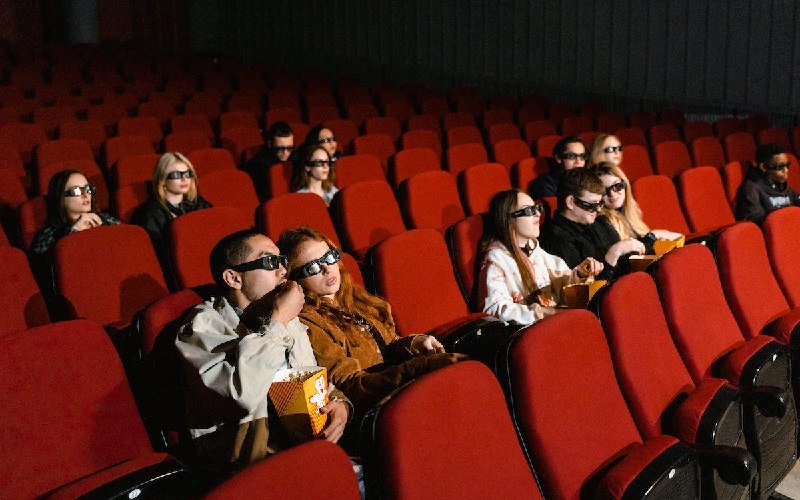
On 21 June 2026, a UNIAN-syndicated roundup of foreign press flagged a quieter cultural shift that has nothing to do with superhero sequels or streaming wars: a growing number of Generation Z viewers, the piece reported, are choosing to go to the cinema alone, treating the darkened auditorium less as a social outing than as a form of psychological repair. The framing came from Dazed Magazine, the London-based title that has spent the better part of a decade chronicling how under-25s metabolise the internet, and it landed in Ukrainian media feeds on a Sunday morning, several days after the original feature was published.
The argument in the Dazed piece is unfashionably simple. Cinema, for a generation that grew up curating a feed, is one of the few remaining cultural formats that demands sustained, undivided attention in a darkened room full of strangers. That demand, the magazine suggests, is exactly the point: a programmed, two-hour pause from notification loops, group chats, and the soft surveillance of the smartphone home screen. The piece frames solo moviegoing not as a confession of social failure but as a deliberate, almost monastic, act of self-regulation.
A social act performed alone
For most of the twentieth century, going to the pictures was an inherently collective ritual — a date, a family outing, a school trip. The Dazed framing turns that inheritance on its head. A solo ticket, the magazine argues, is closer to a gym session or a meditation than to a night out: scheduled, paid for, and entered into with intent. The viewer is not waiting for company; they are choosing, for a defined window, to be unreachable.
There is a generational logic to the claim. Members of Gen Z, the cohort broadly defined as those born between the late 1990s and the early 2010s, came of age during a period in which the boundary between public and private attention was systematically dissolved by platform design. The Dazed feature implicitly treats cinema's enforced single-tasking as a counter-weight to that condition — a room engineered, almost by accident, to make scrolling impossible.
The counter-reading
The reading is not uncontested. Cinema operators in North America and Europe have spent the last five years publicly mourning a younger audience that, in box-office data, appears increasingly reluctant to leave the house at all. Against that backdrop, the idea that the same cohort is suddenly rediscovering the theatrical experience — even in a pared-down, solo form — is at least partially convenient for an industry in search of a turnaround narrative.
A more sceptical read would note that solo moviegoing is also, structurally, the cheapest way to go. A single ticket, a single seat, no babysitter, no negotiation over what to see. In a period of sustained cost-of-living pressure on younger households, the rise of the solo cinema trip may be less a spiritual awakening than a financially rational response to a leisure economy that has steadily priced groups out of the multiplex. Dazed leans toward the psychological reading; the box office, if anything, points the other way.
Cinema as low-tech regulation
Either way, the structural frame the piece is reaching for is real. Across the cultural economy, formats that throttle user input — long-form journalism, hardcover books, single-occupancy cinema seats, classical concerts — have begun to acquire a quiet cachet among younger consumers precisely because they resist the dopamine architecture of the feed. Dazed is not the first outlet to name this dynamic, but the cinema frame has a particular resonance: the medium is old enough to feel inherited, new enough to feel counter-cultural, and physical enough to survive the migration of almost every other leisure format to the home screen.
The magazine also reads the trend as a soft rebuke to the algorithmic curation that has come to govern how under-25s encounter culture. Where a streaming platform optimises for continued engagement, a cinema programme is curated, finite, and visibly chosen — a contrast that, the piece implies, is doing more cultural work than the industry has yet acknowledged.
Stakes for an industry in transition
For exhibitors, the practical question is whether the solo Gen Z audience is large enough, and frequent enough, to reshape programming. The Dazed feature does not supply box-office figures, and the UNIAN wire summary does not cite any. The trend, in other words, is reported anecdotally — through social media, through viral posts of empty auditoria with a single occupied seat — rather than through the trade data that would confirm a structural shift. The piece is best read, for now, as a cultural mood report rather than a market forecast.
What is clearer is the generational self-image the framing offers. A cohort that has been told, repeatedly, that its attention is fractured, its friendships attenuated, and its relationship to public space pathological is being offered a narrative in which the very behaviours once diagnosed as antisocial — going out alone, sitting in silence with strangers, paying for the privilege of being unreachable for two hours — are recast as acts of quiet competence. Whether that framing is adopted widely, or fades with the next algorithm, is a question the data has not yet answered.
Desk note: Monexus treats this as a cultural-mood story rather than a market report. The Dazed feature was surfaced via a UNIAN Telegram roundup; the underlying box-office claims the trend implies remain unverified and are flagged accordingly above.
Wire provenance
This editorial synthesis draws on the following public wire/social posts:
- https://t.me/uniannet