Hezbollah's Qassem, speaking on Ashura, frames Iran and the 'resistance' as having outlasted efforts to eliminate them
In a Sunday address to the central Ashura council, Hezbollah's secretary-general said Iran had emerged 'stronger' from recent blows, and warned that Israel would not be allowed to remain in Lebanon.
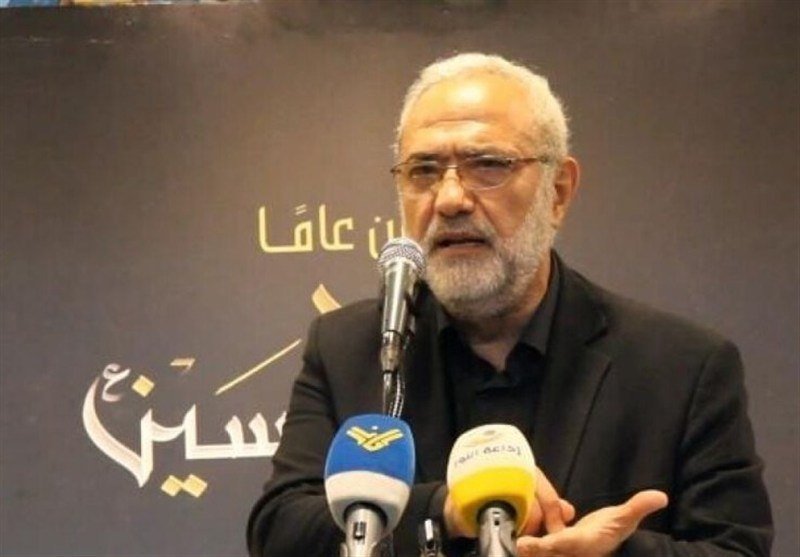
Hezbollah secretary-general Sheikh Naim Qassem used a Sunday address to the central Ashura council in Lebanon to argue that the campaign to dismantle Iran and the regional armed groups aligned with it has failed, and to draw a sharp line against any continued Israeli presence on Lebanese soil. Reporting on the speech, carried by the Iranian state outlet IRNA at 17:34 UTC on 21 June 2026, summarised the message: efforts to "eliminate Iran and the regional resistance" have come up short, and Tehran is, in Qassem's telling, the stronger for having endured them. A live account from Middle East Eye, timestamped 17:31 UTC the same day, added the operational edge: Israel, the Hezbollah leader said, "will not stay in Lebanon," and the group would respond to "any violation from the Israeli side."
The two readings of the speech are not in tension so much as layered. The longer, more theological register — delivered to a religious audience marking Ashura — is about endurance, sacrifice and vindication. The shorter political register is a deterrent: any further Israeli move inside Lebanon will be met. Together they form the script Hezbollah has settled on in the post-war period: a story of survival wrapped around a standing threat.
What Qassem actually said
According to the points circulated by Hezbollah-affiliated outlets on Telegram — including English-language accounts covering the secretary-general's office — Qassem framed Iran as having "emerged stronger, despite the heavy and immense sacrifices it has made," and presented that durability as evidence that the project to isolate or break the Islamic Republic has run out of road. The framing placed Hezbollah's recent losses — dead commanders, a degraded rocket arsenal, a Lebanese public grown visibly weary of the group — inside a longer historical narrative in which the Shia-led "axis of resistance" has absorbed punishment and reorganised before. The message to the Ashura audience was consolatory. The message to Tel Aviv was not.
Middle East Eye's live coverage, citing the speech directly, put the political core plainly: "Israel will not stay in Lebanon." The phrasing matters. It is not a claim about a future war; it is a claim about the present. The implication, on Qassem's own terms, is that the period of Israeli operations north of the border is being framed inside Hezbollah as an occupation that must end, not a security operation that has ended.
Why the Ashura stage
The choice of the central Ashura council — the commemorative gathering that marks the martyrdom of Imam Hussein at Karbala — is deliberate. It gives Hezbollah a religious audience that takes seriously the theme of a community that loses outwardly but wins morally, and it gives the secretary-general permission to talk about sacrifice in theological terms without the secular press treating the language as mere rhetoric. For a movement that has spent the last two years absorbing blows, the calendar offers a ready-made narrative frame: the battle is not over when the funerals are.
The same logic, applied to Iran, is what IRNA is amplifying in English: a state-aligned press eager to present the Islamic Republic as a victor of the recent round, rather than a party that took the worst of it. The framing is not new. It is the standard Iranian narrative of the post-2024 period, refined and re-released.
The counter-read
A skeptic hears the speech differently. The cleric is speaking to a Shia audience that already accepts the frame, in a country where polls have consistently shown Hezbollah's domestic standing in retreat, and at a moment when the group's patron in Tehran is still rebuilding the deterrence it lost when its forward network was hit. The threat to Israel is real, but the deterrent arithmetic the speech implies is harder to verify than the rhetoric. The "resistance" survived, the speech insists; whether it can re-impose the old rules on the northern border is a separate question, and one the speech does not attempt to settle.
The Western wire line on Hezbollah in 2026 has tended to be unforgiving on exactly this point: the group is treated as materially weaker than at its pre-war peak, and any claim to a restored deterrent is read with suspicion. The Iranian and Hezbollah line, by contrast, is that what looks like weakness is in fact attrition that has been absorbed. Both readings rest on evidence the public does not fully see: missile inventories, reconstitution timelines, militia payrolls, Iranian resupply routes. Until those are auditable, the speech sits closer to claim than to fact.
What remains uncertain
The available reporting — a Hezbollah-aligned summary on Telegram, an Iranian state wire's English feed, and a live blog from a regional outlet sympathetic to parts of the axis — does not include a transcript of the full address or independent verification of crowd size, attendance, or applause lines. The "stronger Iran" claim is therefore a framing, not a measurement. Likewise, the assertion that Israel "will not stay" in Lebanon is a political posture, not a fact on the ground. Whether it is followed by a renewed Hezbollah posture north of the Litani, or by quieter consolidation, is the question the coming weeks will answer — and the one the speech is designed to shape in advance.
This article draws on Iranian state media and Hezbollah-affiliated Telegram channels, supplemented by regional reporting. Where claims originate with one side of the conflict, the provenance is named in line.
Wire provenance
This editorial synthesis draws on the following public wire/social posts:
- https://t.me/Irna_en
- https://t.me/englishabuali
- https://t.me/abualiexpress
Follow the event.
These dated source records provide context. They do not retrospectively verify this archive article.
Separate what the nuclear watchdog reported from what it could not determine after the June 2025 strikes.