Hormozgan exhumes the children of Minab: a forensic protocol dressed as commemoration
Hormozgan province has set 9 July for the burial of remains exhumed from the Shajretayba Minab school site — a ceremony whose forensic choreography is being read, by turns, as accountability and as stagecraft.
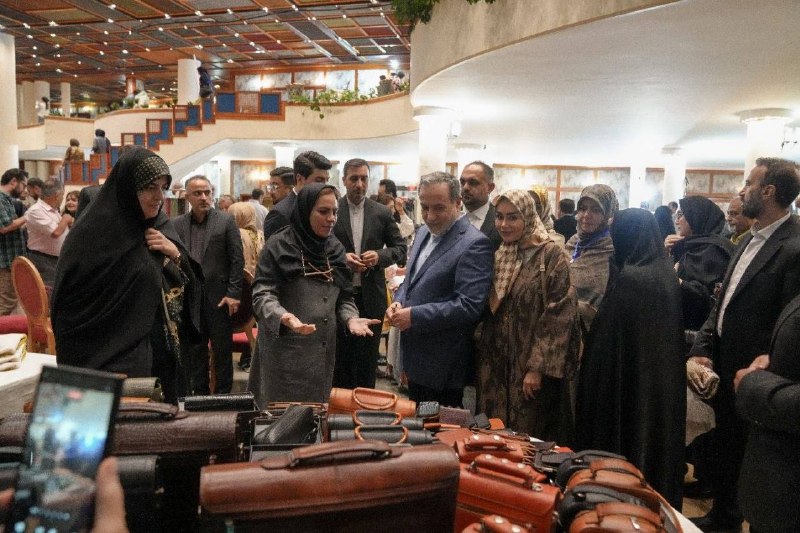
On 21 June 2026 the Political, Security and Social Vice President of the Hormozgan Governorate announced that the exhumed remains of the victims of the Shajretayba Minab school incident will be reburied on 9 July. The announcement, carried in English by Tasnim News Agency's international feed at 18:47 UTC, frames the burial as a closure ritual: a date, a ceremony, an end-point the province can plan around.
What the announcement does not yet answer is the harder question underneath it — what was exhumed, by whom, and to whose standard. Iran has used forensic exhumation as both a judicial instrument and as a political one, sometimes in the same operation. The Minab file now sits in that ambiguous space, and the July ceremony will do the work of resolving it in the public mind whether or not the technical record has been closed.
The site, the date, the frame
Tasnim's English-language item is a single paragraph. It names the Hormozgan Vice Governorate as the authority setting the date; it identifies the dead as "martyrs"; and it locates the reburial on 9 July 2026. There is no enumeration of remains, no description of the site, and no attribution of the original casualty event. That silence is itself a journalistic artefact: in Iranian state reporting, the rhetorical designation of victims as shahid — martyrs — collapses the distinction between a forensic case file and a memorial register, and it pre-answers the question of responsibility before any chain of custody has been made public.
The Minab context matters. The city sits on the southern coastal plain of Hormozgan, on the road between Bandar Abbas and the Pakistani border — a region that has historically been treated by Tehran as a security periphery, populated by Baluch and other minority communities whose grievances over infrastructure, water, and policing have produced recurring cycles of protest and repression. Events in this corridor tend to be reported first through Hormozgan governorate channels and only later, if at all, through Tehran-based national outlets. The Vice Governorate's claim on the ceremony is therefore both administrative and territorial: it is Hormozgan, not the capital, owning the narrative.
The two readings of the exhumation
There is a generous reading. Iran has, in past episodes — the 1988 mass graves of political prisoners being the most prominent — struggled visibly with the gap between judicial process and public memory. A scheduled, formally announced reburial, with remains being exhumed presumably under some forensic oversight, can be read as an attempt to convert an open site into a closed record. The ceremony on 9 July, on this reading, is the legal record becoming visible: families receive named remains, the chain of custody ends in a defined grave, and the site is released from active investigation.
There is a less generous reading. The same choreography — controlled exhumation, controlled release of remains, "martyr" framing in advance of any published finding — is also a way of pre-empting independent forensic work, fixing the political meaning of the site before the technical meaning is settled. International observers who have tracked Iranian handling of past mass-casualty sites, from the 1988 prisoner massacres to the 2019 Abadan building collapse to the Mahsa Amini protests of 2022, will recognise the pattern: provincial authorities perform the rituals of accountability; Tehran retains the editorial privilege of naming the dead and the cause; foreign journalists and independent forensic teams are kept at distance.
Both readings can be true at once. The 9 July date will close a wound for some families and defer a reckoning for others, and the only durable arbiter between those two outcomes is a public, dated, technically defensible record of what was exhumed.
The structural problem with state-led forensics
The difficulty here is not specific to Hormozgan. Across the region — Iraq, Syria, Libya, Yemen, Sudan, Iran — sites of mass civilian harm have repeatedly become battlegrounds of forensic authority. Who digs, who documents, who publishes the chain of custody, who names the dead: each of those is a political act, and each has been litigated. The international standard that has slowly consolidated around such sites — independent observers, published protocols, family notification, chain-of-custody documentation — exists precisely because state-led processes have, in case after case, served memory before they served evidence.
Iran's institutions are not uniquely opaque on this point, but the gap between the country's medical and forensic capacity, which is substantial, and its willingness to expose politically inconvenient sites to outside scrutiny, which is narrow, is unusually wide. The Hormozgan Vice Governorate has the technical ability to produce a credible chain of custody. Whether it does so before 9 July is the open question, and the announcement, as it stands, gives no indication.
Stakes and what to watch
Two near-term developments will determine which way the Minab file resolves. The first is technical: will a forensic protocol — naming the agency responsible for the exhumation, the standard applied, the documentation produced, the families consulted — be published before the July burial? The second is political: will independent Iranian civil-society monitors, lawyers, or journalists based in Hormozgan or Tehran be permitted access to the reburial site, or will the ceremony be conducted inside a press perimeter that Tasnim and provincial outlets alone define?
If both answers come back positive, the 9 July ceremony will read, retrospectively, as a rare and useful example of a state-led process producing a public record. If either answer comes back negative, the same ceremony will join a longer ledger of Iranian commemorations whose forensic content has been displaced by their political function. The date is fixed; the meaning is still being negotiated.
— Desk note: Monexus is reporting this announcement from a single Tasnim wire item and has not yet verified independent details of the underlying casualty event or the exhumation protocol. We will update when Hormozgan provincial authorities publish a procedural record or when independent Iranian outlets confirm the site, scale, and circumstances of the original incident.
Wire provenance
This editorial synthesis draws on the following public wire/social posts:
- https://t.me/tasnimnews_en/
- https://en.wikipedia.org/wiki/Minab_County
- https://en.wikipedia.org/wiki/Hormozgan_Province
- https://en.wikipedia.org/wiki/Tasnim_News_Agency