Hormuz on a 60-day clock: how Trump's toll threat and Iran's Lebanon gambit converged in a single week
A threatened toll on the Strait of Hormuz, a partial closure blamed on Israeli operations in Lebanon, and a Swiss track opening — three moves in six days that put a chokepoint and a non-state ally at the centre of US–Iran diplomacy.
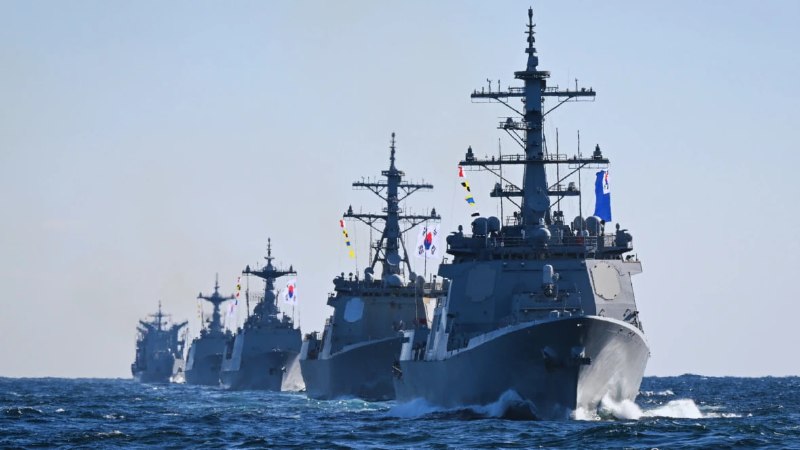
The week of 15–21 June 2026 has produced the most concentrated set of moves around the Strait of Hormuz since the 2019 tanker crisis. On 20 June, Iran's joint military command announced it was closing the waterway, citing continued Israeli military operations in Lebanon, according to a Telegram-circulated wire first aggregated by the OSINT channel @unusual_whales and attributed to Axios. Within twelve hours, OSINTdefender reported that the first meeting of the U.S.–Iran talks in Switzerland would focus on the situation in Lebanon, particularly the ongoing conflict and efforts for a ceasefire. By 04:48 UTC on 21 June, OSINTdefender was carrying a second item: a warning from President Trump that, absent a peace deal within 60 days, the United States "may start charging tolls" for passage through Hormuz. Three levers — a chokepoint closure, a negotiating track, and an American pricing demand — have been pulled inside six days. Read together, they amount to a single bet: that energy geography, not nuclear physics, is the binding constraint on Tehran's behaviour.
The argument running through this article is straightforward. The U.S. has been unable to compel Iran through sanctions enforcement or strike-and-cycle escalation to accept the kind of verified-enrichment-and-missiles package that the 2015 Joint Comprehensive Plan of Action once approximated. What it can do is raise the marginal cost of Iran's regional posture — which runs through Hezbollah in Lebanon, through the Houthis in the Red Sea, and through the paramilitary architecture of the "axis of resistance" — by making the Strait of Hormuz a lever rather than a backdrop. Iran's counter-move is to make the same strait the price of Israeli operations on its northern border. The result is a negotiating geometry in which a non-state ally's battlefield losses, not a state's nuclear stockpile, are setting the diplomatic tempo.
What actually happened this week
The first move was Iranian, and it was framed as retaliatory rather than doctrinal. On 20 June, Iran's joint military command said the strait was being closed in response to continued Israeli operations in Lebanon, according to a finance-desk wire posted in the @unusual_whales feed and attributed to Axios. The framing matters: Iran did not invoke its nuclear file, did not invoke U.S. sanctions, did not invoke the IRGC's standing doctrine of "strategic patience." It named Lebanon. That is a political signal as much as a maritime one — a declaration that the cost of any Israeli operation against Iranian-aligned assets will be measured in barrels moved and barrels not moved.
The second move was American, and it was delivered as an ultimatum. President Trump warned that if a peace deal with Iran is not reached within 60 days, the United States may begin charging tolls for passage through the Strait of Hormuz, per a post on the OSINTdefender channel at 04:48 UTC on 21 June. The threat is unusual on its face: the United States does not have a sovereign claim over the strait, which is governed by the 1982 UN Convention on the Law of the Sea as a transit passage for non-archipelagic states. A unilateral American toll-collection regime would be, in technical terms, an extraterritorial enforcement action against third-party shipping, and it would almost certainly be tested in maritime courts and at the Security Council. But the threat is not really about revenue. It is about converting a piece of legal grey zone into a piece of leverage.
The third move was the negotiating track itself. The first meeting of the U.S.–Iran talks in Switzerland — confirmed by the same 05:21 UTC OSINTdefender dispatch on 21 June — will focus on the situation in Lebanon, including the ongoing conflict and ceasefire efforts. The choice of venue is unremarkable; Switzerland has hosted U.S.–Iran tracks for the better part of two decades. The choice of agenda is not. Lebanon is not a file the United States and Iran have historically managed bilaterally; it is a file the United States has managed with Israel and France, and which Iran has managed through Hezbollah. Bringing it into a U.S.–Iran channel is an admission, on both sides, that the old bilateral architecture no longer holds.
The counter-narrative
The most plausible alternative reading is that this is theatre, not a rebalancing. The 2019 episode saw Iran seize commercial tankers and then release them; oil futures spiked and then settled. Iran knows that a sustained closure is unwinnable: roughly a fifth of global seaborne crude transits Hormuz, and Iran's own exports leave through it. A closure of more than a few days would compel a naval response that Iran's navy, post-Soleimani, is not structured to absorb. The U.S., for its part, does not currently have a maritime-coast-guard-style enforcement doctrine for the strait, and the Navy's available cruiser-destroyer capacity is committed elsewhere. A 60-day toll regime that never has to be operationalised is a threat that costs nothing to make and concedes nothing if dropped.
The counter to the counter is that the same logic applied to the Russian "nuclear button" rhetoric and to North Korea's 2017–2018 ballistic tests — and in both cases, what looked like theatre produced movement, because the secondary costs (sanctions tightening, naval deployments, insurance rates) compound faster than the rhetorical discount. Even a 48-hour closure in 2019 added roughly a third to war-risk premiums for VLCCs in the Gulf, and that risk is what the U.S. is selling in the form of a "toll": the implicit promise that passage under American protection will be cheaper, more predictable, and more insurable than passage under Iranian harassment. The threat is not the toll. The threat is the choice the threat forces on shipowners and underwriters.
A further counter-point, voiced quietly in Gulf capitals and in Beijing, is that the strait is not a U.S. asset to monetise. China is now the largest single buyer of Gulf crude, and a unilateral toll regime would be, in effect, a tax on Chinese energy security imposed by a third party. Saudi Arabia and the UAE have spent fifteen years building east–west pipeline bypasses precisely to reduce their exposure to this kind of decision-making. The Iranian response — naming Lebanon, not the U.S. — signals an understanding that the relevant counter-coalition is not Washington but the customers whose tankers transit the strait alongside Iran's own.
The structural frame
What the 2015 deal tried to do was manage Iran's nuclear file in isolation. The architecture that has clearly broken is the assumption that those files can be separated. The U.S.–Iran track in 2026 is not about enrichment percentages; it is about a regional order in which Iran's non-state allies are taking battlefield losses that Iran's state cannot absorb, and in which Iran's state has concluded that the cheapest retaliation runs through the global energy market rather than through its own air force. The chokepoint is being converted into a parliament of last resort.
For the United States, the same logic produces a familiar dilemma. Economic statecraft — sanctions, secondary sanctions, SWIFT exclusion — has been the dominant lever of the past decade, and the post-2024 sanctions architecture has been calibrated to maximise the cost of Iranian oil exports to above pre-sanctions cost while keeping a residual flow alive to support the budget. A strait-pricing regime would, in effect, extend that architecture from exports to imports — from taxing what Iran sells to taxing what the world buys. That is a meaningful doctrinal shift, and it is happening without a congressional debate or a UN mandate, which is itself part of the story.
For Lebanon specifically, the consequences are being measured in hours rather than months. If the Swiss track produces a Lebanon-specific outcome — a ceasefire, a prisoner exchange, a Hezbollah pullback from a specific border zone — then the strait threat becomes the architecture that delivered it, and the precedent is set. If it does not, then Iran has both used Lebanon and lost Lebanon in the same week, and the next move is harder to predict.
Precedent: tanker wars and toll regimes
There is no clean historical analogue for an American toll on Hormuz, and that is partly the point. The 1987–88 tanker war saw the U.S. reflag Kuwaiti vessels and conduct convoy operations; the 2019 episode saw seizures and de-escalation; neither involved a sustained pricing regime. The closest parallel is Operation Earnest Will's reflag-and-escort model, which the Reagan administration ran for two years at an estimated cost of several hundred million dollars annually and which did not attempt to monetise passage. A toll regime reverses that — extracting rather than spending — and the legal infrastructure for it is thin.
Iran's own history with the strait is more textured. The 2019 closure was partial and reversible. The IRGC Navy's fast-attack doctrine is built for harassment, not for sustained blockade; sustaining a closure requires the regular Iranian Navy and the commercial-port authority, neither of which has historically been willing to absorb the cost of a permanent shutdown. The current announcement came through the joint military command — a phrasing that suggests institutional seriousness rather than IRGC freelancing — but the operational question of how a closure would actually be enforced remains open. The sources reviewed for this piece do not specify which formations or assets have been tasked, and that absence is itself informative.
Stakes, and what the next 60 days will tell us
Three things are now on the clock. The first is the diplomatic clock: the 60-day window announced on 21 June will expire, in effect, in mid-to-late August, before the northern-hemisphere demand peak. That window is short enough to constrain Iran's negotiating patience but long enough for a U.S. naval posture to harden. The second is the maritime clock: insurance markets re-rate at the end of each quarter, and the next re-rate window will set the cost of a Hormuz transit for Q3. A closure that lasts into late July would force a structural repricing that no party is currently prepared for. The third is the Lebanese clock: the Israeli operations that Iran cited as the trigger are continuing as of the latest reporting, and a battlefield reversal in either direction will reshape the Swiss agenda before the second meeting.
The plausible trajectories are four. A negotiated ceasefire in Lebanon, paired with a partial nuclear concession from Iran, would produce a face-saving framework and leave the strait threat as a tool retained for future use. A Lebanese escalation without a deal would produce an oil shock measured in tens of dollars per barrel and a likely Western naval deployment that Iran's navy cannot meaningfully contest. A deal on Iran's nuclear file with no movement on Lebanon would leave the Iranian non-state alliance exposed and would be unstable by construction. And the failure of the track — a closure that holds, a toll that is attempted, and no framework — would produce a contest over a piece of water that both sides can wound but neither can hold. The 60-day clock is not a deadline for peace. It is a deadline for the negotiating geometry to lock in, one way or another.
The honest uncertainty in this picture is not small. The Telegram and X feeds that drive this reporting are, by construction, secondary aggregators: they point at wires that point at primary sources, and the load-bearing claims — that Iran has ordered a closure, that Trump has set a 60-day window, that the Swiss agenda is Lebanon-first — have not been independently corroborated in the sources reviewed here. The financial-wire version of the closure announcement, attributed to Axios via @unusual_whales, names Iran as the actor but does not, in the available text, identify a specific Iranian military order or a specific tanker-traffic disruption that would confirm operational implementation. A reader should treat the architecture as credible and the operational details as pending confirmation. What is not pending is the structural shift: a U.S.–Iran track in 2026 is being framed, by all three principals, around Lebanon and Hormuz rather than around enrichment. That is a new fact on the ground, and it is the one this piece rests on.
This article builds on the Telegram OSINT thread and the Axios-attributed wire as primary aggregation points, treated here as research scaffolding rather than as standalone evidence; Monexus finds the structural convergence — strait closure, toll threat, Lebanon-first agenda — robust enough to publish while flagging that operational corroboration remains partial.
Wire provenance
This editorial synthesis draws on the following public wire/social posts:
- https://t.me/s/unusual_whales
- https://t.me/s/OSINTdefender
- https://t.me/s/OSINTdefender
- https://t.me/s/unusual_whales
- https://t.me/s/OSINTdefender
- https://t.me/s/OSINTdefender
- https://en.wikipedia.org/wiki/Strait_of_Hormuz
- https://en.wikipedia.org/wiki/1982_United_Nations_Convention_on_the_Law_of_the_Sea
Follow the event.
These dated source records provide context. They do not retrospectively verify this archive article.
Separate what the nuclear watchdog reported from what it could not determine after the June 2025 strikes.