A 72-Hour Strait: How a Lebanon Strike Reopened the Hormuz Question
Iran's joint military command shut the Strait of Hormuz for the second time in a week after Israeli strikes hit southern Lebanon hours into a US-brokered truce. The standoff exposes how a single residential strike can move a fifth of global seaborne oil and the political architecture around it.
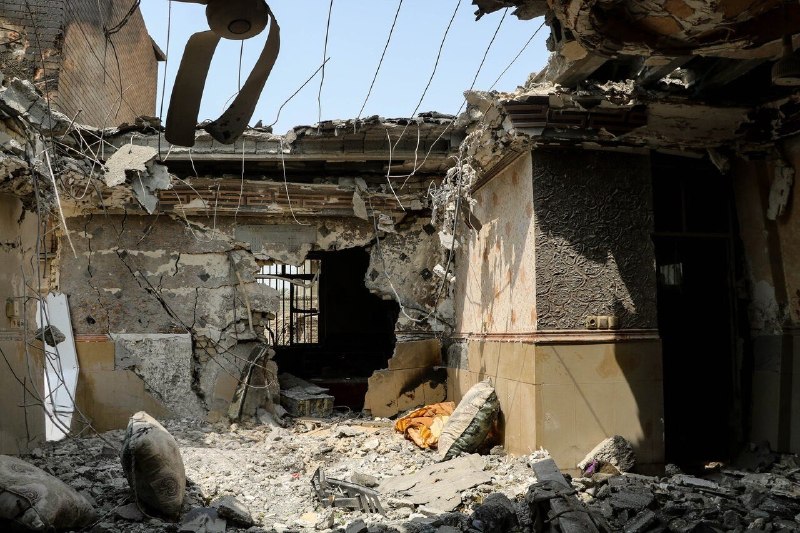
At 16:20 UTC on 20 June 2026, a residential building in southern Lebanon was hit by an Israeli airstrike that local reporting and the X account @unusual_whales, citing Reuters, said killed a family of four. The strike came hours after a US-Iran truce had taken effect. By 15:06 UTC the same day, Axios was reporting that Iran was preparing to close the Strait of Hormuz in response to Israeli operations in Lebanon. By 17:06 UTC, Iran's joint military command had declared the waterway shut, citing continued Israeli strikes. By 11:25 UTC on 21 June, the country's Tasnim news agency had set a conditional: Hormuz would stay closed until the Lebanon ceasefire held and accompanying oil waivers were issued.
The sequence is short, sharp, and unusually legible. Within roughly twenty-four hours, a tactical Israeli strike and an Iranian strategic decision converged on the narrowest point of the world's most consequential oil transit corridor. Each move was justified in its own language — Israel framing the strike as security-driven, Iran framing the closure as a response to ceasefire violation. Both claims are contestable. The mechanical fact is that the corridor through which roughly a fifth of seaborne oil normally moves is, as of this writing, contested again, and the political architecture sitting on top of it has begun to bend.
The strike and the closure, in sequence
The Reuters wire report surfaced by @unusual_whales describes a single residential building strike in Lebanon, in the late afternoon UTC of 20 June, that killed four members of a family. The strike's timing matters more than its specifics. It landed inside a truce window — a ceasefire arrangement that, according to the same reporting, was already fragile. Telegram channel CryptoBriefing picked up Iran's framing of the closure, describing it as a response to an alleged Israeli ceasefire violation. The Polymarket account flagged the same Iranian declaration in near-real time, characterising it as a closure "citing alleged ceasefire violations by Israel."
The Iranian move from strike to strait closure is a well-rehearsed lever. What is new in this episode is the speed: the gap between the Lebanon strike and the Hormuz announcement is measured in hours, not days. The lever is also being pulled in a more conditional register. Tasnim's late-morning formulation on 21 June — Hormuz will not reopen until the Lebanon ceasefire holds and oil waivers are issued — reads less like a unilateral shutdown and more like an opening bid in a negotiation that is being conducted in real time, with tanker traffic as collateral.
What the wire says, and what it does not
Western wires have led with the strike and the closure as a paired event, with the closure framed as a regional security disruption layered on top of an unresolved Israel-Lebanon situation. The Iranian framing, where it appears in Western coverage, is treated as a stated position rather than a fully explained one. The Global South wire and the Tehran-aligned outlets that picked up the story have framed the sequence the other way around: the Israeli strike as the trigger, the closure as a defensive response. Both framings reduce to the same physical facts, but they place agency on opposite sides of the equation.
There is also a quieter disagreement. The wire reports describe the closure as Iran's, executed by the joint military command. The market-facing channels — CryptoBriefing, Polymarket, and the Unusual Whales feed — present the same decision through a price-and-flow lens, with the assumption that the closure will, at minimum, push insurance and freight rates higher. The two registers are not incompatible, but they describe different things. One describes a sovereign decision. The other describes a market condition. A reader who only watches one will miss half the story.
The reporting so far does not specify the precise mechanism of the closure — whether Iranian naval assets are interdicting traffic, whether the closure is administrative, or whether it is a declared posture that traffic may or may not be testing. It also does not specify the exact scope of the waivers Tasnim is demanding as a condition for reopening. Both are load-bearing details, and both remain to be verified as the situation develops.
The corridor, in plain terms
The Strait of Hormuz is the geographic pinch point between the Gulf and the Indian Ocean. It is also the political pinch point at which Gulf energy, Israeli security policy, US-Iran diplomacy, and Asian demand for crude converge. Roughly a fifth of seaborne oil moves through it. A sustained closure is not a price event; it is a structural event. It changes who can refine what, who can ship to whom, and which governments have the political cover to tap strategic reserves or reroute cargoes overland.
The current episode is the second closure in a week, according to the wire. The first round, in the days preceding the 20 June strike, was the context in which the US-Iran truce was negotiated. That truce has now visibly failed its first stress test. The Iranian conditional — ceasefire plus waivers — is a de facto renegotiation of the truce, with the strait as the bargaining chip. This is the lever's deeper function. A single closure event is a disruption. A repeated closure event, anchored to a political demand, is a pricing mechanism. It tells the buyers of Gulf crude that the transit route carries a new risk premium, and it tells the guarantors of the truce that the cost of letting a strike go unaddressed is paid in oil-flow terms.
There is a counter-reading worth airing. The closure can also be read as a way for Tehran to demonstrate that it can interrupt flow without crossing the line into an act that would force a military response. The strike, by contrast, is a kinetic event with a finite footprint. The closure is a non-kinetic event with an indefinite one. Iranian decision-makers, in this reading, are choosing the lever that punishes the most downstream actors for the least immediate cost to themselves.
Counterpoint: who is the closure for?
The most plausible alternative read of the facts is that the closure is not principally about Lebanon at all. It is about the negotiation that produced the truce. A ceasefire that holds only as long as both sides abstain from escalation is, in operational terms, a ceasefire that one strike can break. By closing Hormuz over a Lebanon strike, Tehran is testing whether the truce's guarantors — principally Washington — are willing to enforce restraint on the Israeli side. If they are, the closure is a one-day event followed by a return to the bargaining table with new leverage. If they are not, the closure becomes the pretext for a longer disruption and a higher oil price.
The Western wire line treats the closure as a regional security disruption that complicates the truce. The Iranian framing treats it as a defensive response to a violation. The market-facing channels treat it as a price event. The structural read is that all three are true simultaneously, and that the actors involved are aware of all three. The closure is a security event, a defensive event, and a price event, and it serves different functions for each audience.
The stakes, looking forward
In the near term, the closure puts a floor under crude prices, raises insurance and freight rates for Gulf cargoes, and gives Asian importers — particularly the major Chinese and Indian buyers of Iranian and Gulf crude — a fresh reason to evaluate non-sea routes, strategic reserves, and discounted Russian barrels. For Israel, the closure raises the political cost of any further Lebanon operations inside the truce window, because every strike now has a Hormuz-shaped consequence attached. For Iran, the closure is a lever that loses potency with each use, but the current use is calibrated to be a demand, not a punishment. For the United States, the closure is a stress test of the truce's architecture — and so far, the architecture is creaking.
The deeper stake is the precedent. If a single residential strike in Lebanon can move a fifth of seaborne oil, the global economy has acquired a new coupling between local military events and global flow. The strike was tactical. The closure was strategic. The two together form a feedback loop, and the loop is now visible to every regional actor with a coast and a grievance. The next round of this loop will be the test of whether the truce's guarantors can hold it shut, or whether the corridor becomes the standing site where Israeli security policy, Iranian strategic signalling, and the transit of Gulf energy negotiate with each other in real time.
What remains uncertain
The reporting as of 21 June 2026 does not specify whether the closure is a declared posture, a naval interdiction, or a hybrid. It does not name the families killed in the Lebanon strike beyond the figure of four. It does not specify the scope of the oil waivers Iran is demanding, or which buyers would receive them. It does not say whether any tanker has yet tested the closure. The wire coverage and the Telegram/X feeds are aligned on the sequence of events but thinner on the mechanism. The next 24 to 72 hours will tell us whether the closure is a negotiating position or a regime.
Desk note: The wire led with the strike and the closure as a paired disruption. Monexus is reading them as a single feedback loop, with the Lebanese strike as the input and the strait as the lever, and treating Tasnim's conditional formulation as a negotiating position rather than a posture.
Wire provenance
This editorial synthesis draws on the following public wire/social posts:
- http://reut.rs/3QUsZZy
- https://t.me/CryptoBriefing
- https://t.me/s/CryptoBriefing
- https://t.me/s/reuters
Follow the event.
These dated source records provide context. They do not retrospectively verify this archive article.
Separate what the nuclear watchdog reported from what it could not determine after the June 2025 strikes.