Iran sets ultimatum on Lebanon ceasefire as Trump threatens harder strikes
Iran's negotiating team has formally protested to Washington over Trump's threats and warned that talks will stop unless Israel's operations in Lebanon end, leaving a fragile diplomatic track on a knife-edge.
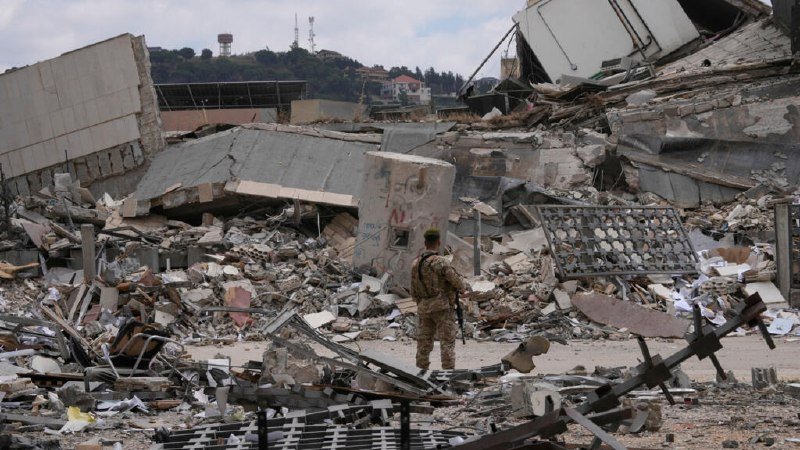
Iran's negotiating delegation has formally protested to the United States over President Donald Trump's latest threats and is reviewing options for what Iranian state-linked outlet Tasnim on 21 June 2026 called "an appropriate response," signalling that the diplomatic track between Tehran and Washington is again on a knife-edge. Tasnim, citing an informed source, said the protest was lodged against remarks in which Trump warned Iran to rein in Lebanese actors or face a harder strike than the one carried out "last week." The exchange amounts to a public ultimatum in both directions: Tehran demanding an end to Israeli operations in Lebanon as the price of continued talks, and the White House demanding an immediate curb on what Trump described as Iranian "proxies" in Lebanon.
The episode lays bare the structural problem that has bedevilled Middle East ceasefire diplomacy for the better part of two years: Israel and the United States read Lebanon's battlefield through the lens of a single armed non-state actor, while Iran and its regional partners frame the same ground as a multi-actor conflict in which any settlement has to address the territorial integrity of Lebanon itself. Each side accuses the other of conflating the dispute. Neither is wrong on the facts; both are incomplete on the framing. That gap is where negotiations keep dying.
Tehran's condition: end the war in Lebanon
The most concrete Iranian demand came from Qorbanzadeh, a member of Iran's negotiating team, who told Tasnim on 21 June 2026 that "if the war in Lebanon is not ended, the negotiations will not continue." The phrasing is categorical. It is also unusually direct from a sitting member of an Iranian negotiating delegation, which has historically preferred calibrated ambiguity. A separate Tasnim item on the same day carried the harder formulation: should Israel not withdraw from Lebanon, "all negotiations will be stopped" and Iran will enter "the phase of a tough response" with the continuation of what Tasnim called "Israel's occupation and crimes."
The language is significant for what it does not say. It does not demand a prisoner exchange, a sanctions package, or a verification regime — the usual furniture of US-Iran diplomacy. It ties the entire channel to a single variable: Israeli military posture on Lebanese territory. That is a diplomatic gamble. It gives Washington an obvious off-ramp — push Israel to a declared halt in operations and the talks survive — but it also gives Iran's domestic critics, who already view negotiations as a concession, a clean exit ramp of their own: walk away and blame Washington and Tel Aviv.
The American warning: "we'll hit Iran very hard"
Trump's intervention, posted publicly on 21 June 2026 and circulated by Telegram monitoring channels including rnintel, was characteristically compressed: "Iran must immediately stop their highly paid PROXIES in Lebanon from causing trouble. If they don't, we'll hit Iran very hard again, just like we did last week, only harder!!!" The reference to strikes "last week" is the load-bearing claim. It anchors the threat in a recent kinetic action against Iranian targets that Tehran and Washington have both, in different registers, confirmed in public messaging without disclosing scope, scale, or target list.
That opacity is doing real work. Without a public accounting of what was struck, by whom, and with what effect, both governments can claim what they wish. Iran's negotiators can argue they are negotiating under duress, justifying a hardened line. The White House can argue that prior strikes set the precedent for further escalation, justifying the threat. The Lebanese public, whose country is the terrain on which this dispute is being fought, gets none of that clarity.
Why the framing matters
Western wire coverage of the Lebanon file has tended to fold Iranian-aligned armed groups into a single undifferentiated threat category, while Iranian state media reads every Israeli action in Lebanon through the language of occupation and civilian harm. Both framings contain truth and elide inconvenient facts. Lebanon's actual battlefield is plural: multiple armed formations, overlapping zones of control, a state security apparatus that is itself contested, and a civilian population whose displacement figures are reported in tens of thousands without a consolidated official tally in the source material available to this publication. Treating the dispute as a bilateral US-Iran argument obscures that plurality; treating it purely as a Lebanese internal matter obscures the external sponsorship that materially shapes every faction's staying power.
The diplomatic record of the past decade suggests the more honest frame is the boring one: a multi-sided conflict in which two external patrons — Washington for Israel, Tehran for Lebanese armed factions — hold disproportionate leverage over the duration and intensity of fighting, but in which neither patron commands the actors on the ground with the certainty their public rhetoric implies. Iran's conditional commitment to continued talks is a function of that reality. So is Trump's resort to threats rather than deals. Neither side currently believes it can deliver the other's preconditions.
Stakes and the next ten days
If the Iranian condition holds, the operative question is whether Washington can or will move Israel to a publicly verifiable halt in Lebanon within a window short enough to keep Tehran at the table. Israeli security concerns — hostage situations, cross-border fire, the demonstrated capacity of Lebanese armed factions to threaten northern Israeli communities — are legitimate and remain the operative frame for any Israeli government's decision calculus. Any halt will be conditioned on guarantees that those threats are addressed, not on a unilateral Iranian request transmitted through Tasnim.
If the American threat holds, the operative question is what "harder" means in practice — a wider target set, deeper penetrations, or a sustained campaign. The source material does not specify. What it does establish is that both sides have now publicly placed their credibility behind incompatible demands inside a 24-hour window, and that the mediating structure around them — the Swiss channel referenced in Tasnim's reporting, the back-channel traffic that surfaces only in fragments — is the only thing between a negotiation and an exchange of fire. The diplomatic clock, in plain terms, is the operative battlefield. Whoever moves first will pay a domestic cost; whoever moves last may not get the chance to move at all.
What remains genuinely uncertain is whether Iran's negotiating team speaks for the full Iranian system on this issue, or whether — as has happened in past rounds — a public ultimatum from Tasnim is partly theatre designed to harden Tehran's position before any face-to-face contact resumes. The source items do not resolve that question, and the pattern of recent years suggests the answer is usually both at once.
How Monexus framed this: the wire services are leading with Trump's threat; Iranian state media is leading with the conditional ceasefire demand. Monexus treats both as primary statements by primary actors, and reads the gap between them as the story.
Wire provenance
This editorial synthesis draws on the following public wire/social posts:
- https://t.me/tasnimplus
- https://t.me/tasnimplus
- https://t.me/wfwitness
- https://t.me/rnintel
- https://t.me/tasnimplus
Follow the event.
These dated source records provide context. They do not retrospectively verify this archive article.
Separate what the nuclear watchdog reported from what it could not determine after the June 2025 strikes.