Iran walks out of Lucerne: how a Trump threat collapsed the sixth round
Iran's negotiating delegation left the Lucerne talks on 21 June 2026 after President Trump's threats. The collapse exposes how thin the channel between Washington and Tehran has become.
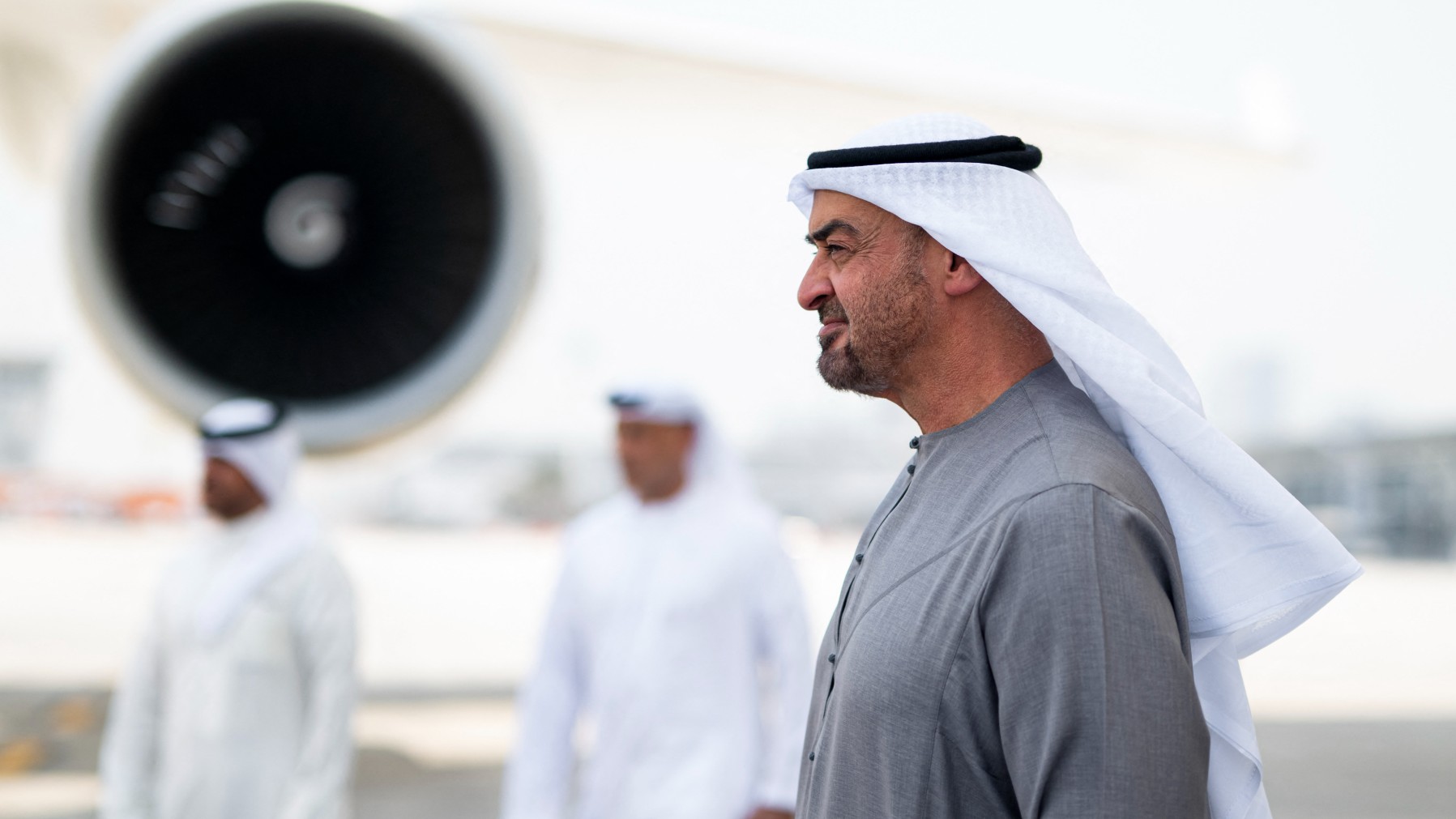
The Iranian delegation walked out of the sixth round of indirect nuclear talks with the United States in Lucerne, Switzerland, on the afternoon of 21 June 2026, after a flurry of threats from President Donald J. Trump in the preceding hours. The walkout, first reported by Iran's Tasnim News Agency via sources close to the negotiating team and corroborated in real time by the open-source monitor OSINTdefender and outlets including The Cradle, marks the most serious rupture of the channel since negotiations resumed earlier this year. The episode lays bare a structural problem at the heart of the present track: when threats and talks travel in the same news cycle, the latter cannot long survive the former.
What began as a quiet Sunday in central Switzerland ended with a senior Iranian delegation physically leaving the venue in protest, a formal protest note delivered to the American side, and a negotiating calendar that is, for the moment, in suspension. The collapse carries consequences that run well beyond one weekend of diplomacy — it touches the question of whether the United States and the Islamic Republic can sustain any kind of managed rivalry at all.
What happened in Lucerne
The talks were being held under Omani mediation, the sixth round of a process that began earlier in 2026 with the explicit goal of capping Iran's uranium enrichment, constraining its missile programme, and re-establishing some form of inspections regime after the formal collapse of the Joint Comprehensive Plan of Action (JCPOA) framework. The session in Lucerne was understood, on the eve of the meeting, as the most consequential yet.
According to Tasnim News Agency, citing a source close to the Iranian negotiating team, the Iranian delegation left the site of the talks in protest against threats issued by President Trump in the hours preceding the walkout. The Cradle, reporting the same Tasnim wire at 16:35 UTC, framed the Iranian departure as a direct response to those threats. Within minutes, OSINTdefender, the open-source intelligence channel, observed on the platform that the talks appeared to be "under threat of breaking down, following U.S. President Donald J. Trump's direct threats against the Iranian delegation."
By 17:01 UTC, Tasnim reported that Iran's delegation had formally protested to the United States and was reviewing options for an appropriate response. By 17:08 UTC, the same agency, again citing a knowledgeable source, was reporting that Trump's threats had led to the suspension of the talks in Switzerland and that the Iranian side had made clear its displeasure. By 17:10 UTC, Tasnim's English service was reporting, via a source close to the negotiation team, that the Iranian delegation had left the site of the talks in protest. The sequence is unusually crisp: walkout, formal protest, suspension notice, all inside roughly forty minutes.
The timing matters. Threats and walkout do not coincide by accident. A negotiating team does not physically vacate a venue mid-session over an offhand remark; it does so when a public signal from the principal on the other side has raised the political cost of staying past the cameras. The Iranian delegation's calculation appears to have been that remaining in the room after the threats — whatever their substantive content — would convert a tactical pause into a strategic concession. Leaving was, in that sense, the disciplined move.
The threat itself — and the question of what was actually said
The thread context does not preserve the exact text of the threat attributed to President Trump. Reporting from Tasnim, The Cradle, and OSINTdefender consistently refers to "threats" in the plural, and consistently attributes them to President Trump personally, but no source in the immediate record carries the verbatim language. That is a gap worth naming, because the policy implications of the episode depend materially on whether the threats were a familiar rhetorical posture, a new red line, or a substantive ultimatum tied to the substance of the talks.
What can be said with the evidence in hand: the Iranian delegation treated the statements as crossing a threshold. The fact that they issued a formal protest note through the Omani mediator — rather than simply leaving quietly — suggests the Iranian side wanted the threats on the record. That is a deliberate choice. In diplomatic practice, the lodging of a formal protest is itself a tool: it preserves the right to cite the offending statement later, and it signals that the channel is being held open only on terms.
The American side has not, in the available sources, publicly characterised the President's remarks or confirmed the Iranian account. The asymmetry is itself worth noting. Western-wire reporting on the collapse, when it arrives, will likely focus on the question of whether Iran exaggerated a routine statement into a crisis; the Iranian state-aligned record, by contrast, will emphasise the gravity of the threat as justifying the walkout. Both framings serve the principals involved. The reader is best served by holding both simultaneously.
The structural problem: threats and talks do not coexist
The deeper story is structural. A negotiating track of this kind — indirect, mediated, technical — survives only when both sides can decouple their public signalling from their private bargaining. The American side has, across multiple administrations, struggled to maintain that decoupling in the Middle East. The Iranian side, for its part, treats any public threat from a US President as a negotiating fact, not a negotiating backdrop. When Trump issues threats in the hours before a session, the Iranian delegation has little room to ignore them: to do so would invite accusations at home that Tehran had bargained away its dignity for the price of a meeting.
This is the recurring pathology of the Trump-era channel with Tehran. Threats are treated by the American side as leverage; by the Iranian side as a precondition. Both readings can be true at once, which is exactly why the channel keeps seizing. There is no neutral arbiter, no shared timeline, and no enforcement mechanism for statements made between rounds. The Omani mediators can carry messages in both directions, but they cannot launder threats into posture.
The structural pattern extends beyond personalities. Across the post-JCPOA years, every round of US-Iran talks has had to navigate a domestic political economy on each side that punishes softness and rewards confrontation. On the American side, any deal that does not contain an unequivocal Iranian climbdown is politically indefensible to large parts of the foreign-policy establishment; on the Iranian side, any deal that visibly bends under American pressure is politically indefensible to large parts of the security establishment. The narrow corridor where a deal is simultaneously sellable in Washington and in Tehran is, by construction, very narrow indeed.
What is actually at stake
If the talks do not reconvene quickly, the consequences are concrete. Iran continues to enrich uranium at levels and with technical sophistication that the post-JCPOA sanctions regime was specifically designed to constrain. The International Atomic Energy Agency's access to Iranian facilities, already reduced, will likely narrow further. The regional pressure cooker — Iranian-aligned assets in Lebanon, Iraq, Yemen, and the wider Levant — operates under a different logic from the nuclear file, but it shares the same diplomatic atmosphere. A collapse in Lucerne does not cause a regional escalation by itself, but it removes the off-ramp that makes such escalation less likely.
For the United States, a sustained breakdown has costs that the public record tends to under-weight. Without a negotiations channel, the policy default reverts to maximum pressure — sanctions, isolation, the long bet that Iran's economy will eventually force a more compliant posture. That bet has now been running for the better part of two decades without producing the desired result. It also forecloses the possibility of even limited confidence-building measures, such as the release of detained nationals or the deconfliction of regional maritime traffic, that a talks channel can quietly carry.
For Iran, the immediate calculation is whether to allow the channel to reopen on its terms — which would require a public or semi-public American walk-back of the threats — or to use the breakdown as a closing of the door for an extended period. The Tasnim reporting emphasises that the Iranian side is "reviewing options for an appropriate response," a phrase that implies a deliberate, calibrated decision rather than a reactive one. That is consistent with a state that, whatever its internal pressures, retains a degree of strategic patience on its nuclear programme.
The narrower read, and the wider one
A narrower read of the episode is that this was a weekend flare-up, the kind that diplomatic routines absorb: cooler heads prevail, channels reopen within days, both sides issue statements about the importance of dialogue, and the substantive table reappears. There is precedent for that kind of recovery, including in the present track.
A wider read is that the channel has now been demonstrably shown to be hostage to the public signalling of one principal on one side. If a single statement from the American President can empty the Iranian chair, then the channel is not in fact a channel — it is a permission structure that the American side can revoke at will. From the Iranian perspective, that is not a negotiating channel at all; it is a delay in the resumption of pressure.
Which read prevails depends on what happens in the next 72 hours. If the Omani mediators succeed in convening the parties at a lower political temperature — a technical session, a discreet bilateral, a quiet walk-back — the track survives. If the next news cycle carries another round of threats, the track is functionally dead for this round, and the question becomes when, not whether, the post-JCPOA standoff hardens into something more dangerous.
This publication framed the collapse through the Iranian state-aligned wire first, then cross-checked against open-source monitoring, in keeping with the standard practice of reading the principals' own statements before the secondary commentary accumulates around them.
Wire provenance
This editorial synthesis draws on the following public wire/social posts:
- https://t.me/englishabuali/1178
- https://t.me/englishabuali/1177
- https://t.me/wfwitness/
- https://t.me/osintlive/
- https://t.me/TheCradleMedia/
- https://t.me/thecradlemedia/
- https://en.wikipedia.org/wiki/Joint_Comprehensive_Plan_of_Action
- https://en.wikipedia.org/wiki/2025%E2%80%932026_Iran%E2%80%93United_States_negotiations
Follow the event.
These dated source records provide context. They do not retrospectively verify this archive article.
Separate what the nuclear watchdog reported from what it could not determine after the June 2025 strikes.
- https://t.me/englishabuali/1178
- https://t.me/englishabuali/1177
- https://t.me/wfwitness/
- https://t.me/osintlive/
- https://t.me/TheCradleMedia/
- https://t.me/thecradlemedia/
- https://en.wikipedia.org/wiki/Joint_Comprehensive_Plan_of_Action
- https://en.wikipedia.org/wiki/2025%E2%80%932026_Iran%E2%80%93United_States_negotiations