Tehran sets Lebanon as the headline of its Switzerland talks with Washington
On 21 June 2026 Iran's foreign ministry says Israeli operations in Lebanon will be the lead item on the table in Muscat–style talks in Switzerland, with the nuclear file held hostage to implementation of a previously signed memorandum.
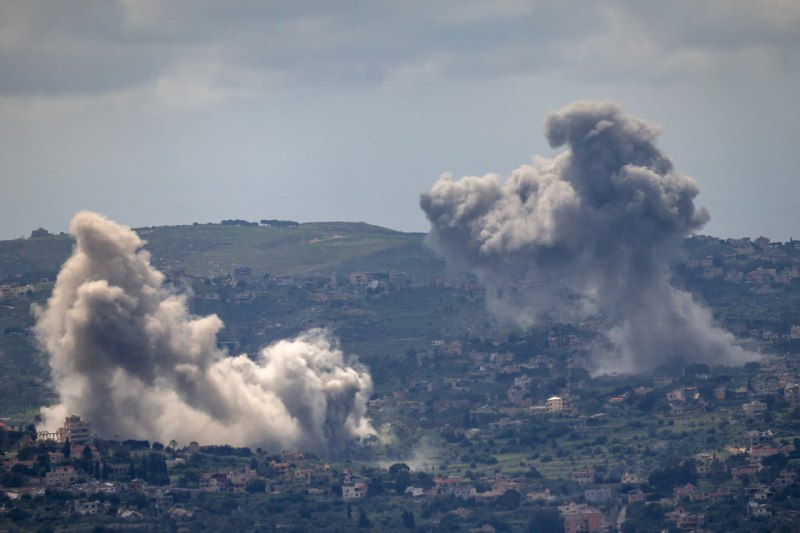
At 10:12 UTC on 21 June 2026, Iran's Foreign Ministry spokesperson Esmail Baghaei walked the world's correspondents through the script for a one-day meeting in Switzerland. The headline item, he said, would not be the file Western capitals have spent two decades trying to keep at the top of the agenda: Iran's nuclear programme. It would be Israeli attacks on Lebanon. The choreography of the day — bilateral talks in the morning, an expanded-format session in the afternoon, a final communiqué expected by evening — is familiar from previous rounds. The substance has been rearranged.
That reordering is the story. For the first time in this negotiating cycle, Tehran has publicly told mediators and counterparts that the security of a neighbouring state, under daily bombardment, takes precedence over centrifuges, enrichment percentages and the architecture of a long-term deal. It is a tactical signal and a structural one. Tactically, it ties the slow-moving nuclear file to a fast-moving military crisis. Structurally, it asserts that the regional order Iran says it is fighting to defend cannot be discussed in compartments.
What was actually said in Geneva–Muscat–style talks
The day opened with the Iranian delegation travelling to the venue, according to the official account broadcast by Press TV from 08:55 UTC. Baghaei confirmed the format: a single day, morning bilaterals, an afternoon session with broader participation, and a closing statement due before delegates disperse. Two substantive points dominated the briefing.
First, the order of business. "The main focus of the first day of negotiations with the United States in Switzerland will be Israeli attacks on Lebanon," Baghaei said, in the wording carried by The Cradle's Telegram channel at 10:12 UTC. The phrasing matters. A focus on the first day is not the same as a focus on the file; it says Tehran intends to test, in real time, whether Washington has the leverage to constrain Israel even on a single 24-hour negotiating window.
Second, the conditionality. Baghaei invoked Clause 13 of the memorandum of understanding that Iran and the United States have been operating under, telling the Watchers Without Frontiers wire at 09:51 UTC that Tehran is "determined to closely monitor implementation of the commitments contained in the war-ending memorandum of understanding." The English-language summary posted by the Abu Ali channel at 09:34 UTC sharpened the point: under Clause 13, the opening of negotiations on a final agreement is conditional on implementation. In other words, Iran is reading its own framework as a sequence — a war must end, and the deal that ended it must be honoured, before the next deal can be discussed.
The Intel Slava channel, summarising IRNA at 09:05 UTC, framed the position more bluntly: the Lebanon conflict is "the main topic" of the day. Five separate channels, three Iranian and two pan-Arab outlets, converged on the same message within a 67-minute window — a degree of message discipline that, in itself, is part of the signal to Washington.
The counter-narrative from Washington and Tel Aviv
None of the items in the wire carried a direct on-record response from the State Department, the White House, or the Israeli Prime Minister's Office. That absence is itself the second story. Western and Israeli outlets are not, in this round, the ones defining the day's agenda; they are reporting on a frame Iran has set.
The structural question is whether that frame is being accepted, contested, or merely noted. Israeli security concerns, including continued rocket and drone fire into its territory and the status of hostages held since 2023, are legitimate and weighty. They are not, however, present in the publicly available record of the Iran–US channel on 21 June 2026, because the channel in this round runs through Tehran and Washington, not through Tel Aviv. If Israel intends to shape the Swiss agenda, it has not yet done so on the record that this publication could verify. The bench is therefore narrow: what we know is what Iranian spokespeople have chosen to put on it.
A second caveat belongs on the page. The Press TV account that sets out the meeting format is a state outlet reporting on its own government's framing. The Cradle is a Beirut-based outlet with a clearly stated editorial line sympathetic to the Axis of Resistance. The Abu Ali channel and Watchers Without Frontiers carry the same official Iranian text in different translations. None of this disqualifies the reporting — but it does mean that the wire of 21 June 2026 is, in this case, a one-flag wire. The counterpoint would normally come from a State Department briefing, a Reuters ticker, or an Axios scoop. As of the timestamps above, none of those had been published. That is a verifiable gap, not an inferred one.
Why sequencing matters more than substance
Sequencing is, in this kind of negotiation, almost everything. Two countries can agree on the destination and still fail to walk there if they cannot agree on which step to take first. The June 2026 round crystallises a sequencing dispute that has been building since the war-ending memorandum was signed.
Iran's reading: implement first, negotiate the next layer second. The argument is procedural and political. If the war that justified the emergency diplomacy has not actually ended — if bombardments of Lebanon continue, if the political understandings that stopped the shooting in one theatre are being violated in another — then the trust on which a longer deal rests has not been built. In Tehran's framing, asking Iranian negotiators to discuss enrichment levels while Israeli aircraft are operating over Lebanese towns is asking them to negotiate a ceiling on a house whose foundation is being shaken.
The US reading, inferred from the choice of venue and the single-day format, is the opposite: keep the technical file moving, use the rhythm of meetings to contain escalation, and treat the war-ending memorandum as a starting point rather than a precondition. The single day in Switzerland is consistent with that approach — short enough to manage, structured enough to produce a deliverable, narrow enough to avoid forcing a decision on Lebanon.
The structural pattern is familiar from earlier US–Iran episodes. The technical file moves fastest when both sides can defer the political one. It stalls when either side concludes that the cost of deferral has become higher than the cost of confrontation. By publicly tying the two together, Tehran is raising the cost of deferral — and doing so on a platform, an official spokesperson's daily briefing, that the US side cannot simply ignore.
The Lebanon variable
The Lebanon file is the variable that makes this round different from the standard nuclear choreography. The wire items do not specify the scale or tempo of current Israeli operations, and this publication has not independently verified casualty figures for 21 June 2026 from the source material. What the wire does establish is that Iranian diplomacy is publicly naming Lebanon as the lead item on a day in which the United States and Iran are face to face. That is new in this cycle.
There are three plausible readings. The first is substantive: Israel and the United States have, in private, accepted that a Lebanon settlement is now on the table, and Tehran is publicly ratifying that. The second is procedural: Tehran is signalling to Washington that it will not allow the next round to be solely about uranium, and it is using Lebanon as the lever. The third is rhetorical: the framing is calibrated for domestic Iranian audiences and for the Axis of Resistance, demonstrating that the diplomatic track has not abandoned the regional file. Each reading implies a different trajectory. The first opens a wider negotiation. The second produces a stalemate. The third produces a communiqué that, in substance, says little and changes little. The wire of 21 June 2026 cannot yet distinguish between them. What it can say is which one Iran prefers: the second, dressed in the language of the first.
The Israeli position, where verifiable in the wire, is that security concerns in the north remain acute and that operations reflect an active threat environment. The sources available to this publication on 21 June 2026 do not include an Israeli readout of the Swiss meeting. That absence is itself an indicator: the talks, in this round, are being framed in capitals other than Tel Aviv, and Israel is being asked to respond to a frame rather than to set one.
Stakes over the next 72 hours
The next three days will narrow the field. If the Swiss meeting produces a joint statement that names Lebanon as a follow-on file, the sequencing has shifted towards Tehran. If the statement confines itself to procedural language and a date for the next round, the sequencing holds and the technical file remains the engine. If no statement is issued at all, the most likely reading is stalemate — a single day in Switzerland that ended the way single days often end, with both sides claiming the format as a success and the substance as deferred.
The regional stakes are not symmetrical. For Iran, a sequenced outcome that ties Lebanese security to the diplomatic track is a victory of framing even if the underlying file moves slowly. For the United States, an unsequenced outcome that keeps the technical conversation alive is the baseline preference. For Israel, the question is whether the framework being built in rooms it does not occupy is one it can live with — a question that, in this wire, has not yet been answered out loud. For Lebanon, the question is older and less diplomatic: whether the time bought at the table translates into hours not spent under bombardment. The wire of 21 June 2026 cannot answer that question. It can only record that the question has, for the first time in this cycle, been put at the top of the page.
Desk note: The Cradle, Press TV, IRNA via Intel Slava, and the two pan-Arab Telegram channels in the thread converged on a single Iranian framing within a 67-minute window. Western and Israeli outlets had not, at the time of writing, published a counter-framing. This article reflects that asymmetry rather than smoothing it over.
Wire provenance
This editorial synthesis draws on the following public wire/social posts:
- https://t.me/thecradlemedia
- https://t.me/wfwitness
- https://t.me/englishabuali
- https://t.me/intelslava
- https://t.me/presstv
Follow the event.
These dated source records provide context. They do not retrospectively verify this archive article.
Separate what the nuclear watchdog reported from what it could not determine after the June 2025 strikes.