Israel's defence minister tells troops in Lebanon there are 'no restrictions' on threat response — and that Israel will not withdraw from a security zone
Israel Katz's public framing — that troops in southern Lebanon face no operational limits and that a security zone is now permanent — sharpens a months-long posture war between Jerusalem and Beirut, with consequences for ceasefire diplomacy, displaced civilians and the regional balance of deterrence.
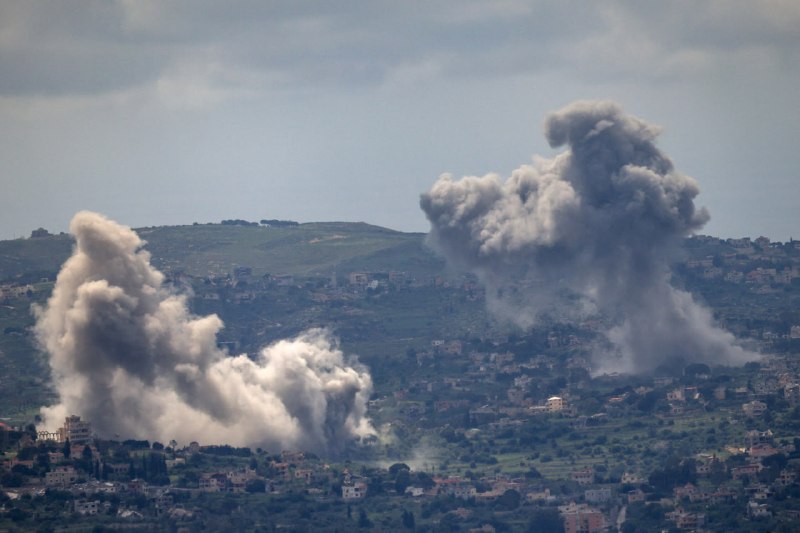
On the morning of 21 June 2026, Israeli Defence Minister Israel Katz walked reporters through a message that left little to translation. "There has never been, and there is currently no restriction on [Israeli] soldiers in Lebanon from acting to eliminate threats," he said, adding, in remarks carried by Reuters, Middle East Eye and a clutch of Telegram channels monitoring the border, that Israel would not withdraw from a southern Lebanese security zone it has occupied in some form since late 2024. The same line — "no restrictions" — was repeated on Sprinter and Intelslava war-monitoring channels within the hour. It is a posture statement, not a policy paper. Read against eight months of cross-border fire, broken ceasefires and stalled diplomacy, however, the posture is the policy.
The story this week is not a single incident but a sentence. It clarifies, in plain language, what Israeli commanders in southern Lebanon have been told to expect when they engage Hezbollah and other armed actors in the villages, hills and olive groves north of the border. It also clarifies what residents of southern Lebanon — and the diplomatic interlocutors shuttling between Beirut, Jerusalem and Washington — should expect in the months ahead. This article traces what Katz said, when, and to whom; how it lands against the operational record on the ground; how the Lebanese state and its regional backers have read it; and what it implies for the still-fragile ceasefire architecture that is supposed to govern the line.
The statement, in context
Katz's remarks came during a Sunday press appearance timed to overlap with the prime minister's weekly cabinet meeting, the slot Israeli ministers use to anchor the government's messaging for the coming week. According to a Reuters wire alert posted at 12:15 UTC on 21 June 2026, the defence minister said Israeli soldiers in Lebanon "are free to take action if under threat," and that this was not a new directive but the standing rule. Middle East Eye's parallel report, timestamped 12:33 UTC, carried the longer formulation — "no restriction on soldiers acting against threats in southern Lebanon" — and a second clause that the security zone itself would not be relinquished. Both lines were then relayed by Sprinter (12:17 UTC) and Intelslava (11:44 UTC), war-monitoring channels that translate Israeli and Russian-language briefings for English-language audiences.
That three-outlet convergence is itself notable. Katz's office has spent the last several months oscillating between the language of restraint — used in Washington during ceasefire negotiations — and the language of permanent presence, used in domestic political settings and in conversations with settlers and southern Lebanese Christian interlocutors opposed to Hezbollah. The 21 June statement is the second register, restated without the first. The security zone, Israeli officials now argue publicly, is not a transitional buffer to be folded back into Lebanese sovereignty; it is a standing arrangement that the Israel Defense Forces will patrol and that the defence minister intends to defend politically.
For soldiers on the ground, the practical effect is the question. The Israeli force in southern Lebanon is concentrated around a series of hilltop positions and crossing points that have been the locus of the deadliest incidents of 2025 and 2026. A standing "no restrictions" rule on engaging perceived threats, in terrain where armed non-state actors and ordinary villagers are difficult to distinguish at distance, narrows the room for de-escalation that field commanders previously retained. It also narrows the room for the United States and France — the two external guarantors of the November 2024 ceasefire understanding — to insist on a pause for diplomacy.
The Lebanese read, and the regional counter-narrative
In Beirut, the statement landed the way Beirut tends to receive Israeli declarations of permanence: as confirmation of an intention long alleged. Lebanese state-aligned outlets have argued for two years that the so-called buffer is a creeping annexation, structured around checkpoints, demolition orders and night raids rather than a formal border adjustment. They note that successive Israeli governments have used the language of "temporary security needs" to justify a footprint that has, in practice, expanded rather than contracted. On this reading, Katz's plain-spokenness is welcome: the euphemism has been retired.
Hezbollah itself, severely degraded as a conventional fighting force after the 2024 conflict and the assassination of much of its senior cadre, has nonetheless retained the capacity to fire rockets and anti-tank missiles into northern Israel. The argument from the group's political wing — and from its patrons in Tehran and its allies in Damascus — is that Israeli "no restrictions" rhetoric is precisely the kind of standing provocation that makes a return to a managed border impossible. The structural claim is that an army operating under a self-described unlimited threat-response doctrine, against an opponent that retains anti-tank and rocket capabilities, will produce incidents at a rate that diplomacy cannot outpace.
The counter-read, articulated quietly in Western capitals and more loudly in Israeli press commentary, is that the absence of clear rules of engagement was precisely what allowed Hezbollah to re-establish positions in southern Lebanese villages in 2025, contributing to the deadliest single incident of that year. From this vantage, Katz's directive is less a provocation than a correction: a public message to Israeli field commanders that they will not be second-guessed in Jerusalem for engaging armed men in a war zone. The dominant framing in mainstream Israeli coverage is that restraint, in 2025, was exploited. The Lebanese framing, equally sincerely held, is that "no restrictions" in 2026 will produce the next round of civilian casualties on the Lebanese side and the next round of rocket fire on the Israeli side.
Both reads rest on the same operational fact: a thin, contested line, with a long and recent history of escalation, governed until now by a set of unwritten understandings rather than a signed arrangement.
Why the security-zone language matters now
The most consequential half of Katz's statement is not about soldiers' rules of engagement. It is about geography. "We will not withdraw from the security zone in Lebanon," the defence minister said, in remarks carried by Sprinter. That sentence reframes the entire ceasefire architecture.
The November 2024 understanding, brokered in part by the United States and France, rested on the premise that Israeli forces inside Lebanon were a temporary presence — the price of dismantling Hezbollah military infrastructure near the border, with a defined timeline for staged withdrawal. That timeline was never published, but successive Israeli governments committed to it verbally to their American and French counterparts. The security zone, in this framing, was an interim arrangement.
What Katz is now saying publicly is that the arrangement is no longer interim. The zone, in his telling, is a permanent feature of the border — to be defended, expanded if necessary, and defended politically against any future government that might contemplate a withdrawal. In Israeli domestic terms, this is a bid to close off a debate that has simmered on the right and the centre-right for two years: the argument that returning southern Lebanese territory to UNIFIL and the Lebanese Armed Forces is a strategic error, because neither has the capacity to keep Hezbollah from re-infiltrating.
In Lebanese and wider regional terms, it is a statement of intent that no Arab capital, and no Western guarantor, can afford to treat as routine. A permanent Israeli security zone inside Lebanon, even one defined as a series of forward positions rather than a contiguous occupation, reopens a question Lebanon's political class has spent the post-2024 period trying to close: the question of who, in fact, governs the strip of territory north of the border.
The structural frame, in plain terms
A few patterns are worth naming without dressing them in theory. First, the language of "no restrictions" in counter-insurgency doctrine is rarely literal. It is a signal to two audiences at once: to the field, that the political leadership will not publicly reverse them in the event of a controversial incident; and to the adversary, that the cost of probing the line has been lowered. The signal works, in either direction, by changing the calculation on the other side of the border. Whether the calculation on the other side changes in the direction Israel wants is the open question.
Second, declarations of permanence inside a contested border strip tend to be self-fulfilling, but not in the direction the declaring party intends. A declared permanent presence provokes a permanent resistance posture; the resistance posture requires the declared presence to harden; the hardened presence requires a larger diplomatic and financial footprint to sustain. Eighteen months ago, the security zone was a tactical expedient. By Katz's telling, it is now a strategic asset. The risk is that, in the interval, it has also become a strategic liability — a thing that needs to be defended rather than a thing that buys time.
Third, the diplomatic architecture that managed the post-2024 period was always a verbal architecture. There was no signed agreement, no UN Security Council resolution, no treaty text. The ceasefire held, when it held, because both sides chose to keep the escalatory steps available without taking them. Statements of the kind Katz issued on 21 June do not, by themselves, break a verbal architecture. They do, however, raise the cost of the next verbal commitment for the other side. If Israel will not commit to withdrawal, why would Hezbollah commit to demilitarisation south of the Litani? The question answers itself.
Stakes, and what to watch next
The immediate stake is the village-level tactical picture in the seven-or-so kilometres of southern Lebanon where Israeli forces and armed non-state actors most often come into contact. If field commanders take the minister at his word — and they generally do, because the political cost of contradicting a sitting defence minister is high — the rate of engagement incidents is likely to rise, and the rate of civilian casualties on the Lebanese side, which has been the politically explosive metric in 2025 and 2026, is likely to rise with it. The most plausible first-order consequence is a renewed push from Beirut, via Paris and Washington, for a written arrangement that codifies a withdrawal timeline. The most plausible Israeli response is to refuse, on the ground that codification would require the government to commit to a date it has decided not to commit to.
The medium-term stake is the regional balance of deterrence. Hezbollah's capacity to project force into northern Israel is reduced, but not eliminated. The group's patron in Tehran has, in recent months, used Iraqi and Syrian intermediaries to keep lines of communication with the Lebanese front open. A declared permanent Israeli presence on Lebanese soil, justified by an Iranian-aligned armed group just across the border, will be cited in Tehran, Baghdad and Damascus as evidence that the existing security order is not viable. The counter-claim from Jerusalem — that the existing security order is the only thing keeping a wider war at bay — is not unreasonable, but it is the kind of claim that, repeated often enough, becomes its own provocation.
The longer-term stake is the precedent. A permanent security zone in southern Lebanon, defended publicly by an Israeli defence minister, in a year in which Israeli forces have also maintained a sustained presence in parts of the West Bank and engaged in repeated operations in Syria, establishes a working doctrine: that forward occupation, justified by security necessity, is the default Israeli posture in 2026. That doctrine will be studied in capitals from Khartoum to Jakarta. It will not be studied with admiration.
What remains genuinely uncertain is whether the language is, in fact, the policy. The Israeli security cabinet has, in past cycles, used maximalist public statements as cover for quiet negotiations, and vice versa. The 21 June statement sits on a Sunday and on the eve of a busy diplomatic week. Whether it is the opening bid of a new phase, or the boilerplate of an old one, the next ten days of incident reports from south Lebanon will tell. Monexus will read them as they arrive.
This article uses the public-statement register Israeli ministries adopt for Sunday press availabilities. The wire-level reporting from Reuters and Middle East Eye carries the operative quotes; the Telegram channels relay but do not originate them. The structural reading here is this publication's own.
Wire provenance
This editorial synthesis draws on the following public wire/social posts:
- https://x.com/MiddleEastEye/status/...
- https://x.com/sprinterpress/status/...
- https://x.com/Reuters/status/...
- https://t.me/intelslava/...