Israel's Lebanon Bind Reads Less Like Strategy Than Exhaustion
Two of Israel's loudest newspapers have spent the same morning warning that the country's Lebanon posture no longer reads as a plan. The framing is unusually candid, and the timing is not accidental.
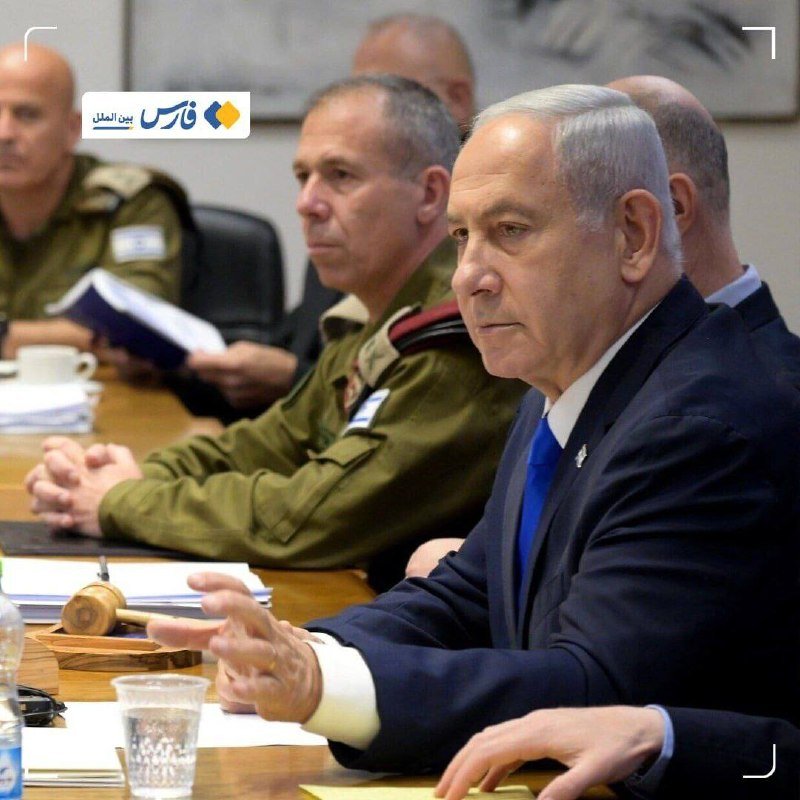
On 21 June 2026, two of the Hebrew press's most establishment voices arrived at the same conclusion within twenty minutes of each other, and did so on the front of the morning cycle rather than in the back pages. Yedioth Ahronoth published a column by the paper's senior analyst Michael Milstein arguing that Israel's current approach "on all fronts, especially in Lebanon," projects the image of "a rebellious state that threatens world order," according to a wire of the column carried by Al Alam Arabic at 06:33 UTC. Twenty minutes earlier, at 06:13 UTC, Haaretz had framed the choice even more starkly: Prime Minister Benjamin Netanyahu "faces a dilemma: either remaining in southern Lebanon and risking his soldiers and the relationship with Trump, or withdrawing and suffering a defeat in his life's project." The convergence is the story.
The diagnosis, in plain language
What the two papers are saying, in slightly different registers, is that Israel's Lebanon posture has stopped resembling a strategy and started resembling a holding action. Milstein, writing in Yedioth, offers the diplomatic read: the longer the campaign runs in its current form, the more Israel reads internationally as a rogue actor. Haaretz's framing is the operational read: there is no good move left. Stay and bleed troops, lose Washington. Pull back and concede the campaign that the prime minister's political identity has been built around. Nadav Eyal, in a separate Yedioth interview carried at 06:31 UTC, makes the same point from a third angle — Netanyahu, in Eyal's words, is "a toxic figure in the world in general" and "a burden on Israel's standing."
Where the framing breaks
The structural problem is older than the current operation. Yedioth's own front page concedes that Israel has been confronting Hezbollah for forty-four years "and we have not been able to defeat it." That is not the language of a state confident in its next move; it is the language of a state describing a stalemate it does not know how to exit. The article credits Donald Trump's own recent criticism as essentially correct on the merits. That, from a major Hebrew daily, is the editorial equivalent of a controlled demolition.
The standard counter-read from the Israeli national-security establishment is that grinding pressure along the border degrades Hezbollah's reconstruction capacity and buys time for a wider diplomatic settlement. The Yedioth/Haaretz critique, taken together, is not that this calculus is wrong in principle — it is that the diplomatic settlement is not arriving, the reconstruction is being matched, and the international patience being burned in the meantime is not replenishing. A strategy that depends on a closing window is not a strategy once the window is visibly stuck open.
The structural read
What Monexus is watching is the point at which a wartime consensus inside an Israeli press corps starts to publicly mark the distance between the prime minister's project and the state's interest. The two pieces do not coordinate that. They do not need to. They reflect a journalistic ecosystem that has spent two years watching a gap widen between battlefield rhetoric and battlefield results, and has now decided the gap is large enough to print.
This is also the point at which the relationship with Washington becomes the binding constraint rather than the enabler. Haaretz's framing makes the trade explicit: troops in southern Lebanon and a functional relationship with the Trump administration are, in the paper's telling, no longer compatible. The United States has not withdrawn support, but it has clearly narrowed its tolerance for operations that produce no decisive result. A prime minister whose political project is a long southern Lebanon campaign is, on this read, structurally out of step with the patron whose continued backing the campaign requires.
What remains uncertain
The sources do not specify casualty figures, the precise depth of the southern Lebanese deployment, or the operational tempo of recent weeks. They also do not specify what concessions a withdrawal might entail, or whether the Trump administration's reported pressure is rhetorical or carried by specific demands. The framing in Yedioth and Haaretz is unusually direct by the standards of the Israeli press during an active campaign, but it is still a framing — written by analysts and columnists, not by the cabinet. The decision is still Netanyahu's, and the cabinet has not spoken on the record in these pages. What has changed is that two papers which normally bracket the prime minister's war decisions have decided, on the same morning, to bracket them no longer.
Desk note: Monexus has framed the Israel-Lebanon file through the Hebrew press's own self-criticism rather than through wire summaries of battlefield action, on the reasoning that the diplomatic cost of the operation is the part of the story that is moving this week. Western-wire coverage of the campaign will be cross-checked as it develops.
Wire provenance
This editorial synthesis draws on the following public wire/social posts:
- https://t.me/alalamarabic/167204
- https://t.me/alalamarabic/167202
- https://t.me/alalamarabic/167205
- https://t.me/alalamarabic/167197