Kyiv hits Crimean Bridge on both flanks, signalling a new tempo in long-range strikes
Ukrainian strikes overnight on 21 June hit military logistics and oil infrastructure on both sides of the Crimean Bridge — in Krasnodar and in occupied Kerch — with Volodymyr Zelenskyy framing the operation as a direct answer to Russian barrages.
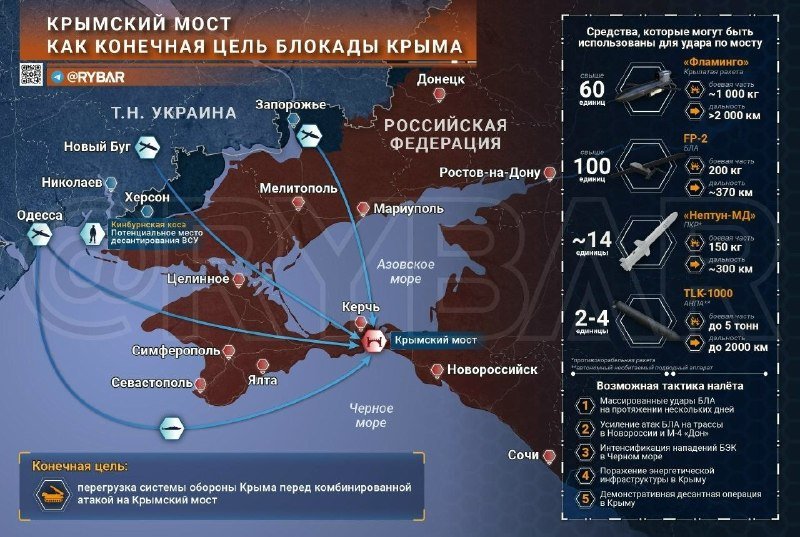
In the early hours of 21 June 2026, Volodymyr Zelenskyy announced that Ukrainian long-range weapons had hit Russian military logistics, oil-industry sites and air-defence positions on both sides of the Crimean Bridge, in operations he described as a response to Russian strikes on Ukrainian cities. The strikes, confirmed in parallel posts from Ukraine's defence intelligence and the General Staff between 07:38 and 08:01 UTC, marked a deliberate expansion of the geography Kyiv is willing to put inside its weapons envelope: the Russian mainland in Krasnodar province on one side, and the occupied city of Kerch on the other, with the bridge itself as the connective tissue.
The operation matters less for the single night's damage than for what it tells us about the trajectory of the war. A bridge that was, for two years, treated as a logistical lifeline is now being bracketed on both flanks, with oil transport infrastructure specifically named as a target. That is a tactical shift with strategic overtones, and it is being telegraphed by Kyiv itself rather than left for satellite analysts to confirm.
What Kyiv says it hit
According to Zelenskyy's overnight address, distributed at 07:39 UTC, the strikes were directed at three categories of target: military logistics, the oil industry, and the air defences of the occupying forces. He framed each as retaliation for what he called "brutal Russian strikes against our people," and said the targets were on both sides of the Crimean Bridge. The Ukrainian Defence Intelligence account, posting at 07:39 UTC under the same wording, repeated the same three categories and the same framing of the operation as a measured response, not an escalation for its own sake. Andriy Tsaplienko, reporting from the Telegram channel that has become a fixture of Ukrainian wartime communications, summarised the operation at 08:01 UTC as having hit enemy military infrastructure, with strikes on logistics and oil in the area of the Crimean Bridge, including maritime infrastructure. The Ukrainian General Staff's operational channel, posting at 07:42 UTC, used the same three-target taxonomy.
The most concrete geographical detail came via ClashReport at 07:54 UTC, which reported that Ukrainian forces struck targets on both sides of the bridge — oil-transport infrastructure in Russia's Krasnodar region on one side, and an oil depot in occupied Kerch on the other — along with military assets. Krasnodar is the Russian mainland; Kerch is the eastern anchor of the bridge on the Crimean peninsula, which Russia has occupied and illegally annexed since 2014. Treating both as a single target set is the operation's organising idea.
The bridge as a target set, not a target
What makes this night different is the framing. Earlier iterations of strikes against the Crimean Bridge tended to be reported as attacks on the bridge itself — a 2022 blast damaged road sections, and subsequent Ukrainian operations, including sea-drone actions, have aimed at the structure. This round, in the language being used by every Ukrainian source in the thread, the bridge is not the bullet. The bridge is the line on a map that defines what counts as inside the target set. Logistics sites that feed it, fuel depots that supply traffic over it, and air-defence assets that protect it are what Kyiv says it hit.
That is a meaningful distinction. A direct strike on the bridge structure invites a particular kind of Russian response — symbolic, political, and aimed at a recognisable piece of infrastructure. Strikes on the supporting ecosystem are quieter to announce, harder to attribute in real time, and arguably more damaging over weeks and months. They also fit inside the doctrine Ukrainian planners have used for the past year: degrade the system that uses the bridge rather than fight the bridge itself.
Why oil, and why now
The consistent naming of the oil industry as a target category is not accidental. Russian fuel supply has been one of the more porous parts of the sanctions architecture since 2022, with refined-product flows rerouting through shadow-fleet shipping, Indian and Chinese buyers absorbing discounted Urals, and a parallel rail-and-pipeline economy that has kept the front line fuelled even as formal price caps bit. Strikes on Russian oil infrastructure — refineries, depots, trans-shipment points — have been a recurring feature of Ukrainian long-range operations throughout 2025 and into 2026, with the effect of tightening domestic fuel supply and forcing the Kremlin to choose between exporting less or burning less on the battlefield.
Targeting oil assets at the bridge's immediate approaches is the cheapest version of that pressure. It does not require hitting a refinery deep inside Russia. It threatens the choke point where product moves between mainland Russia and occupied Crimea, and it complicates the air-defence problem for Moscow by forcing radar and interceptor coverage on both approaches simultaneously. The Krasnodar-side and Kerch-side hits, taken together, do precisely that.
The framing Kyiv is buying
Zelenskyy's choice of language matters. He used the phrase "long-range sanctions" to describe the strikes — a term that recurs across the Ukrainian official accounts in the thread — and tied each category of strike explicitly to "the brutal Russian strikes against our people." That is the framing Kyiv wants to settle into the international record: the strikes are proportionate, retaliatory, and aimed at military and dual-use infrastructure that sustains the invasion.
The alternative reading is straightforward and worth taking seriously. From Moscow's side, strikes on Krasnodar-region infrastructure extend the war's geography onto Russian soil in a way that earlier operations, even long-range ones, did not always do; and oil-depot hits in occupied Kerch, while inside territory Kyiv considers Ukrainian, will be presented in Russian domestic coverage as attacks on Crimea itself. Any Ukrainian claim of proportionality will be tested against the visible damage in the coming days.
What is not in dispute in the source material is that the operation was announced by Kyiv, not discovered. That is itself a strategic choice. It tells Russian planners what Kyiv believes it has demonstrated; it tells Western audiences that Ukraine's long-range capability is intact and active; and it tells the oil markets that the Krasnodar-Kerch corridor remains a contested supply route. The next test will be whether Russian retaliation hits Ukrainian energy infrastructure at a comparable scale, and whether Kyiv's domestic fuel reserves absorb it.
This publication framed the operation around the target-set geography the Ukrainian sources themselves emphasised — bridge-as-line rather than bridge-as-landmark — rather than reproducing the symbolic-annihilation framing that dominated 2022 coverage of earlier Crimean Bridge incidents.
Wire provenance
This editorial synthesis draws on the following public wire/social posts:
- https://t.me/Tsaplienko/159248
- https://t.me/ClashReport/216400
- https://t.me/operativnoZSU/184210
- https://t.me/DIUkraine/124512
- https://t.me/V_Zelenskiy_official/31795
Follow the event.
These dated source records provide context. They do not retrospectively verify this archive article.
A dated voting record is evidence of one decision. Use the original UN record before turning it into an alignment label.
Visual explainer · historical vote of 2022-03-02 →