Netanyahu's Lebanon posture signals a permanent security zone — and a doctrine built to stay
On 21 June 2026, Netanyahu rejected any near-term IDF withdrawal from southern Lebanon and framed the strikes on Iran as a 'broken barrier of fear' — a doctrinal shift that is reshaping the region's military and political map.
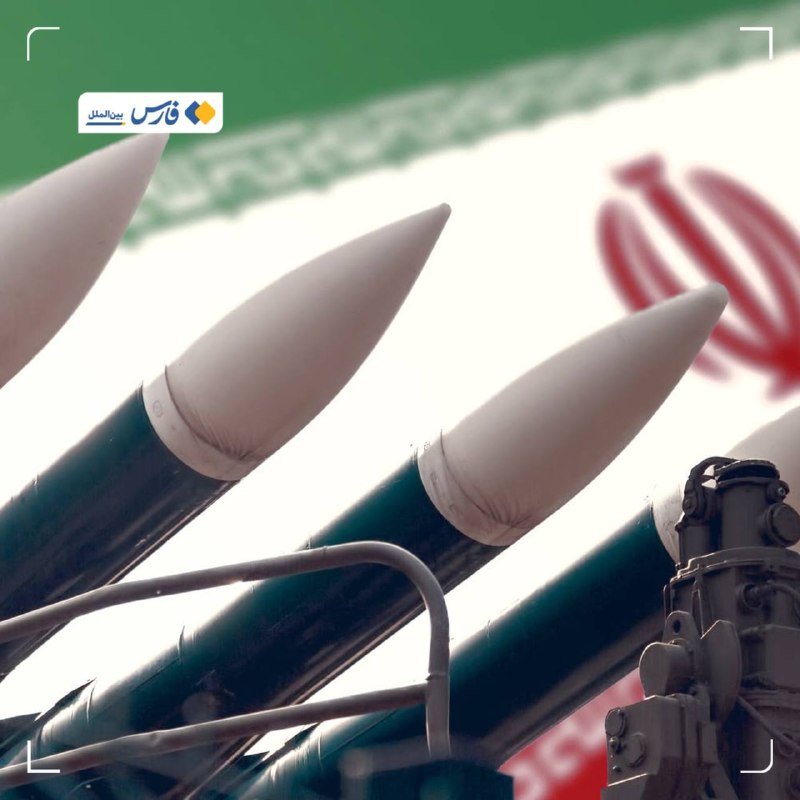
At 20:45 UTC on 21 June 2026, Israeli Prime Minister Benjamin Netanyahu publicly closed the door on any near-term Israeli withdrawal from southern Lebanon, declaring that the Israel Defense Forces would remain in what he termed a "security zone" for as long as necessary. The remarks, transmitted on the same evening that he described Israeli strikes on Iran as having "broken the barrier of fear," amount to the most explicit Israeli articulation yet of an open-ended forward posture on the country's northern frontier — and a doctrinal shift that critics at home and abroad say is being underwritten by force, not diplomacy.
Netanyahu's public framing on 21 June 2026 was not one statement but a stack of them, each tightening the previous. Within roughly half an hour, he told an audience that Israel had "broken the barrier of fear" by striking targets inside Iran directly; that critics who urged restraint in Gaza and Lebanon had been proven wrong; that the campaign against Tehran and its allies would be complete only when the Iranian regime is overthrown; and that joint Israeli–US operations had denied Iran an atomic bomb. Taken together, the comments sketch a strategic doctrine in which Israel is a permanent, jointly-operating strike power across a four-theatre map — Gaza, Lebanon, the broader Syria–Iran axis, and Iran itself — and in which withdrawals are conditional on outcomes that lie far beyond the ceasefire table.
What Netanyahu actually said, in order
The first element to lock in is the Lebanon position. The 20:45 UTC statement, relayed by sprinterpress on X and amplified through the wfwitness Telegram channel, frames the IDF presence south of the Litani as a "security zone" that Israel intends to keep. The terminology matters: "security zone" is a long-standing Israeli euphemism for the 1978–2000 South Lebanon occupation and for the post-2024 expanded buffer that Israeli units have held in the wake of the Hezbollah conflict. Netanyahu's wording — "for as long as necessary" — is the same duration-free formula the Israeli right has historically used to avoid dating any withdrawal.
The second element is the rhetorical re-branding of Israel's regional posture. Netanyahu's claim that Israel has "broken the barrier of fear" by hitting targets inside Iran directly is, in plain terms, an admission that strikes on Iranian soil have become an instrument of state policy rather than a calibrated last resort. The third element, the claim that critics urging restraint in Gaza and Lebanon "argued Israel's decision to push ahead secured its borders and freed all" hostages, inverts the standard Western wire frame — in which Israeli escalation is presented as a reaction to setbacks. Netanyahu is presenting escalation as the instrument that delivered the results. The fourth element escalates the end-state: the campaign against Iran and its allies is "complete only when the Iranian people overthrow their regime." The fifth element folds the United States into the doctrine, claiming joint Israeli–US operations have already denied Iran a bomb. The sixth insists Netanyahu and US President Donald Trump lead "independent and proud countries" and act independently — a pointed denial, given that several of the claims in the same set of remarks rely on a posture of operational alignment with Washington.
The counter-read: doctrine, or electioneering?
The counter-read, held by analysts in Haaretz, Ynet and the Washington-bureau wire desks, is that much of this is calibrated for an Israeli audience and a 2026 coalition calendar, not for the operations floor. Under that read, "security zone" is a domestic-political phrase designed to prepare voters for a long, low-intensity hold in southern Lebanon; "barrier of fear" is the rhetorical payload for a right-flank primary; and the claim that the Iranian campaign ends in regime change is the headline for a base that has grown impatient with rolling operations. Each statement is consistent with the others only if you assume Netanyahu is selling a posture, not yet paying for it.
That read is partially supported by the structure of the remarks. The denial that he and Trump control each other's decisions is, on its face, the most striking line — a denial is rarely volunteered unless the proposition is circulating. The phrase "independent and proud countries" lands as a counter to commentary in the Israeli press that frames policy as a function of White House preferences. Netanyahu is, in effect, making a national-sovereignty argument inside what is otherwise a forward-defence brief. The case for treating the remarks as doctrine is that the same six statements, taken together, lay out a forward position across four theatres with no off-ramp; the case for treating them as messaging is that not one of them commits Israel to a specific timetable, budget, or casualty ceiling.
The structural frame: a long, low-intensity hold, in plain terms
Set against the post-2024 record, however, the trajectory is harder to read as a press cycle. The IDF has, for nearly two years, retained a continuous presence in southern Lebanon that is materially larger and more permanent than the 1978–2000 occupation, against a backdrop of an Iranian-aligned axis whose reconstitution capacity is itself a function of Israeli action in Gaza and Beirut. The infrastructure being held is not a screen of outposts; it is a buffer designed to deny a rebuilt Hezbollah its pre-war rocket envelope. A withdrawal on Netanyahu's stated terms — at some unspecified point in the future, when the threat is judged to be below a threshold that no one in the Israeli cabinet has been willing to write down — is functionally a refusal to withdraw at all.
The pattern is the same one that has played out in the Israeli–Palestinian theatre for decades: each round of operations is justified in the immediate term by the security of the day, the buffer is built, and the conditions for a reversal are framed in language so elastic that they never quite trigger. The Israeli public is told, accurately, that an immediate, unconditional withdrawal carries risks; it is not told, in plain terms, what the off-ramp actually looks like. That asymmetry — risks named, exit conditions unnamed — is the political economy of every long Israeli military presence of the past half-century, and the 21 June 2026 remarks are its most explicit recent statement.
Stakes — and what remains uncertain
The costs of the trajectory Netanyahu sketched on 21 June 2026 fall on three sets of shoulders. Lebanese civilians south of the Litani will live under a foreign occupation whose end-date is explicitly undefined. Israeli reservists will continue to rotate through a northern theatre that no senior official has yet costed or scoped for the year ahead. And the Iranian regime — the explicit final target of the campaign as Netanyahu framed it — has every structural incentive to accelerate whatever it was doing before the strikes, not to slow down. The claim that joint Israeli–US operations have "denied" Iran a bomb is, on the source record, a political assertion; the technical question of what the strikes have set back, and by how much, is the part that the public record does not yet settle.
What the wire has not yet pinned down is the gap between the doctrine Netanyahu is selling and the operations the IDF is actually funded to run. A permanent, four-theatre forward posture with regime change in Tehran as the stated end-state is not a budget any government has put on the table in print. A withdrawal from southern Lebanon "for as long as necessary" is, by construction, no withdrawal at all. Until one of those two lines bends — the doctrine or the footprint — the region is operating under a posture whose exit is undefined, whose cost is undisclosed, and whose end-state is the government of a country of nearly 90 million people. That is the structural fact beneath the 21 June press cycle, and it is the fact that no counter-read can yet wish away.
— Monexus News is a reader-funded publication. This article was written by the staff; it is independent of any government, party, or outside funder.
Wire provenance
This editorial synthesis draws on the following public wire/social posts:
- https://x.com/sprinterpress/status/2068797457090093056
- https://t.me/wfwitness
- https://t.me/wfwitness
- https://t.me/wfwitness
- https://t.me/wfwitness
- https://t.me/wfwitness
Follow the event.
These dated source records provide context. They do not retrospectively verify this archive article.
Separate what the nuclear watchdog reported from what it could not determine after the June 2025 strikes.