Pezeshkian, Netanyahu and the quiet recalibration between Tehran and Washington
Iran's president accuses Netanyahu of sabotaging talks, while Israeli ministers are told to soften language toward Trump. The signal is less about the bomb and more about who gets a seat at the table.
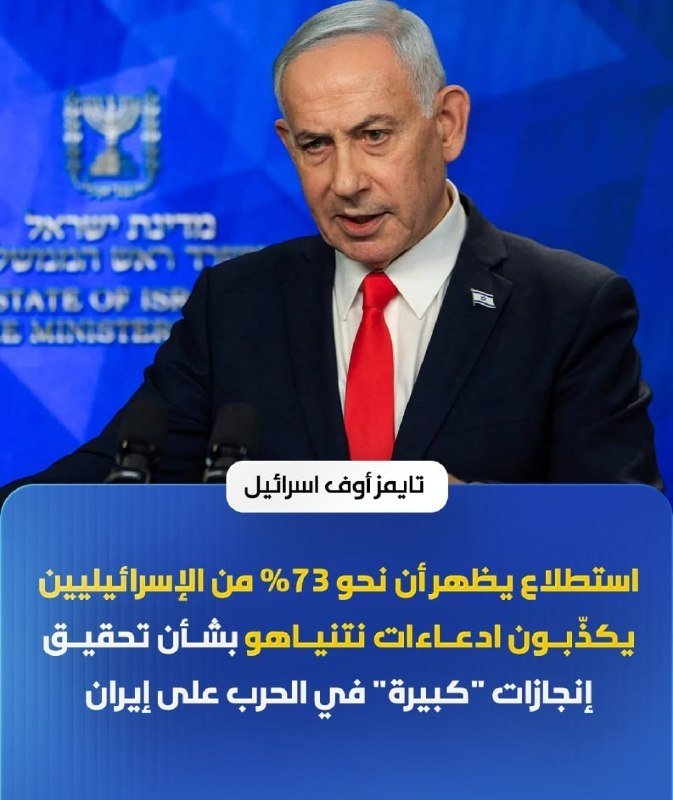
A diplomatic minuet is playing out across Tehran, Jerusalem and Washington, and the choreography is unusually public. On 21 June 2026 at 08:03 UTC, Iranian President Masoud Pezeshkian took to the state-aligned Al Alam Arabic feed to accuse Israeli Prime Minister Benjamin Netanyahu of being "the first to object to the negotiations." Six minutes later, in a separate Al Alam Arabic dispatch timestamped 08:09 UTC, Pezeshkian added a softer note: Donald Trump, "who was preventing us from doing many things," had in his most recent speech conceded that those things are "a right for the people and the nation." Read together, the two statements sketch a Tehran that is simultaneously blaming Jerusalem for torpedoing diplomacy and crediting Washington for opening space.
What this publication is watching is not a breakdown in talks but a very deliberate, very public realignment of credit and blame around them. The Iranian leadership is performing two audiences at once: a domestic base that needs to see resistance to Israeli pressure, and a Western audience that needs to see Iran as a willing negotiator if Trump is to be rewarded politically for any deal. The result is a familiar pattern in which the hardest questions — enrichment levels, IAEA access, the fate of stockpiled material — are deferred while the atmospherics get louder.
The Pezeshkian gambit
The Iranian president's framing matters less for what it reveals about the substance of the talks than for what it concedes about the politics of them. By singling out Netanyahu as the obstructionist, Pezeshkian removes the United States from the role of antagonist and recasts the Trump administration as a reluctant partner being held back by an Israeli veto. That is a diplomatic gift to Washington: it gives the White House domestic cover to argue that any deal reflects American leverage, not Israeli. It also gives Tehran a fallback line — if talks collapse, the blame is conveniently externalised onto Jerusalem rather than Washington.
The second Al Alam line, in which Pezeshkian credits Trump's recent speech for acknowledging Iranian rights, is the giveaway. Iranian state media does not flatter an American president by accident. The signal is that Tehran wants the deal to live — on terms that can be defended in Majles hallways and in bazaars alike.
A Netanyahu looking for an off-ramp
If Tehran is performing flexibility, Jerusalem is performing the opposite. At 08:00 UTC on the same day, Israeli political reporter Amit Segal-style coverage carried by the sprinterpress account reported that Netanyahu had asked his ministers to soften public statements directed at Trump amid tensions with Washington. The instruction, if accurate, is the diplomatic equivalent of a controlled retreat: the prime minister is telling his cabinet that the fight with the White House is privately winnable and publicly costly. Netanyahu, who has built his political career on the claim that no Israeli leader can be trusted to stand up to Washington more than he can, is now telling his own ministers to stand down.
That is the most telling line in the entire exchange. Public criticism of an American president by an Israeli prime minister has historically been the kind of pressure a sitting Israeli leader absorbs, not amplifies. For Netanyahu to be asking ministers to dial it back suggests the friction inside the relationship is more advanced than the joint communiqués admit.
Why the timing
The pattern fits a recurring sequence in this file: a Western wire leak on a near-deal, followed by an Israeli statement hardening the line, followed by Tehran adjusting the framing to preserve the deal's viability. The Israeli move serves domestic coalition politics; the Iranian move serves sanctions-economics. Both sides are using the same set of facts to argue opposite conclusions, and both need the United States to adjudicate.
This is the structural point. The conversation about Iran's nuclear file is no longer a two-sided negotiation between Washington and Tehran with Israel as interested observer. It is a three-cornered bargaining problem in which each capital needs the others to fail in a particular way. Tehran needs the deal to succeed and Netanyahu to be the spoiler. Netanyahu needs the deal to fail but cannot afford to be seen defeating Trump. The White House needs a deliverable that holds together its Middle East posture without alienating either partner.
What the framing leaves out
The exchange as reported on 21 June tells the reader almost nothing about the actual content of any negotiations. There is no mention of enrichment percentages, of stockpile disposition, of IAEA inspection architecture, or of the sequencing of sanctions relief. What is on display is the performance layer — the statements, the leaks, the calibrated softening of language — and the performance layer is, in this kind of negotiation, where most of the real bargaining now happens.
A plausible alternative reading is that the talks are closer to collapse than the Iranian messaging suggests, and that Pezeshkian is pre-emptively preparing a domestic narrative in which Netanyahu serves as the convenient wrecker. A second reading is the opposite: that a deal is in its final drafting and the public theatre is the usual last-mile jockeying over who gets credit. The two readings are not mutually exclusive. Both are consistent with what is actually on the wire.
Stakes
If the trajectory continues, the winner is the capital that successfully externalises blame for whatever outcome emerges. Tehran is best placed for that contest, because the Iranian leadership has the most room to argue that any failure was imposed from outside. The loser, in a structural sense, is the inspection-and-verification architecture that has governed non-proliferation diplomacy for two decades: it is being subordinated to the political credit-assignment game in which each participant is currently engaged. The time horizon is short — weeks, not months. The 21 June messaging reads less like the opening of a new phase than like the last phase of the current one.
Desk note: Monexus has framed this as a credit-and-blame contest between three capitals rather than a substance story, because the source material on the substance is not yet on the wire. The peg is the simultaneous 08:00 / 08:03 / 08:09 UTC message cluster, which gives the article a dated scene rather than a vibes-based summary.
Wire provenance
This editorial synthesis draws on the following public wire/social posts:
- https://t.me/s/alalamarabic
- https://t.me/s/alalamarabic
Follow the event.
These dated source records provide context. They do not retrospectively verify this archive article.
Separate what the nuclear watchdog reported from what it could not determine after the June 2025 strikes.