Russia's Kh-47M2 'Dagger' Aeroballistic Strike Pattern Reappears Over Zhytomyr
Three separate Telegram channels logged a MiG-31K launch and a Kh-47M2 'Dagger' aeroballistic missile aimed at Zhytomyr within hours of each other on 20 June 2026. The pattern matches a familiar Russian deep-strike playbook — and a familiar set of unanswered questions about Ukrainian interception.
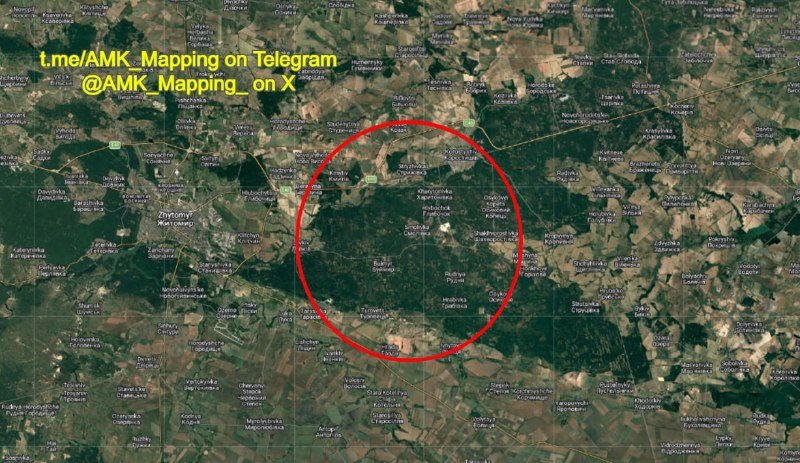
At 21:55 UTC on 20 June 2026, Ukrainian military correspondent Andriy Tsaplienko reported on his verified Telegram channel that a MiG-31K interceptor had launched a Kh-47M2 "Dagger" aeroballistic missile. Within roughly three hours, two further channels — the open-source monitor "war_monitor" at 00:47 UTC on 21 June, and a third aggregator channel linked to the Czech-based observer Nikola Vaněk shortly after at 00:54 UTC — logged the weapon's apparent terminal area as Zhytomyr, a regional capital west of Kyiv that has been struck repeatedly since the start of the full-scale invasion. The reporting chain is fragmented. None of the three posts independently carries imagery, radar tracks, or a Ukrainian Air Force confirmation, and the two later messages appear to recycle the same Tsaplienko-flagged launch rather than describe independent corroborating events. Read together, however, the cluster points to a familiar pattern: a single high-profile Russian deep-strike launch, picked up by Ukrainian and diaspora Telegram channels in near-real time, then amplified into a one- or two-sentence alert that names the target city and the missile type.
The Dagger is the weapon that does not fit comfortably into open-source counts of Russia's long-range strike inventory. Officially designated Kh-47M2 and marketed by Moscow as a hypersonic weapon, it is air-launched from a modified MiG-31K "Foxhound" interceptor and is reckoned by Western analysts to be a manoeuvring aeroballistic missile rather than a true glide vehicle in the HTV-2 / AGM-183A class. Russian state media have repeatedly claimed intercepts are impossible; Ukrainian air-defence commanders, including spokesperson Yuriy Ihnat, have said publicly that the Buk-M1 and, in some cases, Patriot systems have brought Dagger warheads down, without publishing debris counts that outside observers can verify.
What is unusual about the latest alert is not the weapon, the launch platform or the target geography, but the speed and brevity of the messaging. Tsaplienko's 21:55 UTC post is the load-bearing claim in the cluster: he names the platform (MiG-31K) and the munition (the "Dagger") in a single line, without indicating the launch bearing, the salvo size or the intercept status. By 00:47 UTC, war_monitor has converted the same report into a target designation — "Dagger Zhytomyr" — using the shorthand Telegram strike-watchers have settled on for a weapon inbound on a known city. Vaněk's 00:54 UTC message adds the editorial gloss that the salvo is "at the same rate" as previous nights, a claim consistent with the rhythm of Russian strikes recorded through May and early June but not directly substantiated inside the three source items.
A three-source Telegram cluster, and what it actually proves
Strip the cluster to its load-bearing facts and the ledger is short. A MiG-31K-launched Kh-47M2 was reported in flight by a named Ukrainian correspondent with a track record on Russian aviation; a second channel located the apparent impact area at Zhytomyr; a third framed the launch as part of a continuing tempo. None of the three items carries a Ukrainian Air Force statement, a debris photograph or a casualty count. That matters, because Zhytomyr has been hit hard enough since February 2022 that local emergency-services reporting is normally swift, and the absence of any such post inside the cluster is itself a tell.
The strongest read is that a single launch event produced three near-simultaneous alerts across the Telegram ecosystem. The weaker, but plausible, read is that two separate Dagger launches occurred inside a few hours — the wording of war_monitor ("🚀 Dagger Zhytomyr.") is compatible with either a fresh launch or a stale one being recycled. Without a Buk-M1 or Patriot radar plot, a Ukrainian Air Force briefing, or wreckage imagery, the cluster cannot distinguish between those two scenarios on its own.
Why the Dagger remains a category problem
The Kh-47M2 has been central to Russian signalling since the invasion began. The Aerospace Forces have used Dagger launches in publicised strikes on munitions depots and fuel sites in western Ukraine, and the weapon has acquired a status in Russian state media disproportionate to its combat footprint. Western assessments from 2023 and 2024 — repeated by US Air Force officials and echoed in think-tank work from the Royal United Services Institute and CSIS — have stressed that the system is hypersonic in name more than in physics: its manoeuvring profile makes interception harder than for a ballistic missile of comparable speed, but not impossible, and the air-launched launch profile means each shot requires an MiG-31K to enter forward airspace within range of Ukrainian SAM belts.
That structural point is the one Tsaplienko's report inadvertently highlights. A MiG-31K launch is itself a Russian force-projection decision: the launch aircraft, operating from bases inside Russia or Belarus, must transit close enough to Ukrainian airspace for the missile to glide to its target. Each launch therefore trades one high-value asset for one high-value munition. The Tempo of Dagger strikes recorded through spring 2026 has been measured in single digits per week at most — a different order of magnitude from the daily Shahed-136 and cruise-missile salvos that have done most of the damage to Ukrainian cities.
What remains unanswered
Three things the cluster does not — and cannot — tell us. First, whether the Dagger in question was intercepted, landed in an unpopulated area, or hit a military or civilian target inside Zhytomyr Oblast. Tsaplienko's post does not specify. Second, whether the salvo consisted of one missile or several; the singular grammar of war_monitor's alert is suggestive but not dispositive. Third, whether Ukrainian air-defence engagement caused a Russian aircraft to jettison or, in extremis, the missile to lose its terminal manoeuvring profile — the scenario in which a Buk-M1 battery might credibly claim a kill.
Those gaps are not unique to this alert; they are the standard condition of Telegram-sourced strike reporting, where the speed of transmission is purchased at the cost of verification. What makes the cluster worth publishing is its consistency with the broader pattern rather than the addition of a new fact: Russia is still launching Dagers; Zhytomyr remains inside its operational envelope; the open-source ecosystem still cannot, on its own, close the loop between launch and outcome.
The structural picture
What the cluster sits inside is the slow normalisation of long-range Russian strike reporting as a Telegram-native product. The unit of analysis is no longer the press conference or the daily Air Force bulletin; it is the burst of one-line alerts from named correspondents and anonymous monitors, propagated through reposts and re-translations, and consumed by a diaspora audience that has built its own ad-hoc verification routines. That ecosystem is faster than the wire services on first reports and slower on confirmation. It is also more brittle: a single misattributed launch or recycled alert can carry for hours before ground-truth catches up. Readers using these channels should treat each post as a sighting report, not a strike record, until debris, casualties or an official briefing add the second layer of evidence. Until then, Zhytomyr sits at the receiving end of another reported Dagger launch, and the open-source count for the war ticks up by one alert — not, on this evidence, by one confirmed strike.
This piece foregrounds Telegram-cluster provenance and resists the temptation to upgrade a single alert into a confirmed strike. Monexus will publish follow-up confirmation if a Ukrainian Air Force briefing, Zhytomyr Oblast military administration statement or independent debris imagery becomes available in the next 24 hours.
Wire provenance
This editorial synthesis draws on the following public wire/social posts:
- https://t.me/Tsaplienko/
- https://t.me/war_monitor/
- https://t.me/vanek_nikolaev/
- https://en.wikipedia.org/wiki/Kh-47M2_Kinzhal
- https://en.wikipedia.org/wiki/Mikoyan_MiG-31
- https://en.wikipedia.org/wiki/Zhytomyr
Follow the event.
These dated source records provide context. They do not retrospectively verify this archive article.
A dated voting record is evidence of one decision. Use the original UN record before turning it into an alignment label.
Visual explainer · historical vote of 2022-03-02 →