Strait of Hormuz shut, US-Iran talks open: what a closed chokepoint means for the world’s oil supply
US and Iranian negotiators sat down in Switzerland on 21 June 2026 while Tehran kept the Strait of Hormuz sealed. Crews aboard ships in the waterway are rationing food and dodging drones.
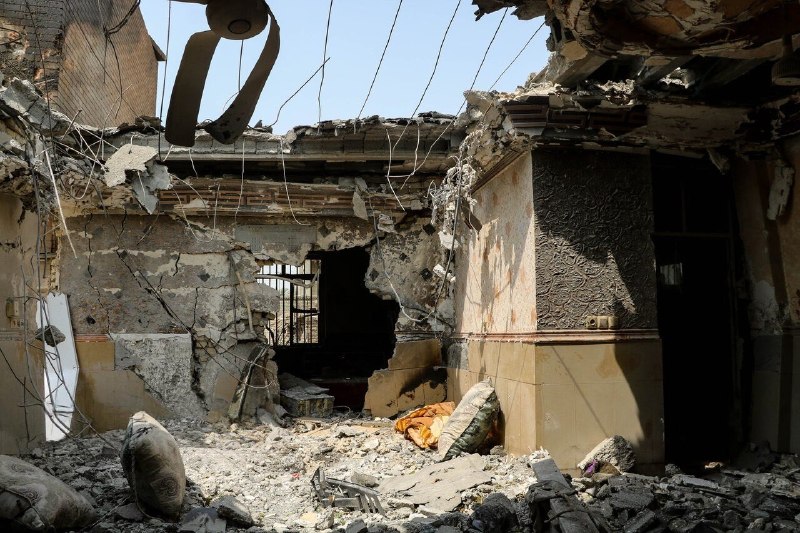
The diplomatic choreography was already in motion when the waterway shut. On the morning of 21 June 2026, the United States and Iran opened a new round of talks in Switzerland, and the Strait of Hormuz — the narrow corridor through which a substantial share of the world’s seaborne crude and liquefied gas transits — went dark to commercial traffic. France 24 reported on the same day that sailors inside the strait are now trapped, rationing food, and "dodging drones," while Iranian authorities accuse Israel of breaching a ceasefire that is supposed to be holding in parallel. Two facts, same day, opposite trajectories: the negotiating room is open, and the shipping lane is closed.
What the next hours decide is no longer a local security question. A sustained closure of the strait would ripple through insurance markets, fuel pricing, and the political bandwidth of every capital that depends on Gulf energy exports. The bargaining happening in Switzerland is, for practical purposes, being conducted against a backdrop of a live blockade.
What France 24 reported from the waterway
The French state broadcaster’s correspondent described crews aboard vessels still inside the chokepoint as cut off — unable to leave without permission, and unable to receive the normal pattern of supplies, refuelling or crew rotations. Iran has framed the closure as a response to what Tehran characterises as an Israeli breach of the existing ceasefire arrangement. France 24’s reporting, relayed in English by the network’s international feed, noted that the closure is being "kept shut" by Iranian authorities even as the US-Iran track reopened in Switzerland. The implicit story is a divergence: the diplomatic channel with Washington is alive; the security channel with Jerusalem, in Tehran’s telling, is not.
That distinction matters. The United States and Iran have a long history of compartmentalised negotiations — talks on the nuclear file, on prisoner exchanges, on de-escalation measures, that have coexisted with active confrontations elsewhere in the region. A track with Washington can move while a parallel grievance with Israel is allowed to harden. The two are not, from Tehran’s vantage point, the same conversation.
How a Hormuz shutdown actually works
The strait is not a gate that can be locked. It is a maritime corridor narrow enough — at its tightest, roughly 33 kilometres across the shipping lanes — to be policed by small craft, shore-based missiles, fast-attack units, and, increasingly, the kind of drone activity France 24 referenced in its dispatch. Iran’s doctrine for the waterway has long relied on layered harassment: seizures of commercial tankers, the detention of crews, the threat of anti-ship missiles from coastal batteries, and the deployment of fast boats to compel compliance from passing traffic. A "closure," in practice, is a threat that the cost of transit has become unbearably high.
For shipowners, that threat translates immediately into war-risk insurance premiums, rerouting around the Cape of Good Hope, and demurrage charges for cargo that arrives late or not at all. For importing states in Asia, where the bulk of Gulf crude is bound, a sustained closure would force emergency drawdowns from strategic petroleum reserves and a hunt for alternative barrels — a hunt that, in current market conditions, does not produce enough volume quickly enough to neutralise the shock.
Why the timing is not accidental
Negotiators do not usually open a sensitive round of talks on a day when the chokepoint is being sealed. There are two competing reads of the timing, and both are consistent with what is publicly known.
The first reading is that the closure is leverage — a coercive reminder, delivered to Washington from a position of geographic control, that the cost of not reaching a deal is measured in oil flows and in the stability of allied Gulf economies. From this vantage point, the strait is an open hand, and the negotiating room in Switzerland is the only place to relieve the pressure.
The second reading is that the closure is what Tehran says it is: retaliation for what it characterises as an Israeli violation of the ceasefire. On that telling, the talks in Switzerland are happening despite the closure, not because of it, and the diplomatic track may have to absorb the shock of the security track before it can move.
Which reading holds is not yet knowable from the public reporting. It is worth saying plainly: the same set of facts supports either interpretation, and the next 48 hours of reporting from the waterway and from the talks will do most of the work of separating them.
What the closure changes downstream
Even a short closure reshapes the information environment. Energy desks will move from baseline coverage to live tracking. Defence ministries in importing states will be asked, privately and publicly, what their contingency plans look like. Insurers will publish revised transit advisories, and each revision is itself a price signal.
The structural question is older than this week’s news. The world’s energy system has been routed through a handful of geographic chokepoints for decades, and the political theory underwriting that routing — that flows would remain stable because disruption was mutually costly — is being tested in real time. A closure of a few days is absorbable. A closure that drags toward a week begins to bite into refining margins. A closure that lasts longer than that is no longer a market event; it is a political event, and the politics will run through Switzerland, through the Gulf, and through every capital that depends on the lane.
What remains uncertain
The open reporting does not yet disclose how many vessels are inside the strait, what flag states they sail under, or whether the International Maritime Organisation or the maritime centres in the region have issued formal advisories. The sources do not name the specific Israeli action that Tehran alleges constitutes a ceasefire breach, nor do they identify the negotiating teams in Switzerland by name. France 24’s account is the most concrete public window into the conditions aboard the trapped ships, and it is the account on which this article leans; broader wire confirmation of the operational picture on the water — vessel numbers, incident reports, official statements from the Iranian foreign ministry or the US State Department — has not, as of the time of writing, been incorporated here. The desk will widen the source list as those confirmations arrive.
This publication treats the Swiss talks and the Iranian closure as a single, integrated story rather than two parallel ones. The diplomatic channel and the security channel are, in this case, not separable — and the dominant framing in early wire copy that reads the talks in isolation from the strait understates how much the closure reshapes the leverage on both sides of the table.
Wire provenance
This editorial synthesis draws on the following public wire/social posts:
- https://t.me/tasnimnews_en
Follow the event.
These dated source records provide context. They do not retrospectively verify this archive article.
Separate what the nuclear watchdog reported from what it could not determine after the June 2025 strikes.