Kyiv's long arm reaches the Kerch Strait: what the overnight strike does — and doesn't — change
Ukrainian drones hit the Kerch ferry crossing and an oil terminal overnight. The strike is tactically modest, strategically loud — and worth reading past the war-blogger hype.
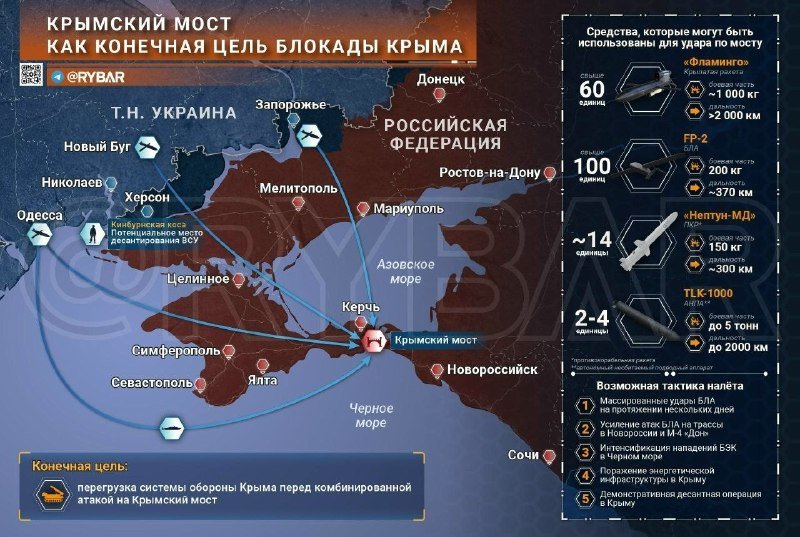
Overnight on 20–21 June 2026, Ukrainian long-range drones struck the Kerch ferry crossing in occupied Crimea, damaging a ferry and an oil terminal and igniting fires at the ports of Kerch and Kavkaz on the opposite, Russian-mainland side of the strait. The crossings sit 245 km from the line of contact — well inside the stand-off range Kyiv's drone operators have been methodically extending for more than a year. Russian authorities acknowledged the strikes; OSINTtechnical posted imagery of the Kerch fuel terminal burning in daylight hours on 21 June. The picture is small in the strict military sense: a ferry damaged, a fuel terminal scorched, a crossing briefly disrupted. The picture is much larger in the strategic sense, because the Kerch crossing is the soft connective tissue of Russia's occupation logistics.
This publication reads the strike as a deliberate Ukrainian signal aimed less at tonnage and more at the Russian rear — a reminder that the same drones now hitting military airfields 1,500 km from the front can also throttle the ferry shuttles that move rolling stock, fuel and civilian traffic between Taman and Crimea without touching the bridge itself.
What the strike actually hit
The crossing the drones hit is the sea-borne supplement — and, since the October 2022 damage to the Kerch Bridge, the de facto workhorse — for moving goods and people between the Russian mainland and the occupied peninsula. The port of Kavkaz on the Taman side and the port of Kerch on the Crimean side operate paired ferry terminals; damaging one side paralyses the round trip. The overnight package set fire to a ferry and to the fuel terminal at Kerch, according to Telegram channels WarTranslated and OSINTtechnical, with Russian authorities confirming fires at both ports. No casualty figures have been published in the material this publication has reviewed; the strike is, at this point, best described as an infrastructure event, not a personnel event.
The tactical point worth holding onto: ferry traffic is far more vulnerable than bridge traffic. A bridge can be partially closed and still function; a ferry crossing requires both terminals, intact vessels, and the willingness of crews to sail under a drone umbrella. None of those are reliably available after a hit like this one.
Why Kyiv's doctrine points at logistics, not symbols
The temptation, in the Western commentariat, is to treat every Ukrainian deep strike as a "degrading Russia's war machine" headline. That is partly true and mostly a category error. The pattern of named strikes over the past eighteen months — fuel depots, refining capacity, command-of-the-sea nodes, ferry crossings — points to a coherent doctrine: choke the throughput, not the headlines. A damaged ferry and a burning fuel tank do not by themselves change the front line at Donetsk or Pokrovsk. They do, cumulatively, raise the marginal cost of every litre of diesel that reaches a Russian armoured column in the south.
Counter-claim material from Russian-aligned channels is already running the opposite framing: the strikes are a provocation, the damage is "cosmetic," Russia will repair and resume. Both are partly true. The ferries are repairable; fuel terminals are rebuilt. The honest reading is neither. Ukraine is not trying to destroy the crossings once. It is trying to make them expensive enough, often enough, that Russian planners stop treating the southern logistics corridor as a free good.
The plain-language frame: a hegemon testing its own rear
Strip the rhetoric away and what is happening is structural. A defending state with a smaller air force and shorter-range missiles has, in less than two years, built a drone-strike complex capable of putting flaming holes in fuel infrastructure 245 km behind the line of contact on a routine basis. The relevant comparison is not whether one fuel tank burns. The relevant comparison is the trajectory: in 2023, hitting Kerch was a one-off propaganda event. In 2024–25, it became a recurring line item. In 2026, it is being executed in the same operational tempo as strikes on military airfields inside Russia proper.
That is the part of the story most worth sitting with. Industrial-scale drone production, target intelligence sourced from inside occupied territory, and a permissive political chain in Kyiv have turned what was a symbolic capability into a routine one. The Russian rear, defined as anything more than a long drone-flight from Ukrainian-controlled airspace, is smaller every quarter.
Stakes and what remains uncertain
The immediate winners are Ukrainian southern command planners, who can now price the Kerch crossing into their logistics assumptions about Russian resupply. The immediate losers are the civilian users of the crossing — Crimean residents who depend on the ferries for movement to and from the mainland and who, under international law, are being made to absorb the cost of their own occupation. The medium-term question is whether the tempo holds: Russian air defence adapts, drone production plateaus, or a political settlement arrives before the cumulative effect is felt. None of those is a foregone conclusion.
What remains genuinely uncertain is the damage state. Telegram footage shows a fuel terminal burning in daylight; whether the damage is weeks or months of disruption, whether the ferry is sunk or scarred, whether Russian coverage will concede a months-long repair timeline — all of that will become clearer in the next 72 hours. This publication will update the ledger as wire imagery and on-the-ground reporting from Russian and Ukrainian sources converges. For now, the strike is best read as a routine escalation inside a doctrine that is, itself, the story.
Desk note: Monexus has framed this as a logistics-doctrine story inside the Russia–Ukraine war — Ukraine as the invaded party, strikes inside occupied territory as defensive, with Russian-aligned counter-claims cited as counter-claim material rather than as a stand-alone factual basis. The piece resists the temptation to call the overnight strike a turning point; the turning point, if there is one, is the trajectory, not the telegram.
Wire provenance
This editorial synthesis draws on the following public wire/social posts:
- https://t.me/wartranslated/
- https://t.me/osintlive/
- https://twitter.com/Osinttechnical/status/2068570217416
Follow the event.
These dated source records provide context. They do not retrospectively verify this archive article.
A dated voting record is evidence of one decision. Use the original UN record before turning it into an alignment label.
Visual explainer · historical vote of 2022-03-02 →