US and Iran open indirect track in Switzerland, with Qatar and Pakistan at the table
Vice-President JD Vance arrived in Switzerland on 21 June 2026 for US-Iran talks mediated by Qatar and Pakistan, with President Trump warning that Strait of Hormuz transit fees could return if negotiations fail.
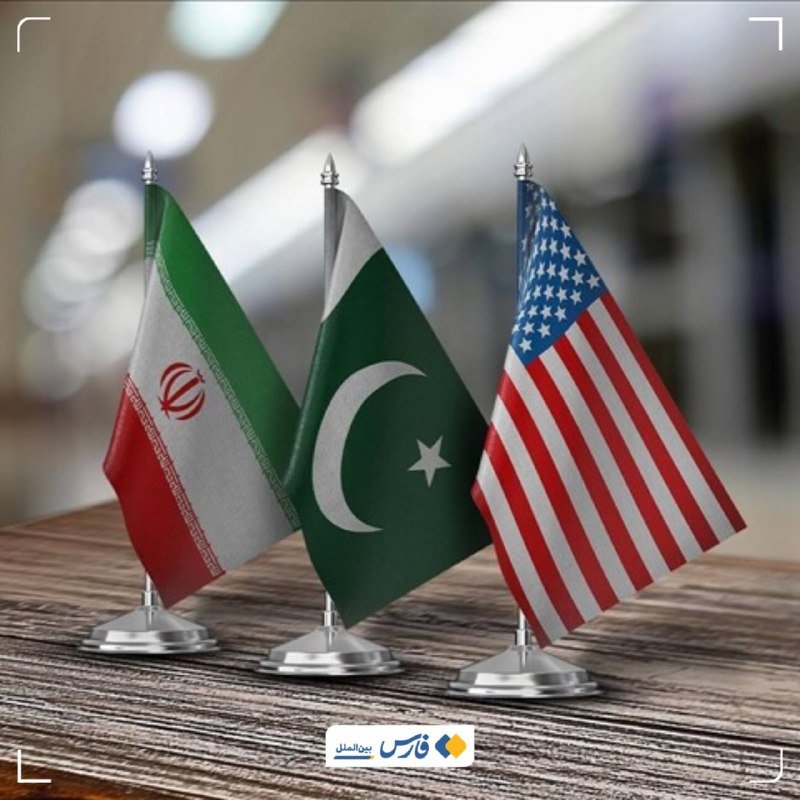
US and Iranian delegations sat down in Switzerland on Sunday 21 June 2026, with Doha and Islamabad acting as intermediaries and Vice-President JD Vance leading the American side, according to separate accounts from Al Jazeera and the Telegram channels Clash Report and OSINTLive. The track is the highest-level direct contact reported between the two governments since US strikes on Iranian nuclear sites a year ago, and the first in which two Gulf-and-South-Asian states have formally mediated rather than facilitated.
The opening session matters less for what was said than for who is in the room. The mediation arrangement — Qatar and Pakistan as joint intermediaries, with Switzerland as the physical venue — is a small but real signal that Washington is willing to dilute its usual one-channel posture in the Gulf. It also raises the political cost of any walkout: a failure now is a four-country failure, not a bilateral one.
What was reported, and by whom
Al Jazeera's breaking-news wire at 11:03 UTC on 21 June said US and Iranian delegations had arrived in Switzerland, with talks under way, without naming the venue beyond the country. Telegram channel Clash Report at 11:25 UTC said the talks were being mediated by Qatar and Pakistan, identifying Doha and Islamabad as the two intervening capitals. OSINTLive, at 10:48 UTC, added the most specific detail: that Vice-President Vance had travelled to Switzerland for the meeting, and that President Trump had warned the Strait of Hormuz transit-fee arrangement could be reimposed if negotiations did not produce a result.
No readout from either delegation was in the public sources by midday UTC. The shape of the agenda — nuclear constraints, sanctions sequencing, the fate of Iranian funds frozen in third-country escrow, and the Hormuz transit regime — is inferred from the warning Trump issued, not from a published Iranian or American statement.
Why Qatar and Pakistan, and not Oman or Iraq
The Gulf mediation landscape has shifted since the 2025 strikes. Oman, which hosted the secret 2012–13 channel that produced the interim Joint Plan of Action, and Iraq, which hosted several rounds of regional de-escalation talks in 2024, were the obvious candidates. Their absence from the framing is itself a story: Doha brings Qatari energy-sector leverage and an established backchannel to Tehran through the Al Udeid diplomatic interface, while Pakistan supplies a Sunni-majority nuclear neighbour with a long, complicated border with Iran and a working relationship with both the GCC and the Islamic Republic. The pairing is also a quiet signal to Saudi Arabia and the UAE, who have their own Gulf-security equities, that Washington is widening the consultative circle rather than centralising it in Riyadh or Abu Dhabi.
For Tehran, the arrangement has its own logic. Mediation by two Muslim-majority states — one Arab, one non-Arab — gives the talks a diplomatic cover that a European venue like Geneva or Lausanne does not. For the United States, it gives the White House political distance from a process that is bound to draw domestic fire from a Congress still smarting from the 2025 strike cycle.
The Hormuz lever
Trump's warning — that transit fees in the Strait of Hormuz could return if talks collapse — is the load-bearing line of the day. The Strait handles roughly a fifth of global oil shipments; even the threat of a fee regime moves the tanker market. By floating the threat publicly, the White House is doing two things at once. It is signalling to Tehran that the economic pressure track is not off the table. And it is signalling to Beijing and New Delhi — the two largest single buyers of Gulf crude — that a fee regime would impose a cost on them, not just on Iran. Whether the threat is bargaining posture or actual policy is the open question, and the sources do not resolve it.
Iranian counterparts have historically treated Hormuz access as sovereign and non-negotiable. The Islamic Republic has, on past occasions, threatened to close the Strait in response to sanctions escalation. A deal that produced either a transit fee or a verified transit arrangement would be the first piece of enforceable architecture in the waterway in years.
What remains uncertain
Three things are genuinely under-determined by the reporting. First, the format: there is no public confirmation that the talks are face-to-face between Vance and an Iranian principal of equivalent rank, as opposed to shuttle diplomacy in separate rooms. Second, the agenda beyond the Hormuz warning: no source in the public thread enumerates the issues on the table. Third, the political shelf life in Washington: congressional reaction to direct engagement with Tehran a year after strikes on Iranian facilities is not yet visible in the reporting, and a hard-line pushback could compress the timeline. The sources also do not specify whether the talks are time-boxed to a single day or expected to run across several.
The pattern fits a familiar rhythm: maximalist threat in public, calibrated contact in private, mediators absorbing political risk that neither principal wants to carry alone. Whether the four-country framing survives the first 48 hours, or whether it narrows back to the familiar US-Iran bilateral with the mediators quietly sidelined, is the question the next 48 hours will answer.
This piece was filed by Monexus staff. Unlike the wire services we read against, we read the Telegram channels in the open as primary, not as commentary, and we say so.
Wire provenance
This editorial synthesis draws on the following public wire/social posts:
- https://t.me/ClashReport
- https://t.me/OpenSourceIntel