Vance's Bürgenstock sit-down with Sharif and Munir puts Pakistan back at the centre of US regional calculus
A bilateral on the sidelines of a Swiss security forum has turned into the most explicit US-Pakistan engagement of the year, and Washington is sending a deliberate signal to Islamabad — and to everyone watching from New Delhi, Tehran and Beijing.
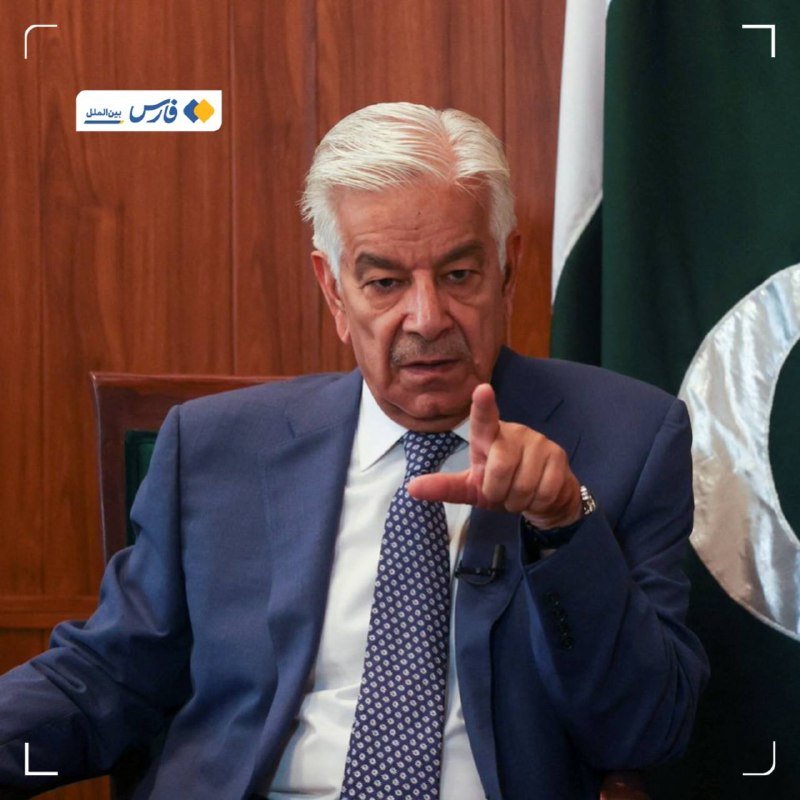
US Vice President JD Vance met Pakistani Prime Minister Shehbaz Sharif and Army Chief General Asim Munir in Bürgenstock, Switzerland, on 21 June 2026, in a bilateral that ran on the margins of a wider security forum and that several outlets are now treating as the most consequential US-Pakistan encounter of the year. The meeting was reported in near-real time by Iranian state media, including Press TV and Tasnim, and by the Lebanese outlet Al-Alam Arabic, with the Fars News Agency releasing video of the encounter. The choice of cast — the vice president, the prime minister, and the chief of army staff together in a single room — is itself a message. In Pakistan's constitutional order, the army chief is the principal decision-maker on security policy; the prime minister leads the civilian cabinet. Putting both on the same side of the table in a foreign capital tells the audience back in Rawalpindi and Islamabad that Washington wants a single, unified interlocutor, not a fractured one.
The sit-down is best read as a marker that Pakistan is being repositioned inside US strategic thinking, after a year in which Islamabad has simultaneously deepened economic engagement with Beijing, kept channels open with Tehran, and held a more volatile line with Kabul. The Bürgenstock encounter is not a treaty. It is the diplomatic equivalent of a price discovery session: both sides are testing what the other will accept, and both sides are aware that cameras and analysts are watching.
What actually happened in Bürgenstock
According to reporting carried by Press TV and corroborated by Tasnim News, Fars News International, Mehr News and Al-Alam Arabic, the encounter took place on 21 June 2026 in Bürgenstock, the Swiss resort town that has hosted high-level security conferences in recent years. The US side was represented by Vice President Vance at the head of a delegation; the Pakistani side by Prime Minister Sharif and Chief of Army Staff Munir. The accounts from the Iranian and Lebanese wires are consistent on participants, location and timing, which is notable in itself: when state outlets that are usually rivals file essentially the same read of an event, the underlying bilateral is almost certainly real and on the record.
What the publicly available accounts do not yet contain is substance. No readout of the meeting has been released by either the White House, the Office of the Vice President, the Prime Minister's Office in Islamabad, or the Inter-Services Public Relations directorate, the media wing of the Pakistan army. Iranian and Arab coverage has so far confined itself to confirming the meeting and publishing imagery. The silence from the principals is itself analytically useful: it suggests both governments prefer the optics of the encounter to its details, which is what usually happens when the message is to a third audience rather than to each other.
Why Munir matters more than Sharif in this room
Pakistan's foreign-policy architecture is famously bifurcated. The prime minister leads government-to-government engagement; the army chief runs the security relationship with the United States, China, Saudi Arabia, and the wider Gulf. In a Bürgenstock bilateral where the chief of army staff is seated at the table, the substantive agenda is almost certainly security-domain: counter-terrorism cooperation, Afghanistan policy, the future of US military assistance and Foreign Military Financing, and the access arrangements that govern US overflights and logistical resupply into Central Asia.
Munir's presence is also a signal to New Delhi. The army chief has been the public face of Pakistan's recalibration with the United States over the past year, and his elevation to the Bürgenstock table makes clear that Washington is comfortable dealing with him directly. For a Pakistani system in which the civilian government often complains of being cut out of security decision-making, that is a notable endorsement. For Indian observers, it is a reminder that the US-Pakistan security relationship has structural reasons to persist regardless of who sits in Islamabad's prime-ministerial chair.
The third-cities problem
The other reason this meeting matters is where it is not. It is not in Washington, which would carry the freight of an official state visit. It is not in Islamabad, which would commit both sides to a joint communiqué. It is on a Swiss lakeside, on the margins of a multilateral forum, with the host venue supplied by a neutral third party. That format is the standard playbook for contacts that the principals want to be real and visible but not yet binding.
The Iranian wires that carried the story — Press TV, Tasnim, Fars, Mehr, and the Lebanon-based Al-Alam Arabic — are themselves part of the signal. Tehran is paying attention to the US-Pakistan line in a way it has not consistently done for several years, and the speed with which Iranian outlets filed the Bürgenstock meeting suggests the Islamic Republic reads this engagement as material to its own regional position. China has not been quoted in the available reporting on this specific encounter, but Beijing's interest is structural: any deepening of the US-Pakistan security relationship sits alongside the China-Pakistan Economic Corridor, and the two are not always easy to square.
What remains uncertain
The honest reading is that very little is publicly known beyond the fact of the meeting. The sources do not specify whether the encounter was a formal bilateral on the conference programme, a private pull-aside, or an unscheduled meeting convened in a hotel corridor. No agenda items have been disclosed. No readout has been issued. There is, accordingly, no basis on which to claim a specific outcome — no deal on F-16 sustainment, no new counter-terrorism framework, no Afghanistan settlement, no India policy — from this single encounter. The reporting supports only what it says: that Vance, Sharif and Munir met in Bürgenstock on 21 June 2026.
That thinness is not a weakness of the story. It is the story. In the diplomatic language of the early 2020s, a vice-presidential sit-down with both the Pakistani prime minister and the army chief in a single foreign venue is itself a measurable act of signalling. The shape of what follows — whether it is a quiet bureaucratic process, a public joint statement, or an accelerated tempo of engagement — will tell analysts more about the underlying direction of US-Pakistan relations than any communique issued in the next 48 hours.
The more interesting question is not whether this meeting happened. It did. The question is what series of meetings it is part of, and whether the US-Pakistan relationship is being re-institutionalised at a higher tier than it has sat on for the better part of a decade. The Bürgenstock encounter is the most visible data point in that series to date, and the principals appear content, for now, to let the picture speak for itself.
This publication framed the Bürgenstock encounter through the lens of signalling and structural positioning, rather than chasing a non-existent readout. The Iranian and Arab wires that first surfaced the meeting are named as carriers of the fact, not as analysts of its meaning.
Wire provenance
This editorial synthesis draws on the following public wire/social posts:
- https://t.me/ClashReport
- https://t.me/mehrnews
- https://t.me/tasnimnews_en
- https://t.me/FarsNewsInt
- https://t.me/presstv
- https://t.me/alalamarabic
- https://t.me/JahanTasnim