Vance lands in Switzerland as Iran doubles down on Hormuz closure threat
Vance touched down in Geneva on 21 June and Tehran matched the optics with a Hormuz closure threat routed through Muscat. The sequencing is the story, and the Oman statement on 'administrating' the strait is the line to watch.
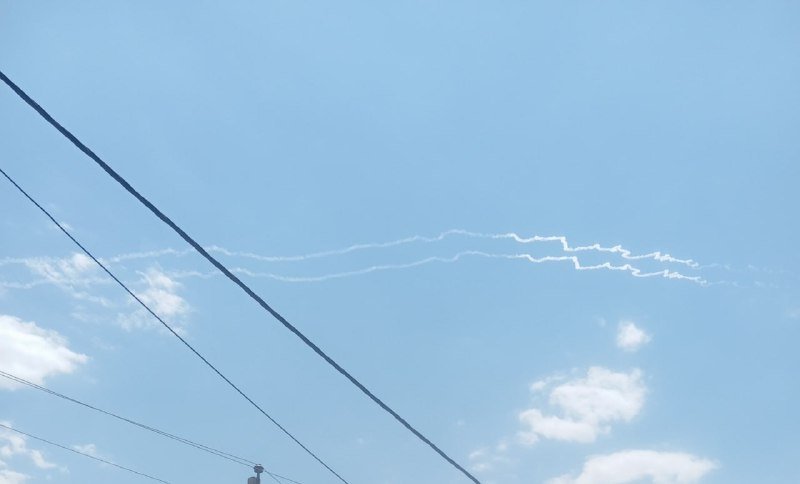
Vice President Vance's plane touched down in Geneva on the evening of 21 June, and within hours Tehran had matched the optics with a fresh threat to close the Strait of Hormuz. Iran's parliamentary speaker and a senior negotiator were already in Muscat, opening what Oman's foreign ministry framed as an attempt to keep shipping lanes open while the United States and the Islamic Republic negotiate. The sequencing is the story: a senior American arrives in Switzerland for indirect talks, and Iran's leadership surfaces a maximum-pressure demand on the same day, in the same news cycle, with the explicit aim of reshaping the bargaining before Vance sits down.
The Iranian side plainly intends these two events to be read together. Treating Vance's landing and the Hormuz threat as separate stories would have underplayed the leverage Tehran is trying to apply. What looks, on the wire, like two parallel tracks is, on closer inspection, a single coordinated signal: the threat of a chokepoint closure is the leverage; the indirect track in Geneva is the venue. The point of the threat is to make the venue matter.
The Hormuz card, played on cue
Oman's official news agency confirmed on 23 June that Muscat was hosting Mohammad Bagher Ghalibaf, speaker of Iran's parliament, and deputy foreign minister Kazem Gharibabadi's negotiating partner Abbas Araghchi for talks on a "temporary sea route" through the strait, with both sides agreeing to explore "administrating the Strait of Hormuz, and the services and 'costs' associated" with such an arrangement. The Omani statement was carefully neutral on outcomes but unusually specific about subject matter. It put a price tag on the conversation.
A closure of the strait would throttle roughly a fifth of global seaborne oil shipments. Tehran has, off and on for two decades, used the threat as a negotiating tool. What is notable this time is the venue of the threat: not a Revolutionary Guard parade ground, not a PressTV broadcast, but a parliamentary speaker dispatched to the Gulf state that mediates between Tehran and Washington, framing the message in the language of "administrating" services and "costs." That is the vocabulary of a transactional demand, not a doctrinal one. Tehran is signalling that it intends to be paid, in some form, for the right of safe passage.
Vance's brief: deny the bomb, not the strait
President Trump used his own platform on 23 June to recast the negotiating goal. The central objective of his Iran policy and any new agreement, Trump said, is to guarantee that Tehran is permanently denied nuclear weapons capability, and he claimed Iran has now accepted that restriction. He separately described a "historic peace agreement" over Hormuz, boasting that 19 million barrels of oil moved through the waterway in a single day and characterising the arrangement in sweeping terms. Trump's framing puts the nuclear file at the centre and the strait as a solved corollary. That sequencing matters: if Washington treats Hormuz as a wrapped deal, Tehran's parliamentary lever loses weight.
Vance's arrival in Geneva is the operational arm of that framing. The vice president is the senior political lead on a file that includes nuclear constraints, missile programmes, regional proxy networks, and the shipping lane. His brief, on the public record, is to translate Trump's headline into an enforceable text, while the Iranians test whether that text can survive contact with a parliament that controls the Hormuz card.
The declassified worry
A separate report, surfaced by The Telegraph and amplified on 23 June, carries a more uncomfortable corollary: Trump, the report claims, is likely to withdraw from any agreement with Iran after the United States congressional midterms. The source-level framing is declassified intelligence assessment rather than White House confirmation, and the publication context matters. The Telegraph is establishment-conservative, not anti-administration; the leak does not appear designed to wound the president so much as to warn Tehran, or the market, that the durability of whatever Vance signs is conditional on a domestic political calendar.
If that reading holds, Iran has an incentive to extract in the next several weeks whatever it can extract at all. A deal that the next administration, or the next Congress, could tear up is worth less than its signature. Hormuz leverage applied now is more valuable than Hormuz leverage applied later, when the political ground in Washington may have shifted.
The military backdrop the talks sit on
The negotiating environment is not abstract. A U.S. Air Force F-15E Strike Eagle was shot down over Iran in April, and the American pilot who ejected described, in debriefing language circulated on 23 June, a "shocking sight" before egress that prompted the deployer of the account to use the phrase "real alien sh*t." The wording is locker-room, but the operational meaning is sober: an American strike aircraft was lost over Iranian airspace, a high-risk special forces recovery followed, and the episode has clearly entered the closed negotiating room as a remembered event. Iran's drone programme, separately described in a CNN report as showing an unexpected technological level, sits alongside that air-defence performance as the second leg of Tehran's deterrent posture.
Read together, the pieces describe an Iran that believes it fought, in some calibrated sense, and survived. That perception is the predicate for the Hormuz demand. A state that saw its air defences absorb an American strike package can afford to be transactional about a strait it controls by geography.
What the Oman channel is actually for
Muscat's role has been to function as a price-discovery mechanism rather than as a neutral host. By convening Iran's parliamentary speaker and a senior foreign ministry figure together with a public reference to "services and costs," Oman has forced the conversation to admit that Tehran wants compensation for restraint. Whether that compensation is denominated in sanctions relief, in a formal administration fee on transit, in security guarantees, or in some hybrid of all three is the question the Geneva track will, in practice, attempt to price.
The risk for the American side is that Vance arrives with a narrow nuclear brief, while the Iranian side arrives with a multi-file demand that uses Hormuz as collateral. The risk for the Iranian side is the symmetric one: that the nuclear file is genuinely all Trump will sign, and that the parliamentary demand arrives at a White House that has already declared the main item settled.
What to watch
The Oman statement on "administrating the Strait of Hormuz" is the line worth tracking. If it hardens into a formal transit-fee proposal, the Hormuz threat has shifted from rhetoric to billable item. If it dissolves back into diplomatic fog, the threat was always theatre, designed to weight the Geneva table. The next three to four weeks, before the U.S. congressional cycle hardens, are the window in which a deal, of whatever scope, is likeliest to be signed or to die. The midterms are the second variable: a durable agreement and an election-sensitive one are not the same document, and Tehran is now on notice that it may not be.
Sources
- rnintel (Telegram), 23 June 2026, 22:25 UTC: Oman statement on "administrating the Strait of Hormuz" following Ghalibaf–Araghchi talks. https://t.me/StandardKenya/
- wfwitness (Telegram), 23 June 2026, 22:17 UTC: Trump statement on permanently denying Iran nuclear weapons capability. https://t.me/StandardKenya/
- wfwitness (Telegram), 23 June 2026, 22:14 UTC: Trump statement describing "historic peace agreement" on Hormuz and 19 million barrels in a single day. https://t.me/StandardKenya/
- osintlive (Telegram), 23 June 2026, 21:49 UTC: U.S. Air Force F-15E pilot debrief, shot down over Iran in April. https://t.me/StandardKenya/
- JahanTasnim (Telegram), 23 June 2026, 21:16 UTC: Oman announces temporary sea route in the Strait of Hormuz. https://t.me/StandardKenya/
- sprinterpress (X), 23 June 2026, 21:15 UTC: Telegraph declassification report on likely U.S. withdrawal from Iran agreement after congressional elections. https://x.com/sprinterpress/status/2068629291835772928
- sprinterpress (X), 23 June 2026, 21:15 UTC: CNN report on Iranian drone programme technological level. https://x.com/sprinterpress/status/2068629291835772928
- reuters (X), 23 June 2026: https://x.com/reuters/status/2068554548998803456
Desk note: Monexus framed Vance's landing and the Hormuz threat as a single coordinated signal, drawing on the rnintel Oman statement, Trump's own Hormuz remarks, and the Telegraph declassification read on durability, rather than treating them as two unrelated wire items.
Follow the event.
These dated source records provide context. They do not retrospectively verify this archive article.
Separate what the nuclear watchdog reported from what it could not determine after the June 2025 strikes.