Beyond the Pitch: What Argentina–Austria Tells Us About the 2026 World Cup's Political Geometry
A routine group-stage fixture in Arlington offers a window into how the 2026 World Cup is being staged, framed, and narrated — and who stands to win the argument about what the tournament actually means.
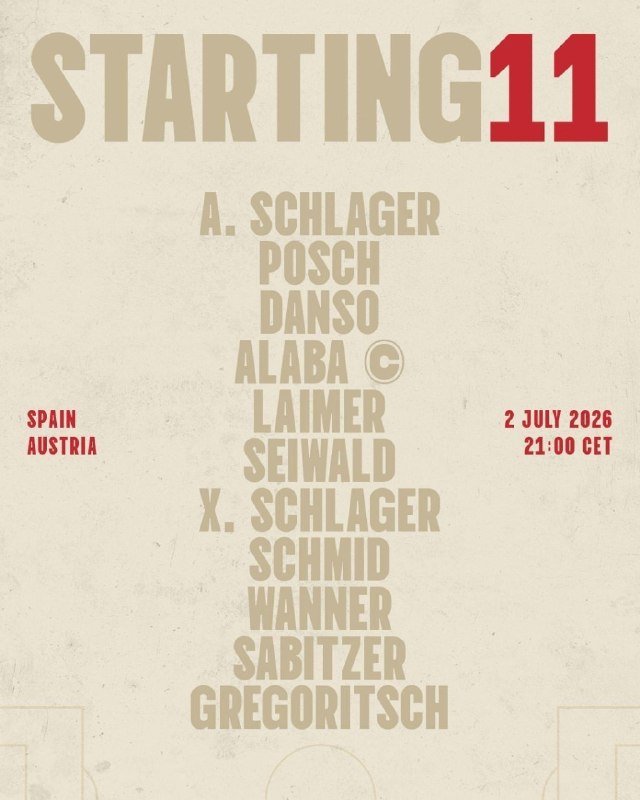
The match was, on the evidence available, a routine early group-stage affair: Argentina pushing through Lionel Messi, Austria absorbing pressure, Marcel Sabitzer missing an attempt on goal, Thiago Almada flagged offside, and a procession of throw-ins and free kicks that suggested a game still finding its shape. The fixture, played in Arlington, Texas, on 22 June 2026, was the kind of contest that rarely makes the back pages of the next morning's papers. It is worth pausing on it anyway, because the framing around this World Cup has been louder than the football.
The 2026 tournament is the first to be hosted across three countries — the United States, Mexico, and Canada — and the first to feature 48 teams. The expansion has been sold as democratisation: more confederations, more matches, more tickets sold. The sceptics, including a number of South American and African federation officials who have spoken publicly in recent months, read it as a commercial land grab in which the game's traditional centres of gravity are being asked to subsidise the entry of new audiences into a FIFA revenue model that has, in the past decade, grown increasingly dependent on Gulf state capital and North American broadcast rights.
The pitch tells one story; the calendar tells another
The on-field action in Arlington on Monday was low on incident in the snippets that surfaced in the early running. Messi had a finish saved. Sabitzer missed an attempt. Almada was caught offside. None of those moments, on their own, are worth parsing. The interesting question is why an Argentina–Austria group fixture is being staged in Texas in the first place, rather than in a South American or European venue closer to either team's fanbase.
The answer, fairly plainly, is that FIFA's centre of commercial gravity has shifted. Host-city selection in 2026 was driven less by sporting tradition than by stadium inventory, sponsor geography, and the dollar-denominated broadcast market that underwrites the tournament's prize fund. The relocation of marquee matches to the American South and Midwest is, in that sense, a structural fact about the modern game — not a one-off scheduling quirk. The football follows the money, and the money now lives in a handful of North American media markets.
The counter-read from the Global South
That framing is not the only one in circulation. Officials from CONMEBOL and the African confederation have argued, with varying degrees of diplomatic cover, that expansion has been managed in a way that protects the commercial position of the European federations while offering the rest of the world a larger number of matches rather than a larger share of revenue or influence. The 48-team format, in this reading, is a controlled widening of the tent: more nations qualify, but the tournament's commercial spine — the broadcast deals, the sponsors, the host-city payments — remains concentrated in the same handful of wealthy markets.
There is a related critique, more pointed, that the 2026 host arrangement formalises a North American stranglehold on the game's flagship event for the next cycle. Mexico and Canada are co-hosts, not junior partners with commensurate voting weight at FIFA level; the United States accounts for the overwhelming majority of host venues, broadcast hours, and ticketed matches. A tournament billed as the first truly global World Cup is, on this reading, the most American one yet.
The structural frame, in plain terms
Strip the politics out and the picture is straightforward. FIFA's revenue base has, over the past fifteen years, migrated from European public-service broadcasters and traditional sponsors to a combination of Gulf sovereign capital, Chinese consumer-electronics deals, and North American streaming platforms. The 48-team, three-country tournament is the operational form that revenue mix now takes. The choice of Arlington over Buenos Aires or Vienna is not an accident of scheduling; it is a downstream consequence of where the cheques are written.
That does not make the tournament illegitimate. It does mean that when federations from outside the Atlantic core complain about the structure, the complaint is rooted in something real — a sense that the game's centre of gravity has moved faster than its governance has accommodated.
What to watch between now and the knockouts
Two things will clarify the political geometry of this tournament in the weeks ahead. The first is how Group-stage results translate into the knockout bracket: a deeper, more geographically diverse round of 32 risks producing match-ups that don't fit the broadcast-friendly narratives the schedule appears designed around. The second is how FIFA itself narrates the tournament's commercial success — ticket revenue, broadcast ratings, sponsor activation — and whether that narration lines up with the experience of fans in host cities who have, in some markets, pushed back sharply on dynamic pricing and ticketing arrangements.
For now, the football does what football does: Argentina probes, Austria absorbs, Sabitzer misses, and the next fixture comes quickly. The interesting game is being played on a different field.
This publication framed Argentina–Austria as a small window onto the 2026 tournament's commercial and geopolitical structure, rather than as a discrete match report — the dominant wire approach on the day.
Wire provenance
This editorial synthesis draws on the following public wire/social posts:
- https://t.me/telesurenglish
- https://en.wikipedia.org/wiki/2026_FIFA_World_Cup
- https://en.wikipedia.org/wiki/2026_FIFA_World_Cup_(qualification)