Argentina, Austria and the politics of who gets to play the World Cup
As the 2026 World Cup's round-of-32 picture fills in, the bigger question is who decided the 48-team format in the first place, and on whose authority.
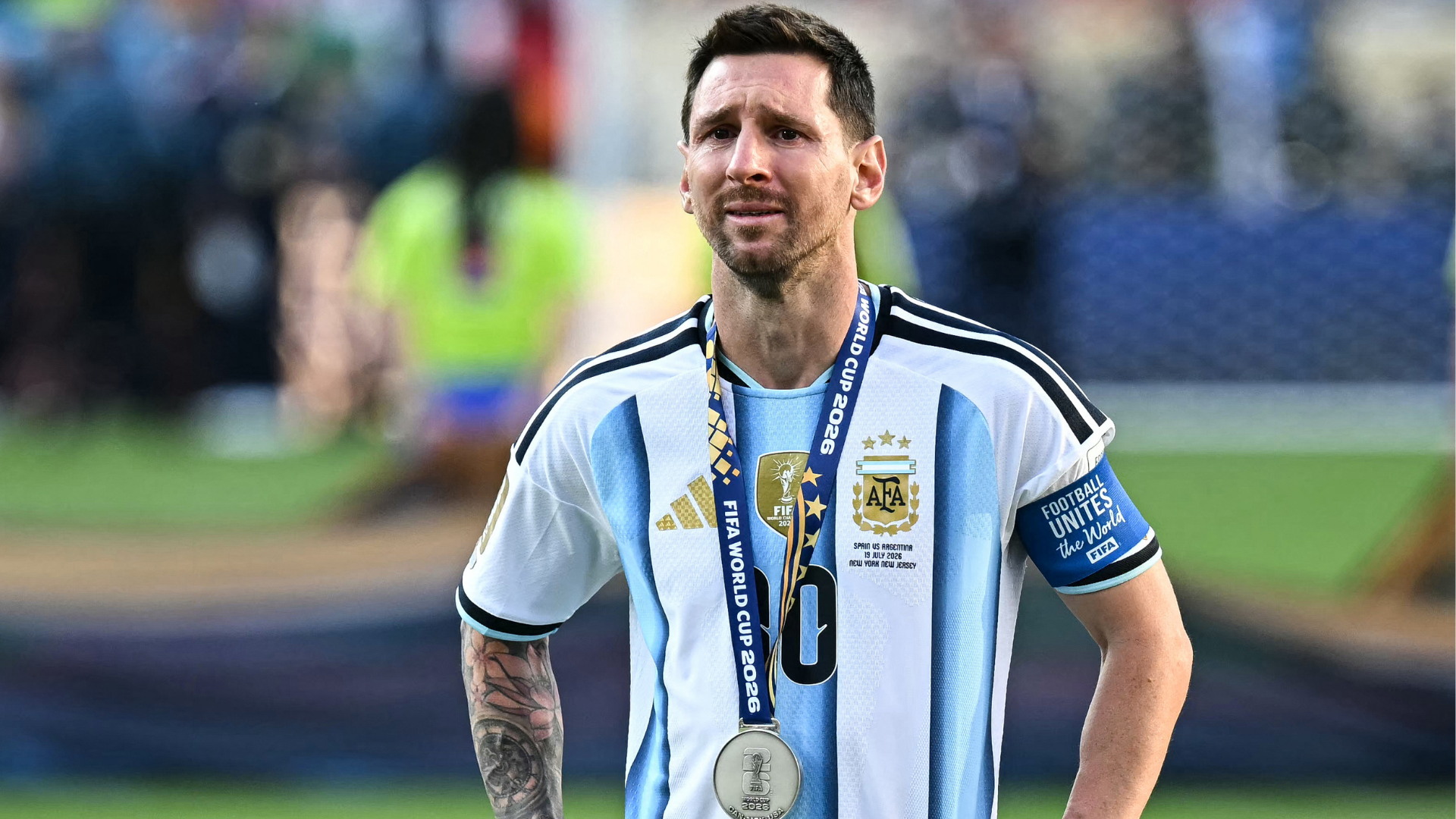
At 22:09 UTC on 24 June, Vinicius Junior put Brazil ahead of Scotland at the 2026 World Cup. Two minutes earlier, Achraf Hakimi had pulled Morocco level with Haiti. By the time Matheus Cunha made it three for Brazil at 23:35 UTC, the group stage had already done something rarer than producing goals: it had produced a qualifying picture that nobody in Zurich planned for.
The Spectator Index's running tally at 22:32 UTC lists the United States, Mexico, Germany, Argentina, France, Norway, Colombia, Canada and Switzerland as confirmed for the knockout phase. Colombia arrived there on a Daniel Munoz strike, per Reuters at 22:25 UTC. Bosnia beat Qatar 3-2 to keep their own route alive, per Al Jazeera breaking news at 21:47 UTC. The shape of the bracket is filling in fast, and the shape of the conversation around it is not.
The federation that keeps moving the goalposts
The 2026 tournament is the first to be staged across three countries, after FIFA's council approved a United States, Canada and Mexico joint bid. It is also the first to feature 48 teams, up from 32, after the same body voted to expand the field. Both decisions sit on the same procedural rails: a small executive committee, weighted voting, and a global federation whose statutes leave the door open to revisions between cycles. The expansion, formally adopted in 2017 and reaffirmed through subsequent council sessions, lifted the total match count from 64 to 104 and forced a redesign of the group phase.
That redesign is what produced the round-of-32 ceiling visible in the Reuters and Al Jazeera dispatches. Eight third-placed teams now advance alongside the top two in each group, a structural concession that turns dead rubbers into commercial inventory and turns the group stage into a 12-match qualifying slog for the sides caught in the middle. Bosnia's 3-2 over Qatar is the textbook case: not a win that guarantees progression, but a win that keeps the calculators running.
What Argentina and Austria have to do with it
The original story started as a fixture question: who actually books a ticket to the round of 32, and on what terms. Argentina's progression answers the easy half. The harder half sits with the federations that did not get there. Austria, the standard shorthand in Monexus reporting for the European sides caught between the seeded tier and the third-place cut-off, watched the calculus change underneath them when FIFA redrew the bracket geometry. The same expansion that opened the door for the United States, Mexico and Canada as co-hosts to enter three teams each also widened the door for the third-placed ranks, and the same governance that approved the first decision approved the second.
The Telesur English live feed that Monexus followed through the evening covered the Brazil-Scotland, Morocco-Haiti and Colombia fixtures as rolling football, not as governance theatre. That choice is itself a frame. State-affiliated and Global South outlets have consistently given more column-inches to the politics of FIFA's expansion than to the on-pitch details, in part because the politics is where their audiences read the contest.
The optics of who decides
FIFA's statutes reserve expansion decisions to the FIFA Council, a 37-member body whose composition is decided by the member associations. The 2026 format, the 48-team field and the round-of-32 cutoff were not ratified by a vote of national federations at large, or by supporters, or by players. They were ratified by a council that answers, in practice, to a small number of confederation presidents and to the federation's own commercial logic. The 104-match schedule, the three-host structure, and the third-place safety net all flow from the same chain of command.
That chain of command is not unique to FIFA. It is the operating model of late-stage international federations: a narrow executive, a wide membership that ratifies by acclamation, and a commercial engine that pays for the privilege of both. Argentina qualified on the pitch. Colombia qualified on the pitch. Bosnia are still negotiating with the maths. None of them got to vote on the size of the door.
What to watch when the bracket closes
The round-of-32 field will be settled over the next 48 hours of group play, with the eight best third-placed teams joined to the pool of group winners and runners-up. The pairing draw, seeded by group-stage performance, will determine whether Colombia's Munoz-inspired campaign meets Brazil's three-goal night in the first knockout round or holds for a later one. Bosnia's path runs through the third-place rankings, which FIFA will publish once the final group matches conclude.
The undercard story is whether any of the third-place qualifiers will publicly challenge the format that let them in. The expansion that gave 48 teams a stage also gave the smallest qualifying sides the longest odds once they reached it. The match result, again, is not the story. The framework around it is.
Sources
- Wikipedia, "2026 FIFA World Cup". https://en.wikipedia.org/wiki/2026_FIFA_World_Cup
- Wikipedia, "2026 FIFA World Cup expansion". https://en.wikipedia.org/wiki/2026_FIFA_World_Cup_expansion
- Wikipedia, "FIFA". https://en.wikipedia.org/wiki/FIFA
- Telesur English live feed, X, 24 June 2026. https://t.me/telesurenglish
- Reuters via X, "Munoz strike sends Colombia into World Cup Round of 32", 24 June 2026. https://x.com/reuters
- Al Jazeera, breaking news, "Bosnia win 3-2, knock out Qatar to keep alive hopes of World Cup round of 32", 24 June 2026.
- The Spectator Index via Telegram aggregator, 24 June 2026. https://t.me/osintlive
Desk note: Monexus covered this fixture through the live text feed from Telesur English, with structural context drawn from public FIFA governance reporting. The match result is not the story; the framework around it is.