VAR denies Taremi's Argentina echo as Belgium and Iran play out a bruising Group G stalemate in Los Angeles
A 0-0 draw in Los Angeles leaves Group G wide open after Belgium's Nathan Ngoy was sent off and Mehdi Taremi saw a Weghorst-style lob ruled out by VAR for offside.
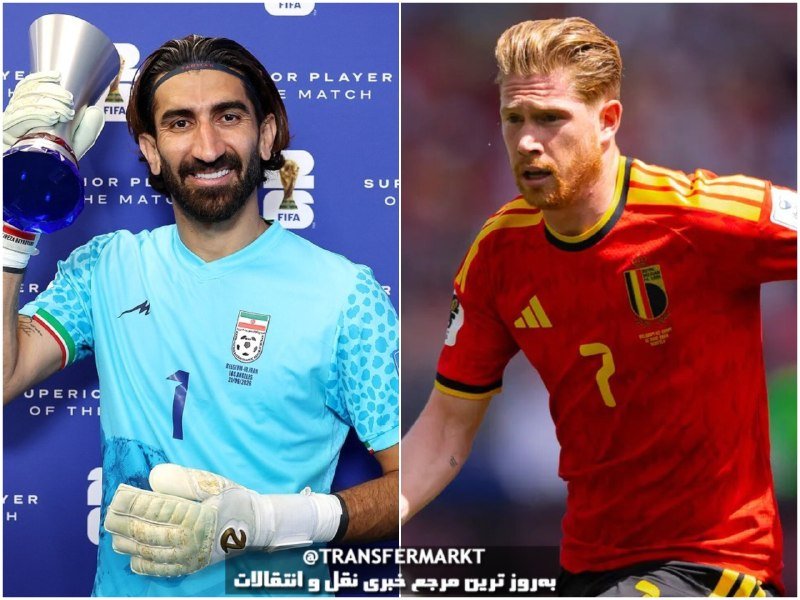
Belgium and Iran could not be separated in Los Angeles on 21 June 2026, finishing goalless in a Group G fixture that will be remembered less for the scoreline than for the two moments that shaped it: a red card and a VAR chalk-off that, for a single second, looked destined for the tournament's highlight reel. Mehdi Taremi, the Iranian striker, produced a lob reminiscent of Wout Weghorst's stoppage-time equaliser against Argentina at the 2022 World Cup — but the assistant's flag had already been raised, and the video review confirmed what the touchline had seen. Taremi was offside. The goal did not stand.
The result leaves Group G genuinely open heading into the final round of group-stage fixtures, with both teams still in contention for the knockout rounds. More usefully, the match offered a small window into the gap between footballing theatre and tournament reality: a moment that, in another VAR cycle, would have been a header-line. Instead, it became a footnote inside a bruising 0-0.
The goal that wasn't
The Weghorst comparison is irresistible because the geometry of Taremi's effort mapped so closely onto the Dutch striker's defining World Cup moment in Qatar four years ago. Taremi, operating just outside the Belgian penalty area, lifted a clipped finish over the advancing goalkeeper and into the net, the ball dropping under the crossbar with the same hang-time that made Weghorst's strike against Argentina instantly iconic. The travelling Iranian support in Los Angeles celebrated accordingly.
The celebration was premature. The referee's assistant had flagged for offside in the build-up; a video review confirmed the call. Taremi was a fraction ahead of the Belgian defensive line when the ball was played through, and by the standard the officiating crew had set for the rest of the afternoon — a tight line, applied consistently — there was no margin to spare. The goal was ruled out, and the score remained 0-0.
That is the small cruelty of the offside law as currently administered: a player can execute a finish of genuine technical quality and still see the strike scrubbed from the record because of a decision made two passes earlier. Iran had the better of the game's first half in terms of territory and threat, and the disallowed goal was the clearest evidence of that pressure. Belgium, for their part, will be relieved it did not count.
Red card, reshaped game
The match's other decisive moment arrived in the second half, when Belgium's Nathan Ngoy was shown a straight red card for a foul on Taremi. According to Al Jazeera's breaking-news wire, Ngoy was sent off for hauling down the Iranian striker, denying a clear goal-scoring opportunity. The dismissal compressed Belgium's shape, turned the contest into a rearguard exercise, and removed any room for Domenico Tedesco's side to chase the win through possession and width.
Iran, with the man advantage, pushed. Belgium, down to ten, sat deeper and trusted their goalkeeper to deal with what came his way. The result was a final twenty minutes of increasingly direct football — long balls into the Belgian box, second-ball scrambles, set-pieces loaded into the area — that the European side absorbed without conceding. A point, in the circumstances, was a recovery. For Iran, it was a chance missed.
Context: Group G's open arithmetic
The draw leaves Group G in a position few predicted at the start of the tournament. Belgium arrived as one of the seeded European sides; Iran arrived as the Asian representative widely tipped to play a defensive, transition-based game. Neither script held. Belgium have looked laboured in possession, vulnerable on the counter, and now carry a red-card suspension into their final group fixture. Iran, by contrast, have shown they can build sustained pressure against a top-tier opponent — and that Taremi, even when the law works against him, can manufacture the kind of chance that wins matches at this level.
The wider point is that 2026 has so far rewarded sides willing to defend deep, attack the channels, and wait for the kind of off-ball run that VAR was specifically introduced to police. Taremi's disallowed finish is a small case study in that trade-off. He made the right run. He timed the finish. He was denied not by the Belgian defence, but by the geometry of the offside line as the assistant saw it.
Stakes and what to watch
For Belgium, the priority is structural: tighten the defensive line that Taremi exploited, manage Ngoy's absence, and trust that the squad's attacking depth can manufacture a goal without needing to dominate territory. For Iran, the question is whether the performance — territorial control, a disallowed goal, sustained second-half pressure with a man advantage — translates into points in the final group game. A draw against a seeded European side is a credible return; it is not yet a qualification.
The VAR review, in the end, will be the talking point. Weghorst's goal against Argentina changed a World Cup. Taremi's almost-twin in Los Angeles will be remembered as the goal that the system caught, and the moment when a Group G fixture that could have been remembered for a piece of art was instead remembered for the technology that erased it.
This Monexus piece leans on the two dispatches that defined the night: BBC Sport's account of the disallowed Taremi finish, and Al Jazeera's breaking-news report on Ngoy's red card. Both wires treated the match as a 0-0 defined by marginal officiating calls, in contrast with social-media framing that emphasised the Weghorst echo above the scoreline.