France meet Iraq in Philadelphia as World Cup group stage offers Group C its first real test
Heavy weather warnings have forced organisers to urge fans to stay away from Philadelphia Stadium, where France and Iraq open their World Cup campaigns on 22 June 2026 under a cloud of logistical strain.
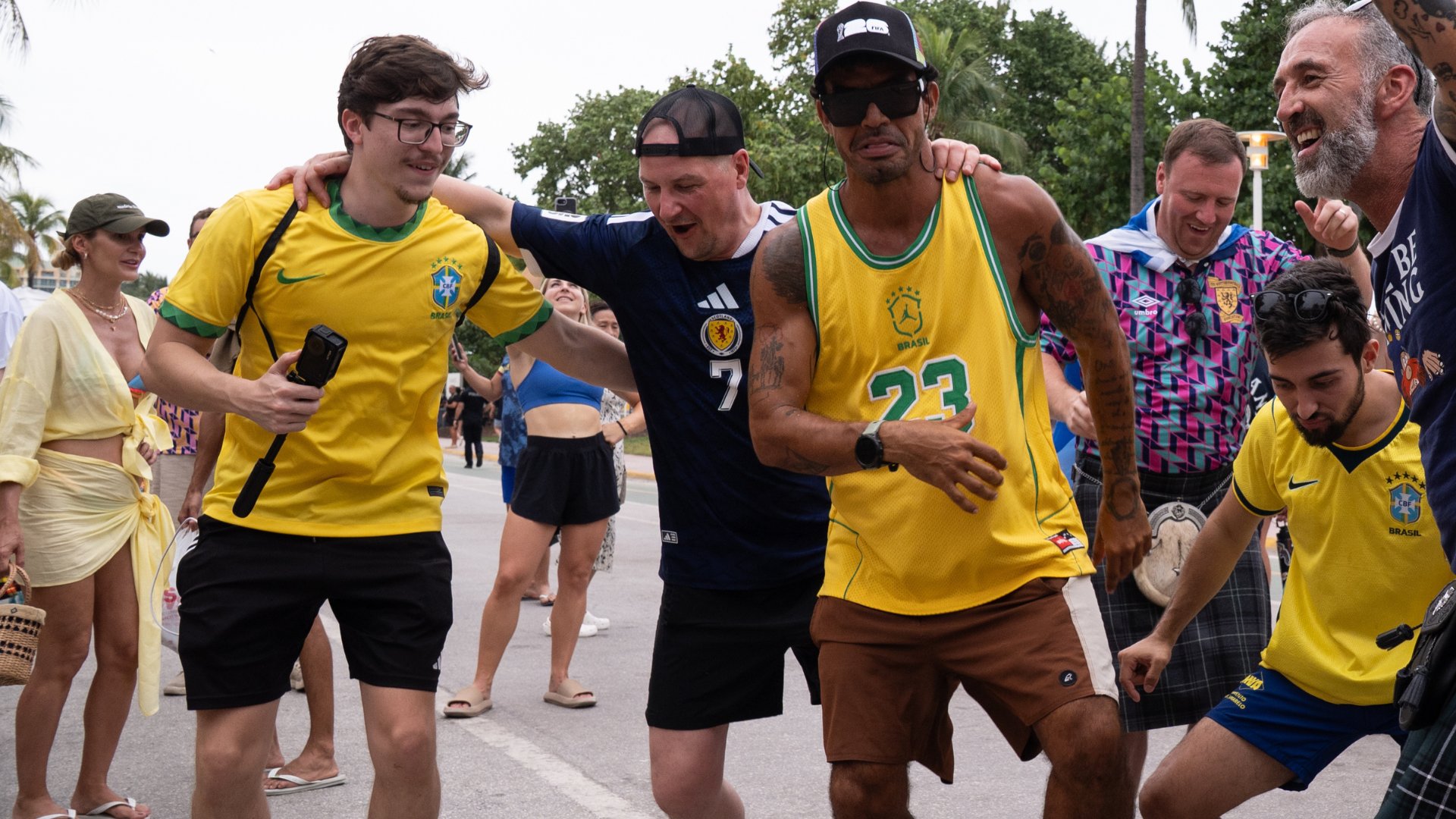
The opening fixture in Group C of the 2026 FIFA World Cup was supposed to be a procession: a France side, freshly re-stocked, walking past an Iraq team punching well above its weight. Instead, the script was rewritten by the weather. By 18:21 UTC on 22 June 2026, organisers were pleading with supporters not to travel to Philadelphia Stadium because of "inclement weather in the region," according to BBC Sport. Kick-off was still scheduled for the standard 30-minute mark inside the group window, with team sheets confirmed shortly before the broadcast. The result, when it comes, will sit inside a tournament that has been, on the field, almost an afterthought to the off-field theatre.
What looked on paper like a glamour tie has become, in practice, a stress test of tournament infrastructure — a competition stretched across three host nations, with kickoff times that expose any one city to the kind of disruption the United States east coast handles every summer. The match itself is a footnote; the running of the match is the story.
The fixture
France and Iraq were confirmed in their official line-ups by Transfermarkt at 19:50 UTC on 22 June 2026, with the Group C clash staged at Philadelphia Stadium. The venue sits inside the expanded 48-team, three-country footprint that the 2026 edition inaugurated, and Group C is widely viewed as one of the softer sections of the draw. France, the 2018 winners and 2022 finalists, enter as a top seed; Iraq's route to the finals marked another step in a generation of Gulf and West Asian football that no longer treats the group stage as a ceiling.
The betting markets reflect the obvious gap. SportsLine's Jon Eimer — on a 21-10 documented run across recent picks, per CBS Sports — installed France as comfortable favourites in the published odds piece released at 12:37 UTC on 22 June. None of that tells you anything about a 90-minute football match in a Philadelphia thunderstorm, which is the only number that will matter at full-time.
The weather problem
The headline from Philadelphia on Monday was not a tactical wrinkle. It was a safety instruction. BBC Sport's advisory, issued at 18:21 UTC, told fans not to travel to the stadium for the evening kickoff because of the weather in the region. Reuters, broadcasting from the venue at 19:05 UTC, showed supporters filtering into the bowl in spite of that guidance, captured in a live feed from the stadium concourses. The split-screen — a public broadcaster telling people to stay home, a wire service showing them arrive — captures the gap that opened between officialdom and supporter behaviour in the hours before kickoff.
The wider read is structural. A 48-team tournament, hosted across the United States, Canada and Mexico and scheduled through high summer, was always going to expose the soft tissue of scheduling: transit networks, local emergency-management capacity, and the willingness of cities to absorb a fan base the size of a small town's population. The France-Iraq tie is the first fixture of the day in Philadelphia and a relatively modest draw by World Cup standards. If the system struggles at this scale, the harder tests — knockout games in the same region, group finales in the south — are still to come.
A team-sheet story
The line-ups themselves, posted by Transfermarkt's official channel at 19:50 UTC, confirm the selection calls both managers made for a tournament opener. For France, the published XI reflects a squad that has been remade around Kylian Mbappé, whose movement and finishing shape the ceiling of this generation. For Iraq, the composition shows a side constructed around the defensive organisation and counter-attacking directness that delivered the country through the Asian qualifying rounds, with players drawn from a domestic league that has been exporting talent to Europe for the better part of a decade.
The deeper question, and the one the betting line largely ignores, is whether Iraq's structure can hold for 90 minutes against a France side that can score in clusters. A single early goal changes the geometry: Iraq would have to chase the match, and the physical cost of chasing Mbappé, Ousmane Dembélé and the supporting cast across a 110-by-75 metre surface in heavy conditions compounds quickly. Eimer's published pick — a comfortable France win — is the line that almost every projection model in circulation agrees with. The history of tournament football, though, is partly a history of teams ignoring those projections for one afternoon.
Stakes and what to watch
For France, the immediate stakes are calm progression: three points, no injuries, no suspensions, and a clean sheet against a team that will finish below them in 95 per cent of the simulations. For Iraq, the stakes are different. A draw or a narrow defeat with a respectable performance is a political and developmental asset back home; a rout is a regression. The margin of the result, in other words, will be read in two completely different capitals for two completely different reasons.
The structural pattern is familiar to anyone who has watched a World Cup group stage: established powers expect a routine, smaller federations treat every minute as a referendum. The weather, for once, is on nobody's side. It is on the stadium, the broadcast trucks, the public-transit planners, and the supporters in the queue at 19:05 UTC who decided to make the trip regardless of the advisory. The match, when it starts, will be the second most interesting thing happening in Philadelphia on Monday night.
Desk note: Monexus framed this around the operational strain of staging a 48-team tournament rather than the form-book narrative the wires led with — a small but real distinction, because the weather advisory, not the team-sheets, is the only information that meaningfully changes a supporter's day.
Wire provenance
This editorial synthesis draws on the following public wire/social posts:
- https://t.me/s/Transfermarkt