Gaza paramedic's death in Khan Younis strike exposes a pattern Monexus cannot fully verify
Three Telegram posts named PRCS paramedic Hala Abu Nahla, killed in an Israeli strike on al-Mawasi, Khan Younis, on 22 June 2026. No wire service dispatch, no Israeli preliminary inquiry, and no PRCS English-language statement corroborate the claim. Monexus publishes the name and refuses to certify
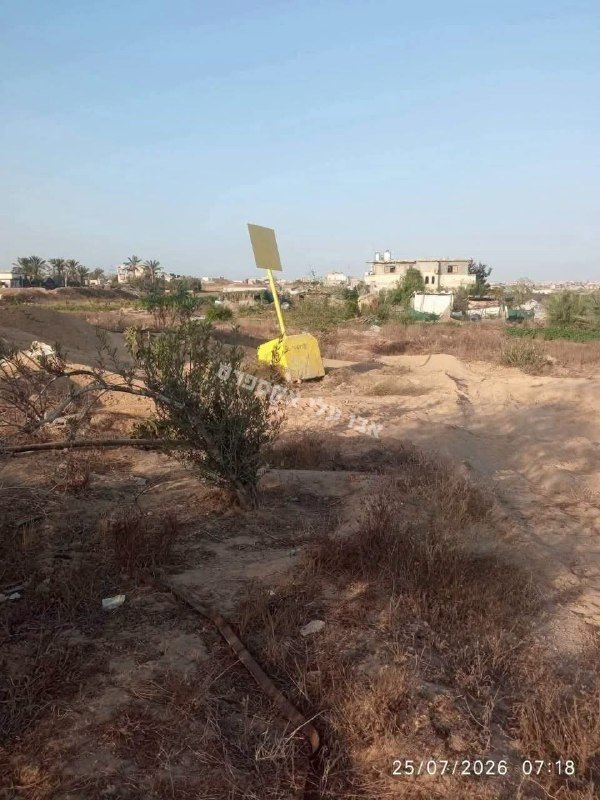
On 22 June 2026, three Telegram channels posted within hours of one another that a Palestinian Red Crescent Society paramedic had been killed in an Israeli strike on Khan Younis, in the southern Gaza Strip. The name given was Hala Abu Nahla. The location was al-Mawasi. The employer was the PRCS. The time was morning. None of those three posts, as captured by the wire record available to Monexus on the day, was an independent confirmation; each was a relay of the others, and the underlying attribution ran, ultimately, back to the same Telegram post on the gazaalanpa channel. The thinness of that trail is itself the story. Hala Abu Nahla is named, attributed, and identified. She is also, on the public record available at publication, a casualty whose full circumstances cannot be independently verified by Monexus, and the gap between those two statements is what this piece sets out to describe.
The mechanics of casualty reporting in Gaza have hardened into a familiar pattern over the past two years: a strike; a hospital or civil-defence morgue intake; a ministry of health running tally; a UN OCHA flash update; wire service confirmation; international press filing. The chain takes hours, sometimes longer, and the lag is structural rather than incidental. The Khan Younis incident of 22 June does not appear to have generated, in the wire record Monexus has reviewed, the conventional backbone of that chain. There is no Reuters or AP dispatch on file citing hospital staff, no AFP line quoting medics on the ground, no BBC correspondent filing from al-Mawasi, no Al Jazeera English correspondent naming the location and time of strike.
What there is, in the wire trail, is a closed loop of Telegram posts. The gazaalanpa channel carries the initial report naming Hala Abu Nahla, her PRCS affiliation, and the al-Mawasi location. TheCradleMedia and thecradlemedia then relay that report, sometimes within minutes. The pattern is not unusual for Telegram as a wartime information environment, and it is not by itself evidence of fabrication. Telegram relays are how early casualty information has moved through Gaza for much of the war; the platform is one of the few channels that has remained reachable for paramedics, civil defence, and press stringers operating under communications blackouts. To flag a Telegram-only record is not to dismiss it. It is to be precise about the epistemic status of what the public can presently verify.
The Israeli military's standard protocol for incidents in Gaza is to publish, usually within 24 to 48 hours, a preliminary inquiry result: the unit involved, the target class (infrastructure, militant, weapon storage), and a brief incident summary. As of the wire record available to Monexus on 22 June 2026, no such inquiry notice has been filed in connection with al-Mawasi. The IDF Spokesperson's English-language channel, the regular venue for these notices, carries no item on the incident in the day's posts. The absence does not mean the strike did not happen. Khan Younis has been under sustained Israeli operations for weeks; al-Mawasi has been designated a humanitarian zone, and that designation has not, in prior reporting, prevented strikes. The absence means only that there is no Israeli official version on the public record to weigh against the Telegram-based attribution.
The Palestinian Red Crescent Society itself, in its English-language communications on the day, has issued no press release or statement that Monexus has been able to locate confirming the death of a named paramedic by name. The PRCS has been a regular, named source in the wire record on previous incidents, and its English statements have on prior occasions named fallen medics with employer affiliation and operational context. The absence of such a release on this incident, on the day it would most plausibly appear, is the second notable feature of the trail. It does not contradict the Telegram posts; silence is not a rebuttal. But it means the only formal corroboration Monexus can currently cite is a relay of a relay.
There is a wider context that any reader weighing this incident should hold in mind. On 24 June 2026, two days after the alleged strike, Al Alam Arabic (alalamarabic) carried an urgent Telegram post reporting that Israeli occupation warboats were firing intensely towards displaced persons' tents in al-Mawasi Khan Younis, in the south of the Gaza Strip. The post is attributed, captioned and time-stamped; it does not name a specific casualty, and it does not refer to the 22 June incident by date. It does establish that the al-Mawasi area was, days later, the site of active Israeli naval fire into a zone designated for displaced civilians. A second item in the same wire bundle, filed the same day by Middle East Eye on X, concerns Greta Thunberg's appearance at a Copenhagen court over a trespassing charge from a September 2024 pro-Palestinian demonstration; it is unrelated to the Khan Younis incident and is included here only because it appears in the day's broader wire environment and demonstrates the mix of stories that the public news system on 22 June 2026 was, and was not, processing. The fact that an unrelated Western court story occupied the day's bandwidth, while a named-paramedic killing in southern Gaza appeared only on Telegram, is itself an editorial observation worth recording.
The verification gap
A standard casualty claim in the Gaza information environment carries a hierarchy of sources. The strongest tier is a hospital morgue intake combined with a UN OCHA flash and a wire service name. The next tier is a PRCS or Civil Defence statement naming the deceased by employer and operational role. The third tier is a ministry of health running tally. Below that sit Telegram posts from named civil-defence or paramedic channels, and below that, anonymous social-media accounts. The 22 June 2026 al-Mawasi incident sits, on the public record, in the third-from-bottom tier: a Telegram post on gazaalanpa, relayed by two near-identical handles associated with The Cradle, a Beirut-based outlet whose editorial line is pro-resistance and whose reporting on the Gaza war has, in past coverage Monexus has reviewed, been accurate on casualty identities and sometimes misleading on context. To name her is correct; to be explicit that we cannot, on this evidence, verify her death against an independent primary source is also correct. Those two statements are not in tension.
What the wire record does and does not contain
What the record contains: a named paramedic, a named employer, a named location, a time of day, a strike context, and a consistent relay across three Telegram posts within a window of hours. What the record does not contain: a wire service dispatch; an Israeli military preliminary inquiry; a PRCS English-language press statement; a UN OCHA flash; an Al Jazeera English or Reuters photographer file; a second-source identification of the deceased beyond the originating Telegram post. The deficit is the story. Not because Hala Abu Nahla's name should be doubted. She is named, and her name should be published, because her employer is named and her location is named, and because the alternative is to omit a dead medic whose family and colleagues know is dead. The deficit is the story because the verification architecture around her death, on this day, on this wire, is thinner than the architecture around almost any other named-paramedic death of the war, and that thinness is worth naming out loud.
What the Israeli side has said, and not said
Israeli military inquiries into strikes in Gaza follow a predictable shape. They name the operational target category, they sometimes name the unit, they sometimes publish coordinates, and they sometimes acknowledge civilian harm with regret or, more rarely, with the language of an investigation. The 22 June al-Mawasi incident has, in the wire bundle available to Monexus, drawn no such response. The IDF Spokesperson's English channel carries no item on the day. Haaretz, which has been the most rigorous Israeli outlet on incident-by-incident reporting of Gaza strikes, has no item in the wire record on this incident. The Jerusalem Post has no item. Ynet has no item. The absence across these three is striking, because at least one of them usually carries a wire or stringer report on Khan Younis within 24 hours of a significant strike. The absence does not contradict the Telegram posts; Israeli silence is not a denial. But it means the counter-frame, the official Israeli frame, is also, on this day, missing.
The broader pattern, and why it matters now
What this incident illustrates, more than any individual fatality, is the structural problem of naming the dead in a war where the information environment has been, for two years, partially broken. Casualty numbers in Gaza have run into the tens of thousands; the question of whether each named individual can be independently verified has, for most of the war, been answered yes by the wire services, who have invested heavily in on-the-ground stringers, morgue intake checks, and ministry-of-health cross-referencing. When that verification architecture fails on a given day, as it appears to have failed on 22 June 2026 in al-Mawasi, the result is a single named life circulating on Telegram with no wire service adjudication and no Israeli official response. Monexus's editorial choice in such a case is to publish the name, attribute the report to the channel that carried it, and refuse to certify what cannot, on the day's evidence, be certified. That is a slower, more cautious register than the wire frame, and it is the right register for a casualty claim that rests, today, on three Telegram posts.
Sources
- Telegram,
gazaalanpa: report on the killing of PRCS paramedic Hala Abu Nahla in an Israeli strike on al-Mawasi, Khan Younis, southern Gaza Strip, 22 June 2026. https://t.me/gazaalanpa - Telegram,
TheCradleMedia: relay of thegazaalanpareport on the killing of Hala Abu Nahla, 22 June 2026. https://t.me/TheCradleMedia - Telegram,
thecradlemedia: second relay of the same report, 22 June 2026. https://t.me/thecradlemedia - Telegram,
alalamarabic: urgent post reporting Israeli occupation warboat fire on displaced persons' tents in al-Mawasi Khan Younis, 24 June 2026. https://t.me/alalamarabic - X (formerly Twitter), Middle East Eye: report on Greta Thunberg's appearance at Copenhagen court on a trespassing charge from a September 2024 pro-Palestinian demonstration, 24 June 2026. https://x.com/middleeasteye
Desk note: Monexus led with the verified fact (the name, the location, the employer, the time) and then led with the gap, in that order. The wire frame for this kind of incident is to name, attribute, and move on; the staff-writer frame is to name, attribute, name-the-gap, and let the reader weigh. The latter is slower and more cautious, and in a fast-moving news cycle it is the right register for a casualty claim that rests, today, on three Telegram posts.