Hormuz on the table: how a 60-day US-Iran roadmap is rewriting Asia's energy map
Asia-Pacific markets closed mixed on 22 June 2026 as investors weighed a US-Iran 60-day peace roadmap, with President Trump publicly musing that Washington might "take over" the Strait of Hormuz if talks collapse.
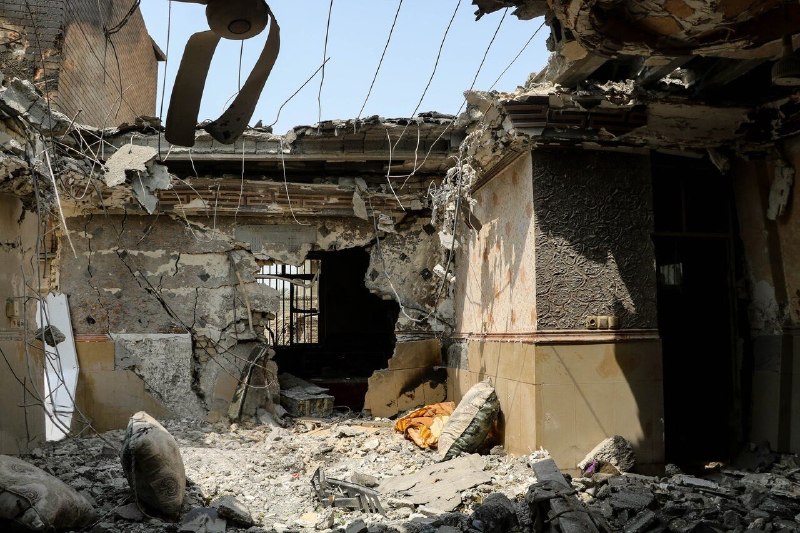
Asia-Pacific markets closed mixed on Monday, 22 June 2026, as traders worked through the implications of a US-Iran "60-day peace roadmap" that has put the Strait of Hormuz back at the centre of the global energy conversation. The Cradle reported the session's split verdict, with lower crude prices and signs of dip-buying coexisting in regional indices. Underneath the tape, the more consequential story was rhetorical: President Donald Trump told Fox News on 21 June 2026 that the United States might "take over" the Strait of Hormuz if a deal with Iran is not reached, and warned that Iranian negotiators would not be able to return home if Tehran closed the waterway, as carried on X by Unusual Whales at 17:37 UTC and 18:21 UTC respectively.
The roadmap is the operative fact for Asian finance. It is also a coercive instrument. Whether the next sixty days deliver an agreement or a crisis, the geography of the world's most important oil chokepoint has been reinserted into the headlines in a way that resets pricing dynamics, shipping insurance, and the strategic calculations of every capital from Tokyo to New Delhi.
A chokepoint with a price tag
Roughly a fifth of the world's traded oil passes through the Strait of Hormuz, the narrow shipping lane between Iran and Oman that connects the Persian Gulf to the Gulf of Oman and, beyond it, the Arabian Sea. Any sustained disruption does not merely raise the price of crude; it raises the cost of marine insurance, reroutes tankers around longer sea passages, and forces importing states to draw down strategic reserves. The Cradle's 22 June 2026 market wrap noted that oil prices eased on the news of the roadmap, but the directional signal is what matters: the market is being asked to price a sequence of binary outcomes, not a steady state.
Trump's two-pronged statement, that the US might "take over" the strait absent a deal and that Iranian negotiators would not be able to return if Iran closes it, is a public articulation of a coercion doctrine that has hovered below the surface of US Gulf policy for years. It also draws a direct link between a diplomatic calendar (the sixty-day window) and a military contingency. The bargaining is no longer just about enrichment levels or sanctions relief; it is about who controls the lane through which the bargaining's commodity travels.
What the Asian trading day actually showed
The Cradle's mixed-session read is consistent with how markets usually digest a headline of this weight. Indices with heavy exposure to energy importers — Japan, South Korea, Taiwan, and parts of Southeast Asia — get a small relief bid when crude softens, because their current-account arithmetic improves. Indices with energy exporters in their supply chain, or with downstream petrochemical exposure, take the other side. The dip-buying signs the outlet noted suggest that participants are not yet pricing a terminal breakdown; they are pricing volatility, and they are willing to step in on weakness.
That posture will not survive a single shipping incident in the strait. A single mine, a single fast-boat boarding, a single missile test that intersects commercial routing, and the same screens flip from "vol-buying" to "risk-off." The roadmap's sixty-day clock, in other words, is not just a diplomatic deadline. It is the period over which insurance underwriters must decide whether to keep war-risk premiums at current levels, quadruple them, or withdraw coverage altogether for parts of the Gulf.
The structural frame: coercion, corridors, and dollar politics
What we are watching is a familiar pattern: a great power using its naval position in a chokepoint to bend a regional actor's economic choices. The structural logic is plain. Energy is denominated in US dollars. A meaningful share of that energy transits a waterway the US Navy can, in extremis, seal off. That configuration gives Washington leverage over both the price that importing economies pay and the foreign-exchange flows that accumulating oil exporters must recycle.
The Iran case sharpens the picture because the country sits on the strait's northern shore, has a documented ability to harass or close commercial traffic, and is simultaneously the target of an American sanctions regime and a counter-balancing actor in regional alignments that include China. The roadmap therefore is not just a US-Iran document. It is an instrument whose execution, or failure, will be read in Beijing and New Delhi, in Brussels and Tokyo, as a signal about whether the US is prepared to underwrite the present security architecture of Gulf shipping — or to weaponise it.
This is the point at which the energy story and the architecture story become the same story. Coverage has tended to treat Hormuz as a price question and US-Iran as a nuclear question, and to discuss dollar hegemony as a separate monetary question. The roadmap forces a more honest reading: the strait is where price, proliferation, and currency converge. Whoever controls the corridor controls the terms on which the trade in hydrocarbons clears.
Counter-read: why the brinkmanship may be theatre
A sceptical reading deserves its own paragraph. The "take over" language, and the implicit threat embedded in the warning that Iranian negotiators will not be able to return, may be opening offers in a negotiation, not operational plans. Past US administrations have floated military contingencies in the Gulf only to settle for sanctions choreography; the same playbook could be in motion. Iran, for its part, has historically preferred calibrated harassment of tanker traffic to outright closure, because closure costs Tehran more than it costs the importers and the price reflex is unpredictable.
Under that reading, the sixty-day roadmap is real, the rhetoric is loud, and the probability of an actual kinetic disruption remains low. The market's mixed-but-resilient tape is consistent with that interpretation. The trouble is that credibility works in both directions. If the US is bluffing about the strait, Iran's leverage rises. If Iran is bluffing about closure, Washington's leverage rises. Each side is trying to set the price of the other's bluff in public, and the public is the market.
What is being priced, and what should be
Three things are being priced correctly. The first is the option value of disruption: tanker rates and war-risk premia reflect the chance, however small, that a serious incident forces a rerouting. The second is the political calendar: sixty days is short for a deal of this scope, and the option premium attached to that clock is non-trivial. The third is the corridor politics of the wider Indo-Pacific: any move that visibly strengthens the US Navy's de facto control of the strait will be read in Beijing as a doctrinal statement about other contested corridors.
Three things are being priced badly, or not at all. The first is the cost to importing economies of a sustained insurance shock, which can rival the cost of the underlying oil price move. The second is the political risk inside producing states, where governments will be pressed by domestic consumers to absorb price rises rather than pass them through. The third is the speed at which a non-military instrument — cyber action against port logistics, for example — could produce strait-equivalent disruption without crossing any of the rhetorical trip-wires now being set.
Stakes over the next sixty days
If a deal lands, the headline prize is sanctions relief, frozen enrichment, and a return to the diplomatic status quo of the mid-2010s. Asian energy importers get a durable price signal and a wider margin for fiscal repair. If the talks fail, the path runs from sanctions tightening, to maritime incidents, to a US naval posture in the strait that is no longer described as a contingency plan. Importers would face an immediate hit to current accounts; exporters would face a windfall that is politically usable and strategically short-lived; and the architectural question — who secures Gulf shipping, on what terms, and at whose expense — would move from the back pages of strategy reviews to the front pages of every finance ministry in Asia.
The most honest answer, sixty days out, is that we do not know. The Cradle's 22 June 2026 market wrap, Trump's 21 June 2026 Fox News comments as carried by Unusual Whales, and the absence so far of any shipping incident together describe a market in a holding pattern. Holding patterns end. The question is whether they end in a runway, a storm, or a stand-off, and the cost of guessing wrong is paid first in dollars and cents, and only later in the slow accumulation of strategic consequences that the next decade's analysts will have to explain.
Desk note: Monexus treated this story as a single market-and-strategy beat rather than splitting it into separate Iran and energy files. The wire frame, where it has appeared at all, has tended to isolate the diplomatic track from the trading day; the more useful frame is the one the roadmap itself forces — corridor politics, with a sixty-day fuse.
Wire provenance
This editorial synthesis draws on the following public wire/social posts:
- https://t.me/thecradlemedia
- https://t.me/TheCradleMedia
- https://x.com/unusual_whales/status/
- https://x.com/unusual_whales/status/
- https://t.me/thecradlemedia
- https://t.me/TheCradleMedia