The Strait of Hormuz, the negotiator, and the language of oil
A reported US warning that Iranian negotiators will not be allowed to leave the country if Tehran closes the strait turns energy security into a personal threat — and exposes how little leverage the language of diplomacy actually carries.
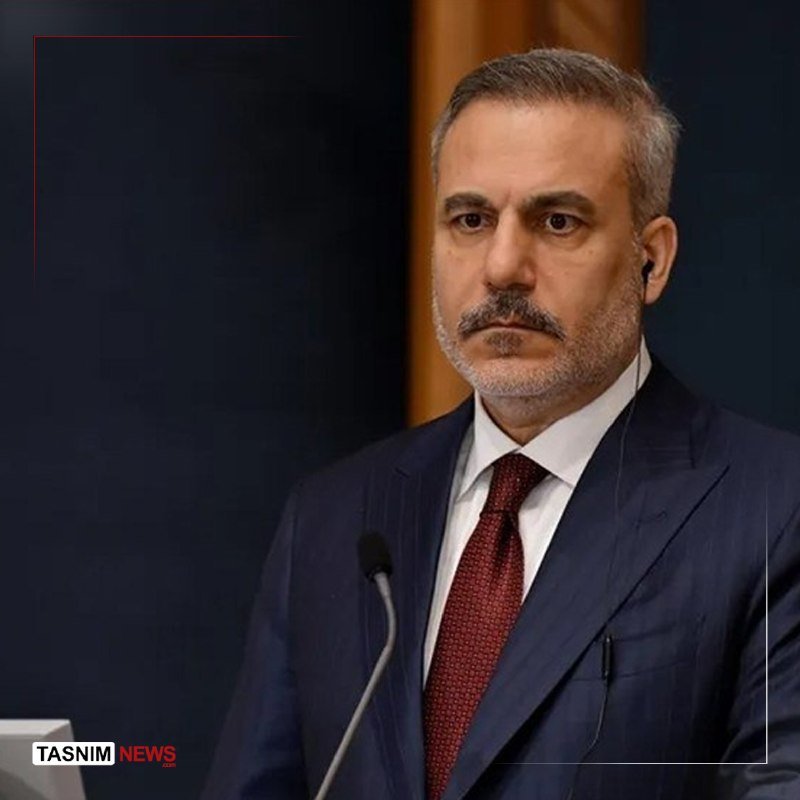
Around 17:37 UTC on 21 June 2026, the United States put a blunt condition on the table: if Iran moves to close the Strait of Hormuz, Iranian negotiators in the room will not be allowed to leave the country. The line, delivered by the US president to Fox News and amplified through market-moving wires, recasts an energy choke point as a personal threat against a diplomatic counterpart — and recasts a negotiating track as something closer to a hostage arrangement.
A reporter's notebook from the past 24 hours now reads less like a diplomatic dispatch and more like an oil-market briefing tied to a single decision: whether 21% of global seaborne oil keeps moving. On 22 June 2026, prices rose after Iran was reported to have shut the strait again, and the US threatened fresh attacks. The same hours produced an Indian Express account of eight sailors, three months on from a missile strike on the tanker MV Sky Light, still struggling for identity documents and jobs. Diplomacy, firepower, and the cost borne by people who had nothing to do with either sit inside the same news cycle.
What the wire actually says
The core facts are not in serious dispute. Reuters reported on 22 June 2026 that oil prices rose after Iran shut the strait again, with the US threatening new attacks. The same day, The Indian Express carried a fuller account of the political theatre, including a public framing of the threat against the Iranian delegation, and a separate piece noting Iran's attempt to project normalcy by mustering a draw — a sporting metaphor that lands oddly in a week of missile strikes and ship seizures. Earlier the same day, an account of the tanker MV Sky Light, struck by a missile three months before, put a human face on the bystander cost.
The market reaction, the diplomatic posture, and the labour aftermath are all visible in the public reporting. What is not visible is the negotiating substance. There is no published text of an offer or counter-offer, no named venue beyond a Fox News interview, and no third-party confirmation of what "close the strait" would actually mean in operational terms — a partial interdiction, a declared exclusion zone, or a move by the Islamic Revolutionary Guard Corps Navy. The reporting carries the choreography; the protocol is missing.
A threat dressed as a negotiating position
Strip the rhetoric away and the US position is straightforward: any Iranian move to close the strait will be met with force, and the negotiators in the room will be treated as a contingent liability. That is not unusual as a bargaining posture — great-power talks have long included implicit warnings about consequences — but the public airing of it, addressed to identifiable individuals, marks a shift. Diplomacy conducted in the language of personal risk tends to harden positions rather than soften them. The Iranian delegation, having heard its own return ticket described as conditional, has little reason to return to a table where the exit is itself a point of leverage.
The structural frame is older than this news cycle. Energy chokepoints confer bargaining power on whichever side credibly threatens to use them; the chokepoint-holder, in turn, faces a counter-threat from a military power with a global navy. When a third party — eight sailors, say, on the MV Sky Light — gets caught between the two, they do not appear in the bargaining algebra. The market notices. The ministry notices. The sailor does not.
The oil market as truth-teller
The price move reported by Reuters is the most candid read on the situation. Brent and the relevant benchmarks do not parse rhetoric; they price probability. A reported re-closure of the strait, even one whose operational status is contested, is enough to lift prices, and the threat of new attacks is enough to keep them bid. That is what the market is saying in real time: that the US–Iran track is now a tail-risk variable priced into energy, and that the diplomatic floor under it is thin.
The Iranian state, for its part, is signalling in two registers at once — a public posture of business as usual, expressed in the sporting language of a draw, and a reported operational posture of partial closure, expressed in the language of naval interdiction. The split is familiar. Tehran has long preferred to keep the strait as a switch it can flick rather than a wall it has built, because the switch is more useful at the negotiating table. The US response — explicit, public, and personal — is designed to raise the cost of flicking it.
What this publication finds
Three things are worth saying plainly. First, the visible reporting treats Iranian negotiators as instruments of the Iranian state and not as protected diplomatic personnel. That is a choice with consequences for any future track, and not only with Iran. Second, the energy market is treating the situation as serious; the prices are not theatre. Third, the human cost — the eight sailors still waiting on paperwork three months after a missile strike on the MV Sky Light — is the part of the story that does not make the wires as loudly as the threats, and it is the part that will outlast this particular news cycle.
The honest uncertainty: the sources do not specify whether the reported re-closure of the strait is a declared closure, an IRGC Navy interdiction, or a routing decision by commercial operators reacting to threat. Until that is clarified, every analyst commentary on the price move is a guess at which of those three it was.
Desk note: The wire led on the price move and the threat; this piece foregrounds the threat, the price move, and the sailor the wire did not foreground.
Wire provenance
This editorial synthesis draws on the following public wire/social posts:
- http://reut.rs/4v9etLP