Jensen Huang's pitch to the trades: why Nvidia's CEO is reframing the AI boom as a blue-collar story
Nvidia's chief executive spent late June 2026 telling electricians and welders that the AI build-out is their story. The pitch is a coalition play for the rooms where data centres are actually approved.
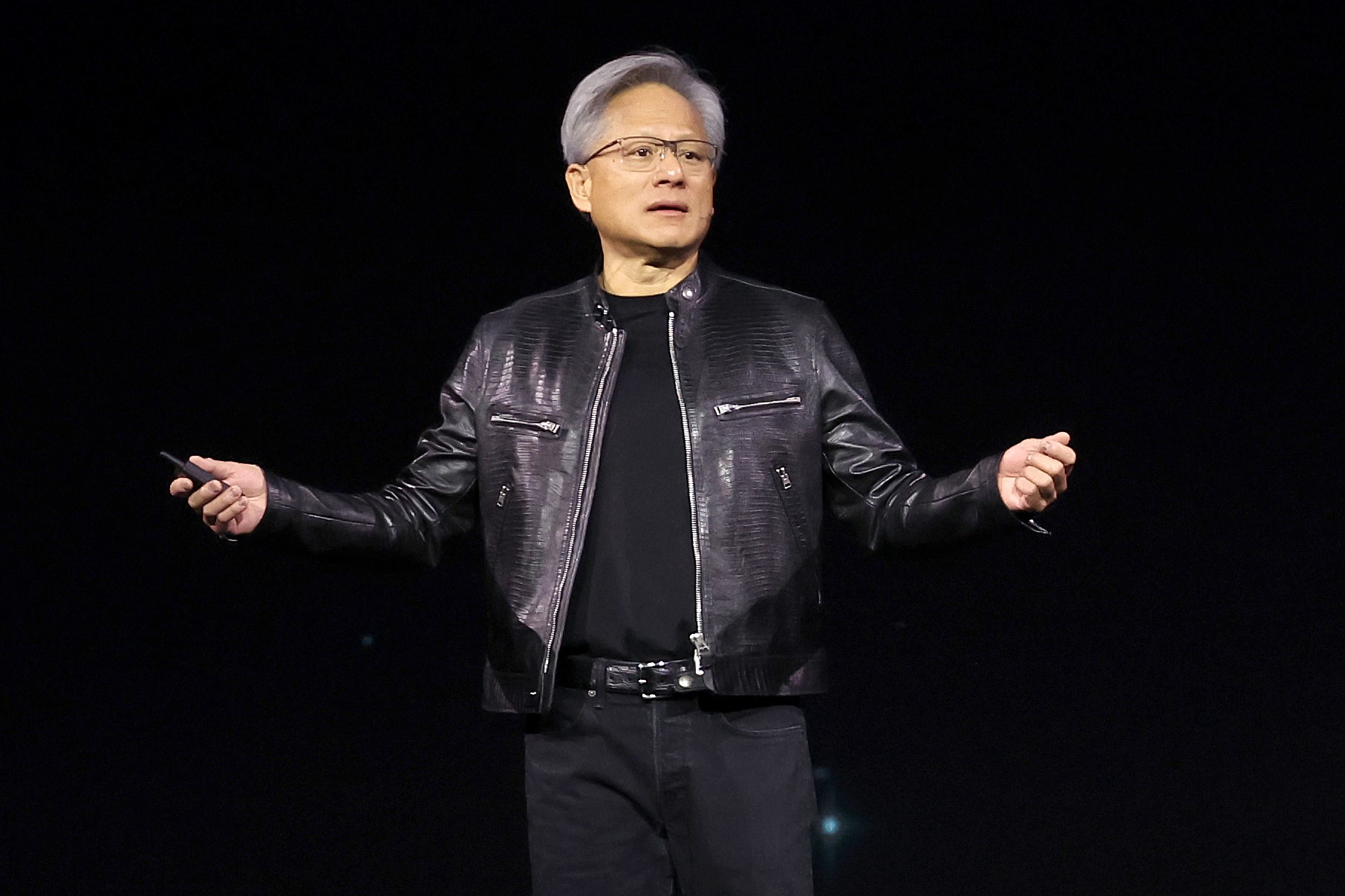
On a video stage in late June 2026, Nvidia's chief executive made an unusual sales pitch. Jensen Huang, the man whose company has become the single most valuable lever in the global AI build-out, stood in front of an audience of electricians, plumbers, welders, and HVAC technicians, and told them that the artificial intelligence boom was, at bottom, their story. The clips, circulated on X on 20 and 21 June, were short, spliced, and stripped of full transcript. What they show is consistent enough to read: a Silicon Valley executive framing a trillion-dollar infrastructure cycle as a blue-collar wage story rather than a frontier-engineering one.
That framing is a deliberate piece of political messaging, and it matters far beyond the keynote floor. The AI build-out has so far been sold to investors and policymakers in the language of frontier capability, sovereign compute, and trillion-parameter models. Huang's pivot to trades workers is a recognition that the next political bottleneck on that build-out is not capital, chips, or model performance. It is labour, and specifically the political permission to wire, cool, and power the data centres that the chips demand.
Why trades, why now
The United States is short of the people who physically build things. Data centres need high-voltage electricians, pipefitters, sheet-metal workers, and commissioning technicians in numbers that the existing apprenticeship pipeline cannot produce. Reports from utility commissions and contractor associations have spent the last year flagging the gap. Huang's appearance in front of a trades audience lands inside that shortage, and tries to recode it: the AI build-out is not an abstraction layered on top of the real economy. It is the real economy, and the people who build it deserve a share of the political dividend.
The strategic logic is straightforward. Every new AI campus requires a substation, a cooling loop, miles of conduit, and a commissioning crew. Each of those line items is now bottlenecked on a finite pool of licensed workers. If the trades perceive AI infrastructure as a project that benefits coastal technologists at their expense, local permitting fights, right-of-way disputes, and union bargaining tables all become harder. If the trades perceive it as their project, those same fights become easier. Huang is selling a coalition.
The political economy of the keynote
The remarks also arrive at a moment when the political centre of gravity around AI has shifted. State legislatures, county commissions, and utility boards have become the venues where the build-out is actually contested. Water rights in Arizona, substation siting in Virginia, gas-turbine permitting in Ohio, and transmission upgrades across the Midwest all sit in front of officials who answer to a workforce that does not, by default, write code. A keynote that hands the AI narrative to electricians and welders is a keynote aimed at the rooms where the next permitting fight will be heard.
There is also a defensive layer. Wages for skilled trades have risen sharply as the same workers are pulled toward semiconductor fabs, battery plants, and now data centres. The construction input-price index and union pay scales both reflect it. A chief executive who publicly credits trades workers as the engine of the AI build-out is buying cover for the wage inflation that the build-out is causing. It is a softer frame than lobbying against prevailing-wage rules or immigration limits, and it travels better on social video.
What the clips do and do not show
A caveat on the record: the three Huang statements cited here circulated as short video clips on 20 and 21 June 2026. The wire coverage of the same remarks is still developing, and the verbatim transcripts have not been released in full. Reading meaning into spliced clips is a familiar hazard. The honest position is that the direction of the messaging is clear, the specific wording is not yet public, and any quotation beyond the general tenor should wait for a full transcript or on-the-record wire copy.
What is beyond doubt is the pattern. Nvidia has spent the last several years calibrating its public message to each successive audience: developers, sovereign wealth funds, hyperscalers, and now the trades. Each iteration reframes the same underlying proposition, that accelerated computing is general-purpose infrastructure, in language tailored to the listener. The trades iteration is the most politically loaded of the set, because it is the first one aimed explicitly at a workforce that votes.
The stakes for the rest of 2026
If the pitch works, expect to see it echoed in state-level permit hearings, in trade-jointed-labour statements supporting new data-centre campuses, and in Nvidia's own apprenticeship and training partnerships. The test will be whether the rhetoric is matched by hiring and procurement patterns that flow toward the trades being courted, or whether the keynote fades into a one-cycle news item. Watch the next two state public-service commission dockets involving large load customers; the political permission to power AI will be granted, or withheld, there.
The deeper question is whether the AI industry's political coalition can hold together as the bill comes due. Capital, frontier researchers, hyperscaler customers, and now trades workers are not natural allies. Huang's job in the back half of 2026 will be to keep them all pointed at the same horizon. The keynote floor was where that work began.
Sources
- https://x.com/unusual_whales/status/.../HLSuCR1W0AAKVLV, Unusual Whales (X post, 20–21 June 2026)
- https://x.com/pirat_nation/status/.../HLQ8S8LW8AAkYX9, Pirat_Nation (X post, 20–21 June 2026)
- https://x.com/pirat_nation/status/..., Pirat_Nation (X post, 20–21 June 2026)
Desk note: Monexus is treating the three Huang clips as primary material for analysis rather than as wire-grade fact, given that full transcripts have not yet been published. The framing here is explainer and stakes, not quotation.