Iran hold Belgium to goalless draw in Los Angeles, capping a measured Group G opener
Belgium left frustrated in Los Angeles as Iran's defence held firm for a 0-0 draw, a result Press TV framed as one of the tournament's finest performances by Team Melli.
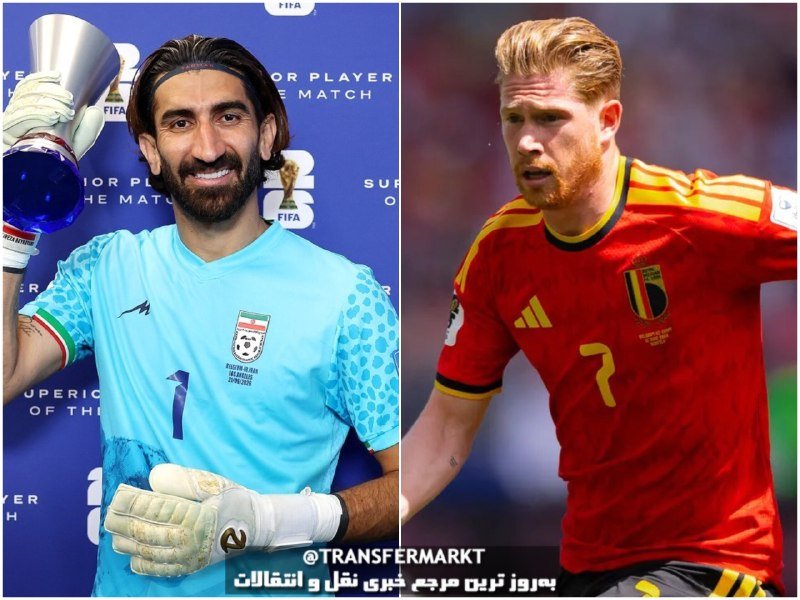
Belgium's Group G opener at the 2026 World Cup ended without a goal on 22 June 2026, as Iran's defence frustrated a Red Devils side widely tipped to take three points in Los Angeles. The 0-0 result leaves Group G open after the first round of fixtures, with both sides taking a point from a match that exposed the limits of Belgian chance-creation against a disciplined, low-block opponent.
The draw is less a story of Belgian failure than of Iranian organisation. Belgium arrived with the deeper squad on paper, yet could not convert territorial control into a goal against a back line that sat deep, narrowed the central lanes and contested every second ball. The point matters more for what it does to the group arithmetic than for its place in the highlight reel.
A stalemate in Los Angeles
Press TV correspondent Ramin Mazaheri, reporting from the Los Angeles venue, described the encounter as one of the finest matches of the tournament so far for Iran, framing a goalless draw against a higher-ranked opponent as a defensive and tactical statement rather than a setback. For an Iranian side operating as a clear underdog in the group, taking a point off Belgium in the opening game changes the shape of what is now possible in the remaining two fixtures.
Belgium, by contrast, were left to rue a familiar failing. The Reuters match report from Los Angeles noted that the team "failed to find a way past the stubborn Iranian defense," with the Red Devils unable to break down an opponent that sat in two compact banks of four and looked to spring on the counter. The 0-0 line, scoreless rather than dramatic, is the kind of result that tends to be remembered for the team that defended it, not the one that drew it.
What the result does to Group G
The point leaves Group G finely balanced after matchday one. Belgium's failure to win turns the group's other fixture into a high-stakes contest: any side that takes maximum points from its opener now sits above the Belgians on goal difference or, at minimum, with a result in hand. For Iran, the calculus is simpler. A draw against a seed is a foundation; it converts the remaining two group games into two opportunities to qualify rather than two must-win matches from a zero-point start.
The structural read is that Iran have played the percentage game well. A team written off in pre-tournament coverage has taken a point and, more importantly, has conserved energy and avoided injury against an opponent that asked more of them physically than the scoreline suggests. Whether that platform can be built on depends on the next two matches, but the opening ledger is now an asset rather than a liability.
The counter-narrative: a missed opportunity, not a defensive triumph
The dominant Belgian read, voiced in the Reuters wire, is frustration: a side expected to win has not won, and the question now turns to whether Domenico Tedesco's group can recover their finishing touch in time for a tournament that punishes slow starts. Belgium's attacking depth on paper did not translate into clear chances, and the failure to break a deep block will be a familiar refrain for a generation of Red Devils squads.
The Iranian counter-frame, carried in the Press TV dispatch, is the inverse: that a 0-0 against a top-ten side, on hostile American soil, with a squad built around defensive cohesion, is precisely the result the team was structured to produce. Both readings can be true at once. The wire service reports the frustration; the Iranian-state coverage reports the validation. Each is correct from its own vantage, and the scoreline is the only fact that both must accept.
Stakes and what comes next
For Belgium, the next two group games become the de facto knockout stage of their opening campaign. A single win, combined with a goal or two of attacking fluency, restores the original trajectory. Anything less, and the question of whether this Belgian generation can translate squad quality into tournament runs will resurface, as it has at every major cycle since 2018.
For Iran, the draw is a launching pad. The team has demonstrated that the gap to a top-tier opponent, on a neutral American venue, can be closed by organisation alone. Whether the attacking half of the squad can convert the next two games into the points needed to advance is a separate question, and one the source material does not yet answer.
How Monexus framed this: the wire reported a frustrating night for Belgium; Press TV reported a triumph of Iranian defensive discipline. Both framings rest on the same 0-0 scoreline in Los Angeles on 22 June 2026, and the piece gives each its structural weight before letting the group table speak for itself.
Wire provenance
This editorial synthesis draws on the following public wire/social posts:
- https://t.me/presstv/