Iran signals it can spend the second tranche of frozen funds on its own terms
Tehran's central bank governor says non-sanctioned goods are fair game for the second batch of released funds, and that the United States is not a required supplier of agricultural inputs.
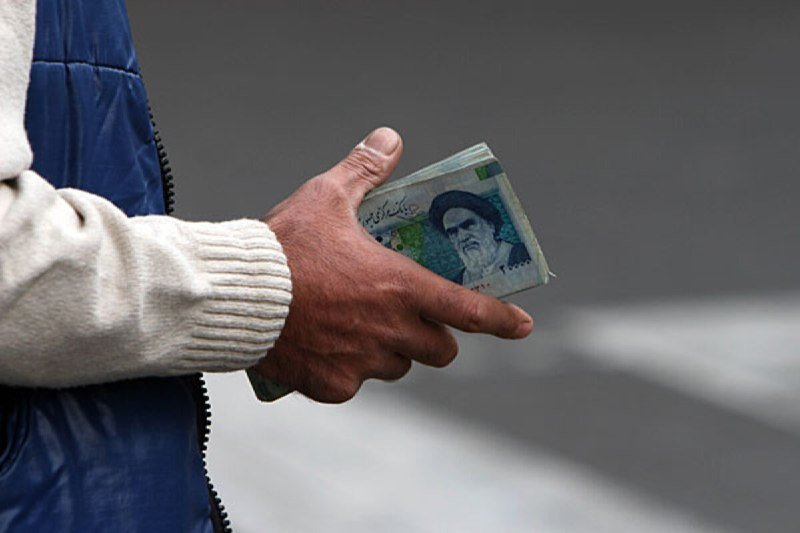
On the evening of 22 June 2026, the Governor of the Central Bank of Iran, Abdulnaser Hemmati, drew two lines around the second tranche of Iran's frozen assets that, read together, amount to a quiet assertion of sovereignty over how the money is spent. The funds, he told state outlets, may be used to purchase any goods not subject to sanctions — and there is no obligation to source agricultural inputs from the United States, even if Washington offers competitive terms.
The sequencing matters. Tehran is signalling to its domestic audience, to its Gulf neighbours, and to the deal-makers in Washington that the mechanics of the second tranche will be set in Tehran, not in the offices of the Treasury Department's Office of Foreign Assets Control. The framing is granular and legalistic on purpose. Hemmati is not a political spokesperson; he is the central bank governor. When he says the bank can buy any non-sanctioned good, he is reading the agreement text aloud.
What the governor actually said
The earliest of the evening's wire items, published by Al-Alam at 20:01 UTC, summarises the position in headline form: Iran can buy any non-sanctioned goods out of the second batch of released funds. The fuller exposition followed on Tasnim, in three instalments between 20:33 and 21:00 UTC. Asked by a Tasnim reporter whether Iran had a hard requirement to source agricultural inputs from the United States, Hemmati replied that it did not. Pushed on whether the United States would be considered at all, he answered that the only test is rate and quality — if American suppliers match the terms of competing exporters, the central bank has no obstacle to buying from them. The implicit corollary is the substantive one: Iran will not privilege American suppliers, and the agreement does not ask it to.
The governor also returned to the much-disputed "first 6 billion dollars" released in earlier tranches — the funds channelled through Swiss and other intermediaries for humanitarian and agricultural purchases under tight banking controls. Hemmati's framing, according to Tasnim, is that the basis for the use of the first tranche is the text of the agreement itself, not political pressure from outside. The first six billion was spent, in his telling, on its own terms; the second tranche will be spent the same way.
The structural read
The dollar's status as the operating currency of global trade has always given Washington an off-switch — the ability to render any cross-border transaction unserviceable by isolating the relevant bank, port or refinery from the corresponding-banking system. The architecture of frozen-asset releases during the 2025–26 negotiations has been the visible counter-move: structured channelling, escrow arrangements, third-country intermediaries, itemised end-use lists. Hemmati's evening comments are best read as the Iranian side announcing that the second-tranche architecture will not be tightened beyond the first, and that the political pressure to widen the supplier list — to push Iran toward American grain, American fertiliser, American shipping — has not landed.
This is a familiar kind of negotiation by footnote. The headline agreement is usually a political event; the contested ground is the procurement annex, where the working-level officials decide who is allowed to compete. By stating that rate and quality, not nationality, set the test, Hemmati is foreclosing a particular Western ask — that humanitarian release be coupled to a quiet commercial concession — without formally reopening the deal.
The counter-read and what remains contested
The official line out of the United States and the European intermediaries has been that the structured-release mechanism is itself a confidence-building measure: Iran gets liquidity for civilian goods, the counterparties get verifiable end-use, and the broader sanctions architecture remains intact. On that reading, Hemmati's remarks are routine. He is restating the procurement neutrality that the text of the deal was always meant to guarantee.
The more sceptical read, more common among Iran-watchers in Washington and Tel Aviv, is that the governor is laying the rhetorical groundwork to redirect tranche-two funds toward sanctioned end-uses once the goods enter Iranian territory — a charge that, by its nature, is hard to disprove in advance. Hemmati's own answer to the agricultural-inputs question — that the bank is not required to source from any particular country — is technically consistent with both readings. The dispute is over what happens downstream of the purchase, not over the purchase itself.
What the sources do not specify, and what will determine which reading ages better, is the granularity of the end-use reporting. If tranche-two is published with line-item transparency comparable to the first six billion, the neutral-procurement framing will hold. If reporting thins out, the sceptical framing will gain weight regardless of what was agreed on paper.
The stakes
For Tehran, the message is calibrated for a domestic audience that has heard a decade of promises about unfrozen assets and watched the actual flows arrive slowly, in tranches, with strings attached. The central bank governor is telling that audience that the second batch will not be spent as tribute — that the choice of supplier belongs to the buyer.
For Washington, the message is more uncomfortable. A humanitarian release that was meant to double as a soft commercial opening is, on Hemmati's account, going to function as a purely humanitarian release. The political premium that the Biden–Trump-era negotiators wanted to attach to the funds — buy American, prefer American — does not survive the governor's reading of the text.
For the wider sanctions architecture, the precedent is the part to watch. The first tranche set a template of structured, end-use-tracked humanitarian release; the second tranche, on Hemmati's terms, will either confirm that template or quietly loosen it. The most plausible outcome is a slow drift toward greater Iranian discretion, masked by continuing formal compliance with the procurement annex — exactly the kind of drift that, over a decade, is what changes an architecture into a habit.
The evening's briefings leave one question hanging. Hemmati spoke of rate and quality as the operative tests. He did not name which countries' exporters are currently winning those tests. The shape of tranche-two will depend on that answer, and on whether the United States chooses to compete on price and logistics, or to make the political argument that neutrality is, in this case, not a sufficient principle.
Desk note: The wire outlets covering this story — Al-Alam and Tasnim — are Iranian state-aligned. Their reporting is treated here as primary material, quoted and paraphrased with explicit sourcing, and read against the public text of the structured-release framework. Where the Iranian framing and the Western reading diverge, the divergence itself is the story.
Wire provenance
This editorial synthesis draws on the following public wire/social posts:
- https://t.me/alalamarabic
- https://t.me/tasnimnews_en
- https://t.me/tasnimnews_en
- https://t.me/tasnimnews_en