Sixty days on the clock: what Iran's Hormuz memorandum does — and does not — settle
A US-Iran memorandum opens the Strait of Hormuz and starts a 60-day countdown, but a same-day insurance decree and an Israeli operation in Lebanon keep the chokepoint on a hair trigger.
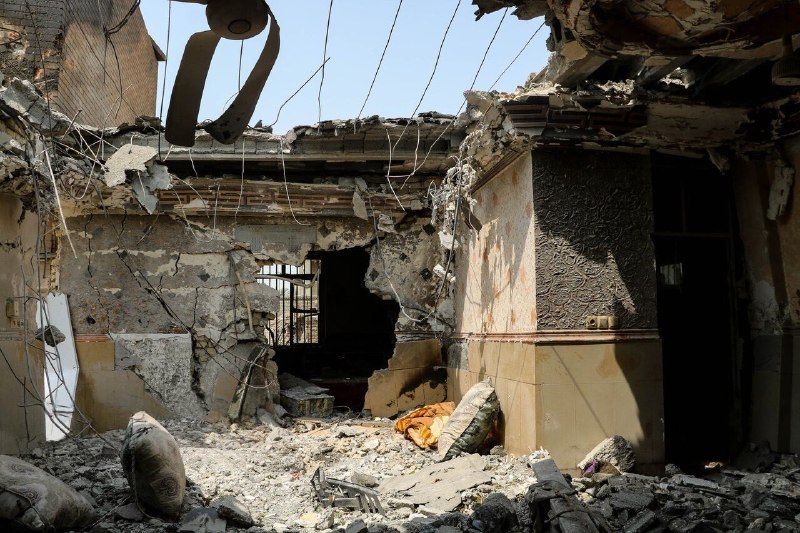
On 21 June 2026, the diplomatic weather over the Persian Gulf changed twice in a single news cycle. First, a US-Iran memorandum of understanding was reported to suspend active hostilities, reopen the Strait of Hormuz, and start a sixty-day clock for negotiating a final nuclear deal. Hours later, Iran imposed a mandatory insurance regime on every ship transiting the strait — free for the initial sixty days, but explicitly designed to convert into fees thereafter. The two moves sit in obvious tension. One is meant to de-escalate. The other is a financial lever that survives any de-escalation, and that is the point of it.
What is now in play is not just the question of whether Iran and the United States can finish a nuclear agreement inside two months. It is whether the world's most important oil chokepoint will be governed, for the foreseeable future, by an Iranian insurance instrument that no maritime underwriter can ignore. The memorandum is the headline. The insurance decree is the structure underneath it.
What the memorandum reportedly does
According to a document summarised on 21 June 2026 by the financial-research platform Unusual Whales, the memorandum ends active hostilities, reopens the Strait of Hormuz, and begins a sixty-day negotiating window for a final nuclear deal. The framing — "ends active hostilities" — is deliberately narrow. It does not declare peace. It does not normalise relations. It pauses the kinetic layer of the crisis so that diplomats can work.
The decision to route the announcement through a research outlet rather than a foreign ministry is itself telling. The text of the memorandum has not been published by either government. What is in circulation is a summary, drafted in the language of markets rather than of statecraft. The operative words are "60-day clock." That is the unit in which traders, insurers, and shipping operators will now think about Hormuz — not in months or years, but in two monthly cycles of option expiry and policy renewal.
The reopening is conditional. On 20 June 2026, Iran briefly closed the strait again, citing continued Israeli military operations in Lebanon, according to a Financial feed circulated that afternoon and an Axios report cited on the same day by Unusual Whales. The closure and the memorandum arrived within roughly twenty-four hours of each other, which is the gap that should determine how the agreement is read: as a fragile pause, not a settlement.
The insurance decree is the real instrument
On 21 June 2026 at 22:12 UTC, Disclose.tv reported that Iran has imposed mandatory insurance on ships transiting the Strait of Hormuz. The first sixty days are free. After that, fees follow. The mechanism is straightforward: any commercial vessel that wants to use the waterway must hold coverage issued or recognised by an Iranian instrument. For the first two months, the cost is zero. The legal effect is not.
The decree is a Suez Canal Authority model applied to the world's most strategic oil lane. Egypt's canal authority has, for decades, used transit rules and tonnage-based fees to extract rent from the geography it controls. Iran is now writing the same kind of instrument for Hormuz, but with a critical difference. The canal authority charges for passage. The Iranian instrument charges for the right to be insured for passage — a layer of sovereignty that travels with the ship and that, in any future closure, would still be on the books.
This is not a hypothetical. Major shipping insurer Chubb, on the same day the memorandum was circulating, cautioned that security in the strait remains an "hour to hour" situation. An underwriter describing a major lane in those terms is, in effect, telling clients that premiums could move on the next news tick. If Iran can issue or recognise coverage, it can also — in extremis — refuse to renew it, or price it out of reach. The free period is the on-ramp. The fee schedule is the destination.
Why the timing is the story
Three movements converged on 20–21 June 2026 and produced the picture the market is now pricing. On 20 June at 15:06 UTC, Unusual Whales flagged an Axios report that Iran was closing the Strait of Hormuz over Israeli attacks on Lebanon. A CryptoBriefing wire at 15:47 UTC carried the same line. A Finance feed at 17:06 UTC reported that Iran's joint military command had framed the closure as a response to continued Israeli operations in Lebanon. Less than twenty-four hours later, the memorandum was on the table and the insurance decree was on the way.
That sequence is not chaotic. It is a negotiation pattern. The closure demonstrated the cost of doing nothing. The memorandum softened the cost. The insurance decree institutionalises a permanent toll. Read in that order, the three moves are not contradictory — they are complementary. Iran has shown that it can close the strait, agreed to stop closing it, and on the same day installed a mechanism that lets it keep collecting from the strait whether it is closed or open.
The structural lesson is older than this crisis. The waterway itself cannot be moved. Roughly a fifth of seaborne crude passes through it, along with a substantial share of liquefied natural gas. Whoever sets the rules of passage sets the price of energy for everyone downstream. For most of the postwar era, that price was set, implicitly, by the United States Navy's guarantee of freedom of navigation. Iran's insurance instrument does not displace that guarantee. It adds a national surcharge to it.
What is being negotiated, and what is not
The sixty-day window is officially about a nuclear deal. The matters at issue in such a deal — enrichment capacity, stockpile disposition, inspections regime, sanctions sequencing — are technical, but the political geometry around them is not. Iran wants sanctions relief and a formal recognition of its right to enrich. The United States wants limits that survive a change of administration in Washington and that constrain Iran's missile programme as well as its nuclear one. Israel, whose operations in Lebanon triggered the second closure, is not a signatory and has not been quiet about its scepticism.
What is not being negotiated, in this round, is the legal status of the strait itself. The 1982 UN Convention on the Law of the Sea treats transit passage through straits used for international navigation as a freedom that cannot be suspended. Iran's insurance regime does not, on its face, suspend that freedom. It conditions it on financial compliance. The convention has nothing to say about a mandatory insurance product issued by a coastal state — which is precisely the gap the decree is designed to occupy.
This is the move that financial analysts will spend the next two months trying to price. The free period insulates the decree from the immediate charge of hostage-taking. The sixty-day clock aligns the fee schedule with the nuclear negotiating window, so that the introduction of charges can be staged as a response to negotiation failure rather than as the original intent. If a deal is reached, the fees can be folded into a broader settlement. If no deal is reached, the fees start to flow on day sixty-one, and the world's oil buyers are funding an Iranian sovereign instrument at the precise moment that sanctions pressure would otherwise be intensifying.
Counter-read: the agreement holds, and the decree is theatre
The alternative reading is that the decree is a face-saving instrument for Tehran — a way to claim a structural win at home while, in practice, doing nothing the United States cannot live with. Under this view, the insurance regime will be underwritten by Iranian-linked entities that the major reinsurers will not recognise, and the decree will collapse in practice into a registry fee that Lloyd's of London syndicates treat as one more line in the policy. Chubb's "hour to hour" caution, on this reading, is the sound of insurers pricing ordinary Hormuz risk, not of an industry bracing for a sovereign toll.
There is something to this. Iran's economy is under severe pressure, and the political incentive to convert the decree into actual revenue, rather than to keep it as a deterrent, is real. If a nuclear deal lands, the decree loses much of its purpose. The structural problem with the optimistic reading is that the same logic works in reverse. The decree does not need to generate revenue in the next sixty days to be consequential. It needs to be on the books, and to be understood by every ship operator and every underwriter as the new condition of passage. Both of those conditions are already satisfied.
Stakes over the next sixty days
The clearest losers, if the trajectory continues, are the Gulf states whose exports depend on the strait and which have no role in the underlying negotiation. Saudi Arabia, the UAE, Kuwait, Iraq, and Qatar ship through Hormuz. None of them are party to the US-Iran memorandum. Their exposure to a sixty-one-day fee schedule is large and growing, and their leverage over the instrument that imposes it is small.
The clearest winners are the actors who can position themselves as intermediaries — Iranian state insurers on the sell side, London and Bermudian reinsurers on the risk-transfer side, and the political actors in Washington, Tehran, and Tel Aviv who can claim credit for whichever version of the next sixty days ends up holding. Energy traders, for the moment, are the most direct beneficiaries: volatility is the product, and the insurance decree guarantees more of it.
For the wider question of how the global energy system is governed, the precedent is uncomfortable. If a coastal state can layer a mandatory insurance product on top of freedom of navigation, then the same template is available, in principle, to any state that controls a strategic chokepoint. The Bab el-Mandeb, the Malacca Strait, the Taiwan Strait — none of them have Iranian-style decrees attached today. The Hormuz instrument is, for now, a single case. Cases have a way of becoming categories.
What remains uncertain
Three things are not yet clear. First, the text of the memorandum itself. The document circulating is a summary, and the differences between a summary and a signed text are the differences between a market move and a treaty. Second, the practical enforceability of the insurance decree. The decree is real; whether underwriters outside Iran will treat it as a condition of coverage is a question the next renewal cycle will answer. Third, the position of Israel. The reported trigger for the second closure — continued operations in Lebanon — is a reminder that the parties to the memorandum are not the only parties whose actions can move the strait. The sixty-day clock is a US-Iran clock. The security situation on Israel's northern border is not on that clock, and it is the situation that produced the closure that produced the memorandum in the first place.
What can be said with more confidence is that the Hormuz file has moved, in the space of twenty-four hours, from a binary — open or closed — to a continuous instrument. The strait is open. It is also, from 21 June 2026 forward, conditionally insured. The two conditions, read together, are the new shape of the chokepoint.
Desk note: Wire coverage of the memorandum has been largely transactional — opening, clock, negotiating window. Monexus is reading the insurance decree issued the same day as the durable element of the package, and the closure in Lebanon as the variable that the agreement has not, in fact, controlled.
Wire provenance
This editorial synthesis draws on the following public wire/social posts:
- https://x.com/unusual_whales/status/iran-closing-strait-of-hormuz-axios
- https://t.me/CryptoBriefing
- https://x.com/polymarket/status/chubb-hormuz-hour-to-hour
- https://x.com/unusual_whales/status/iran-closes-strait-lebanon
Follow the event.
These dated source records provide context. They do not retrospectively verify this archive article.
Separate what the nuclear watchdog reported from what it could not determine after the June 2025 strikes.