Tehran's procedural win in Muscat is not yet a deal
Iran confirms procedural arrangements for further US talks. The substance — enrichment, sanctions, verification — remains untouched, and the gap between announcement and agreement is where wars begin.
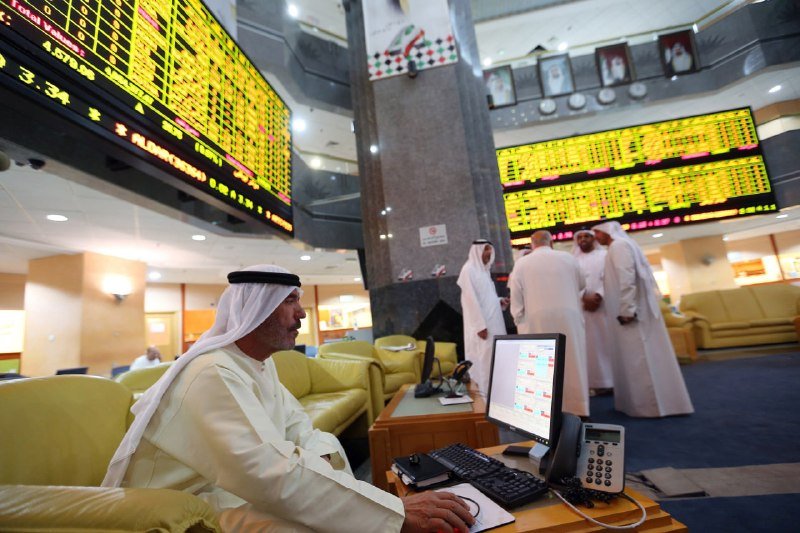
On 22 June 2026, just before 23:00 UTC, Iran's Foreign Ministry announced that an agreement had been reached on the arrangements for a further round of negotiations with the United States. The statement, carried by state-linked outlets Fars and Tasnim, was attributed to Majid Takht-Ravanchi-era deputy Kazem Gharibabadi, who chairs Iran's technical negotiating team. The word that matters is "arrangements": logistics, modalities, the choreography of talks — not the substance that would actually move the dial on enrichment, sanctions relief, or verification.
In diplomatic grammar, an arrangements agreement is the entry ticket. It is what allows two governments to sit in the same room without one of them walking out on procedural grounds. Reading it as a breakthrough is the mistake Western wires will spend the next 48 hours making, and reading it as a collapse is the mistake Iranian hawks will spend the same 48 hours making. The honest read sits in the middle: the channel is open again, the harder questions are still queued.
What was actually announced
The text released by the Foreign Ministry and amplified by Fars, Tasnim and the Arabic-language al-Alam channel is narrow in scope. It confirms that a procedural framework has been agreed for a subsequent round of talks with the US side. It does not name a venue, a date, or a counterpart. It does not commit either party to a freeze on enrichment, a release of frozen funds, or any change to the sanctions architecture. The named official is Gharibabadi, the deputy foreign minister who has run the technical track since the 2015 Joint Plan of Action negotiations — a sign that Tehran is keeping the nuclear file with a tested, technocratic hand rather than a political one, at least at this stage.
This is the same architecture of ambiguity that produced the 2015 deal and the 2018 collapse of it. Both rounds began with procedural confidence and ended in a fight over sequencing: who moves first, who verifies, who releases what. The arrangements are easy. The order of operations is impossible until a political decision is taken at the top in Washington and in Tehran.
The counter-narrative: why Tehran is signalling
The Iranian announcement is also a domestic-political instrument. Hardliners in the Majles and the Islamic Revolutionary Guard Corps command have spent the spring arguing that direct talks with Washington reward US pressure rather than relieve it. By foregrounding a deputy foreign minister rather than the foreign minister, and by describing the outcome as "arrangements" rather than "talks," the Foreign Ministry is buying itself space: enough to claim engagement without offering the opposition a target.
The counter-narrative inside Iran — the one carried by conservative outlets aligned with the security establishment — is that procedural agreements are a Western delaying tactic. The argument runs that Washington uses the mere existence of a channel to soften European enforcement of oil-export sanctions, to split Gulf Arab states from a maximalist posture, and to deny Tehran the diplomatic oxygen that military action would have produced. There is evidence for that read. There is also evidence for the opposite: that the previous round's collapse delivered more economic damage to Iran than the talks themselves ever threatened to. The two readings are not reconcilable, and the Iranian system is built to keep them both alive.
The structural frame: arrangement is not agreement
A procedural agreement between the United States and Iran is, historically, the cheapest currency in Middle East diplomacy. It costs little to announce, buys weeks of headlines, and binds no one to a number. The 2012 Almaty talks, the 2015 Lausanne framework, the 2021 Vienna restart — all of them began with a logistical handshake and ended with a fight over whose move came first.
The pattern is structural rather than personal. Two administrations with mutually exclusive red lines — on zero enrichment in Washington, on the right to enrich in Tehran — can agree indefinitely on the seating chart, because seating charts do not force the red line to be tested. The substance, when it comes, will come from a political decision in one of the two capitals, not from a procedural communique. The arrangements are the placeholders. The real negotiations have not started.
This is also why Gulf states and Israel will read the announcement with a flat affect. The arrangement does not change Iran's stockpile trajectory, does not constrain centrifuge cascade installation, and does not open IAEA inspections beyond what is already in place. None of the metrics that drive the regional risk premium on Iran moved on Monday night.
Stakes: what the next 30 days actually contain
If the next round is held within the month, three things will become testable. First, whether the US side is willing to sequence sanctions relief against verified Iranian roll-back, or whether it insists on a total freeze as a precondition. Second, whether Tehran will accept constraints on centrifuge numbers and enrichment purity, or whether its opening position is a verification-only deal. Third, whether the IAEA Board of Governors' September session becomes a hard deadline, or a soft one. The arrangements agreement does not resolve any of those. It postpones them by a few weeks.
The cost of a procedural agreement is low. The cost of mistaking it for a substantive one is not. Western commentators who treat the Muscat-style arrangements as the precursor to a JCPOA revival will be wrong; Iranian commentators who treat the same arrangements as proof of American isolation will be equally wrong. The harder work — the political decisions on both sides that the technocrats cannot make for their principals — is still ahead, and it is still the only thing that matters.
This publication treats procedural communiques from the Iranian Foreign Ministry as inputs, not outcomes. Where the Gulf, Israeli and European wires read these as breakthroughs, this desk reads them as calendars.
Wire provenance
This editorial synthesis draws on the following public wire/social posts:
- https://t.me/farsna/
- https://t.me/tasnimnews_en
- https://t.me/alalamfa
Follow the event.
These dated source records provide context. They do not retrospectively verify this archive article.
Separate what the nuclear watchdog reported from what it could not determine after the June 2025 strikes.