Iran Says IAEA Inspector Access Wasn't on the Table in US Talks — And That It Won't Buy American Wheat
Three separate messages from figures close to Tehran's negotiating team say the 21 June round made no progress on UN inspections and that Iran is not interested in US agricultural purchases — contradicting readouts being pushed in Washington.
At 20:34 UTC on 22 June 2026, a Telegram channel that tracks the Russian-mediated readouts of the Iran–United States track published a one-line claim from Seyed Mohammad Marandi, a political-science professor at the University of Tehran whom the channel identifies as close to the Iranian negotiating team: Iran was not planning to purchase US agricultural goods, and there had been no discussion the previous day about International Atomic Energy Agency inspectors travelling to the Islamic Republic. Within twenty-six minutes, two more channels — Englishabuali and Abuali Express — had carried near-identical statements from a figure they described as Professor Mohammad Marandi and as a senior member of the Iranian delegation, reinforcing the same two points in slightly different phrasing.
The convergence of those messages, set against the readouts coming out of Washington, amounts to a public, on-record contradiction about what was actually discussed when the two sides sat down. The reporting from the region suggests the gap is widening, not closing, and that the gap now extends to the economic track Tehran has been most visibly willing to talk about — US agricultural purchases — as well as the verification track that Western governments treat as the precondition for any deal.
The reading from Tehran
The three Telegram channels that carried Marandi's comments — two_majors, englishabuali and abualiexpress — are not Iranian state outlets in the formal sense, but they publish in close paraphrase of figures embedded in the delegation. Marandi is a known commentator in Western media on the Iranian file and has for years argued that the Islamic Republic's nuclear posture is misunderstood in Western capitals. His elevation, in the framing of these channels, to a member of the negotiating team is itself a signal: Tehran is willing to use a fluent English-language voice to shape the public read of what happened in the room.
Two claims are doing the work in those notes. The first, carried most explicitly by two_majors, is that Iran is not planning to purchase US agricultural goods. That is significant because the agricultural-purchase track has been, since the early 2025 Oman-channel talks, one of the few concrete commercial items in play: a US willingness to release frozen Iranian funds against Iranian commitments to buy American wheat, soy and rice would, in the framing used by Gulf-based mediators, generate visible economic wins on both sides. Marandi's claim — that Tehran is not interested — strips that off the table.
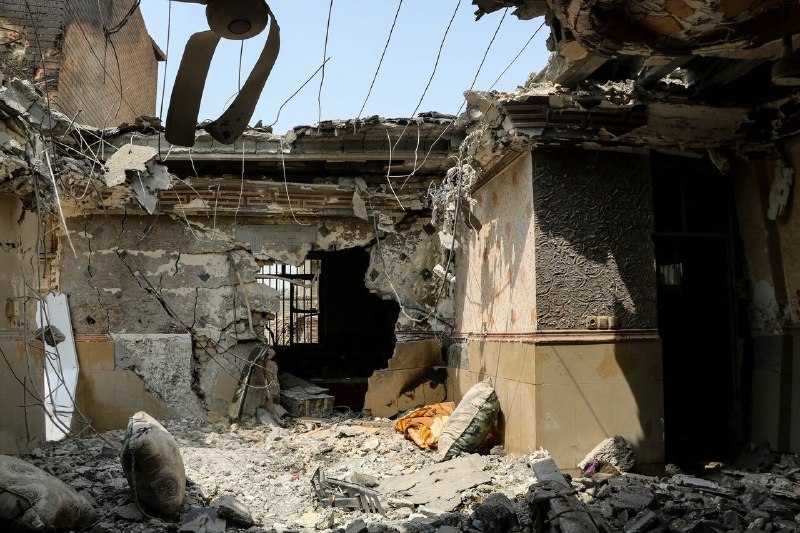
The second claim is that IAEA inspectors were not discussed at all in the 21 June round. That is the more consequential of the two. The IAEA verification question has been the fulcrum on which the European and US position has rested since the 2015 Joint Comprehensive Plan of Action collapsed in 2018. The agency's inspectors were effectively expelled from Iranian facilities after Israel's June 2025 strikes and the subsequent passage of Iran's domestic legislation suspending cooperation; Western governments treat restoration of full inspector access as the minimum precondition for any sanctions relief. If Marandi is right that the inspectors were not discussed, then the round was, on the verification axis, a non-event.
The reading from Washington
The Western readouts that have filtered into coverage since the 21 June meeting have tended to emphasise forward motion: a willingness, attributed by US officials to their Iranian counterparts, to consider sequenced confidence-building steps, and the now-familiar formula that both sides had agreed to meet again. The pattern, since the Oman channel reopened in early 2025, has been for each round to be described by the US side as productive and by the Iranian side as bounded — a structural mismatch that has so far produced no signed document.
What Marandi's statements do, if accurate, is harden the Iranian side's read. They convert what might otherwise have been a process update — "we agreed to keep talking" — into a substantive denial: there was no inspector-track conversation, and the commercial track that US agricultural exporters had been promised is not, in fact, an Iranian priority. The commercial denial in particular is a slight on the Gulf mediators who have been selling the agricultural-purchase angle to their American interlocutors, and a public slight at that.
The verification gap
The deeper story sits in the verification architecture. The IAEA's Board of Governors passed a resolution in mid-2024 declaring Iran non-compliant with its safeguards obligations; the June 2025 Israeli strikes damaged the facilities that the agency had been inspecting, and the Iranian parliament's subsequent suspension legislation, never fully repealed, complicates any re-entry by inspectors. The European negotiating position has been that no sanctions relief — including the unfreezing of Iranian oil revenues held in third-country escrow — can flow until inspectors are back inside.
If the Iranian team has now told the mediators that the inspector question was not on the table, the implication is that Tehran is either unwilling to discuss restoration under current political conditions in Iran — where the domestic debate remains shaped by the June 2025 strikes — or is holding the issue for a higher-leverage moment later in the sequence. Either way, the sequencing that Western negotiators have been pushing for — sanctions first, verification later — appears to have been rejected in advance, and the verification-first sequencing that European governments have demanded does not appear to have been accepted either.
What the messaging tells us
There is a case to be made that Marandi is freelancing. He is not, as far as the publicly available reporting shows, a serving member of the Iranian government; his academic position and his media profile make him a useful explainer for Tehran but not necessarily a negotiator. The two English-language channels that carry his remarks, englishabuali and abualiexpress, present him as "a senior member of the Iranian negotiating delegation," a formulation that is itself an assertion by those channels rather than a confirmed designation. The Russian-mediated two_majors channel uses the looser language of being "close to" the team.
The structural point, though, is that the Iranian state has not contradicted these remarks. The formal Iranian outlets that would push back against an inaccurate leak — the Foreign Ministry briefings, the IRNA wire, the official statements of the negotiating team — have not, in the material available to Monexus at the time of writing, offered a competing read of the 21 June round. In a media system where unattributed claims are routinely contradicted within hours, the silence is itself an indication that the framing is at minimum tolerated by Tehran and likely sanctioned.
The dominant Western framing of these talks has been that Iran is under acute economic pressure and therefore moving toward a deal. Marandi's message — no inspectors, no American wheat — is the counter-framing: that Tehran believes it can manage the pressure, that the verification track is too politically expensive to give away, and that the commercial track with the United States in particular carries a domestic cost (visible dependence on the US) that the Iranian political system is not ready to pay. The honest reading is that both frames are partly true and that the room for a deal is, on the evidence of these three messages, narrower than the Washington readouts have suggested.
Stakes
The practical stakes concentrate on three actors. The first is the IAEA itself: the longer inspectors are denied access, the more the agency's capacity to give any future Iranian declaration a clean credibility assessment degrades, and the harder it becomes for any government to defend a deal that does not rest on a fresh inspection baseline. The second is the Gulf mediators — chiefly Oman and Qatar — who have invested political capital in the agricultural-purchase angle and who now find that angle publicly denied by the Iranian side. The third is the Iranian domestic balance: the political cost of conceding on inspectors is real inside the system that emerged from the June 2025 strikes, and any deal that requires the supreme national security council and the parliament to reverse course will need to offer Tehran something the current track is not.
The remaining uncertainty is whether Marandi's remarks are a bargaining position designed to harden Iran's asking price, or a genuine description of the 21 June conversation. The sources available to Monexus do not resolve that. The public record at 20:34 UTC on 22 June 2026, however, is clear: three channels, one message, and no visible contradiction from Tehran.
Desk note: Monexus carried the three-channel claim of 22 June 2026 against the readouts that have filtered out of Washington since the 21 June round, on the principle that a public denial from a figure named as part of the Iranian team is a fact in its own right, not a commentary on one. Where Western wires have framed the round as procedural progress, this piece foregrounds the substantive denial — on inspectors and on US agricultural purchases — that the Iranian side has chosen not to retract.
Wire provenance
This editorial synthesis draws on the following public wire/social posts:
- https://t.me/two_majors
- https://t.me/englishabuali
- https://t.me/abualiexpress
Follow the event.
These dated source records provide context. They do not retrospectively verify this archive article.
Separate what the nuclear watchdog reported from what it could not determine after the June 2025 strikes.