Full freedom of action: Israel widens the operational envelope in southern Lebanon
On 22 June 2026, Prime Minister Netanyahu and Defence Minister Katz told the IDF it has unrestricted latitude to preempt threats inside Lebanon — a formulation that goes further than past rules of engagement and puts the burden of de-escalation squarely on Beirut.
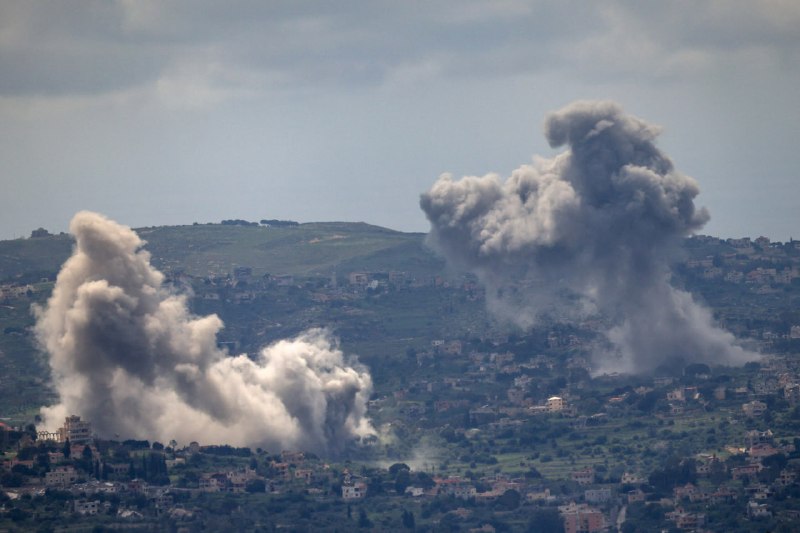
At 16:19 UTC on 22 June 2026, Prime Minister Benjamin Netanyahu stepped before the cameras and read out a one-line directive: the Israel Defense Forces, operating in southern Lebanon, had been given "full freedom of action to thwart any immediate or upcoming threat." Forty-seven minutes later, Defence Minister Israel Katz echoed the language almost verbatim, telling troops that the IDF would "continue to thwart threats and destroy the terrorist infrastructure in the field." By 17:06 UTC, both statements were circulating on Israeli and Arab media channels, framing what officials called an unchanged but emphatic operational posture into a clear public posture of preemption.
The phrasing matters. "Full freedom of action" is not the standard rules-of-engagement language that accompanies routine cross-border activity. It signals a political envelope: cabinet has decided, in advance, that the IDF does not need fresh authorization for individual strikes aimed at identified threats on Lebanese soil. The political decision moves from the cabinet table to the field commander; the triggers for action are tactical rather than governmental. In a conflict that has been frozen for months on the question of who gets to define a "threat," that distinction is the entire story.
What was actually said
Netanyahu's video, distributed in full on X by sprinterpress at 16:19 UTC, framed the directive as a continuation of existing policy rather than a departure. "The order from me and the Defence Minister to the IDF is clear and has not changed," he said. "Our forces in southern Lebanon have full freedom of action to thwart any immediate or upcoming threat." The phrase "has not changed" is doing significant work: it tells an Israeli audience that the cabinet has not been bounced into escalation by a single incident, while the substantive verb — "any immediate or upcoming threat" — opens the door to preemption, not just retaliation. The cabinet is willing to authorise action against infrastructure it judges to be preparing an attack, not only against launches already in motion.
Defence Minister Katz, quoted by both the Telegram channel Clash Report and the Israeli journalist Amit Segal at 16:44 and 16:06 UTC respectively, used parallel language: "The IDF has full freedom of action to act decisively against any threat. Our soldiers will continue to thwart threats and destroy the terrorist infrastructure in the field." The repetition across two senior figures, on the same afternoon, is itself the news. Jerusalem is no longer leaving the operational doctrine to be inferred from strike patterns. It is putting it into verbs, on camera, in English and Hebrew, and is willing to be quoted on it.
The counter-narrative from Beirut and beyond
The Lebanese state and the Iran-aligned network that retains influence in southern Lebanon read the same statements very differently. From their vantage, "full freedom of action" is the diplomatic cover for an expanded campaign of strikes on Lebanese villages, on the road network north of the Litani, and on the reconstruction sites that have sprung up since the November 2024 ceasefire. Lebanese officials have, in the period since that ceasefire, accused Israel of near-daily violations involving demolitions, air activity, and ground incursions; in that context, formalising the operational doctrine is read as escalatory precisely because the threshold for what counts as a threat now sits inside Israeli command, not in any bilateral channel.
The more substantive counter-claim is structural. Hezbollah's own posture, as reported in regional outlets through the spring, has been one of calibrated restraint — rearmament and reconnaissance without the public restoration of the rocket array that defined the pre-November 2024 force posture. A doctrine that authorises preemption against "upcoming threats" effectively lowers the evidentiary bar for action: Israel does not need to wait for a launch site to go active if it judges an installation to be on a trajectory toward becoming one. That is, from Beirut's perspective, a doctrine of permanent action. The Iranian Foreign Ministry, when it chooses to comment on Israeli operations in Lebanon, has framed them in similar terms — as the conversion of a ceasefire into a slow-motion ground campaign — and the read in Tehran is unlikely to diverge much from the read in Beirut's Dahiyeh.
A wider operational envelope in a crowded theatre
The southern Lebanon file does not sit alone. Israeli forces remain engaged across multiple theatres in the north and along the eastern frontier, and the operational bandwidth available to the General Staff is finite. Authorising "full freedom of action" in one sector is a statement about resource allocation as much as doctrine: cabinet has decided that the southern front will not be the one held back by procedural caution, even if that means a slower tempo elsewhere.
The political logic is consistent with the approach Netanyahu has taken since the start of 2026 — a willingness to absorb short-term international criticism in exchange for what his office frames as the disruption of reconstitution. Western wire coverage of the period has, with some regularity, noted Israeli strikes on what Israeli officials describe as Hezbollah reconstitution sites: weapons storage, comms nodes, and the technical infrastructure that allows the group to coordinate across the border. The "full freedom of action" formulation gives those strikes a more legible doctrinal home. Cabinet is not authorising each one retrospectively; it is authorising them as a class.
The domestic political logic is harder to miss. Katz's quote was carried prominently by Israeli media including Amit Segal, a journalist with deep access to the defence establishment, and the duplication across the prime minister and the defence minister is the kind of coordinated messaging that follows an internal decision rather than a spontaneous utterance. Northern Israeli communities that were evacuated in late 2023 and have lived under a partial return framework since November 2024 are a domestic audience the government has been visibly trying to reassure; the language of preemption is calibrated to them as much as to anyone in Tyre or Sidon.
Stakes, time horizon, and what remains uncertain
If the doctrine holds, the operational tempo in southern Lebanon is likely to rise over the summer. The cabinet has removed the friction that tended to slow action in the first quarter of 2026 — the requirement to assemble a particular evidentiary case for each strike, to brief coalition partners, and to weigh the diplomatic cost of each individual incident. The cost of action has been socialised across the cabinet; the benefit, in the form of disrupted infrastructure, accrues to the IDF. The Lebanese state, which has constrained the armed groups on its territory to a degree over the past eighteen months, now has reason to fear being drawn back into a kinetic cycle precisely because restraint is being priced out of the Israeli calculation.
Several things remain genuinely uncertain. The sources do not specify the geographical depth of the operational envelope — whether "southern Lebanon" means the area south of the Litani as defined in UN Security Council Resolution 1701, or a wider zone, or the full territory up to and including the Beqaa Valley. Nor do they specify the trigger threshold for what counts as an "upcoming threat"; that, by design, will be left to field commanders. The statements are deliberately elastic. A reader who wants to know what will actually change on the ground tomorrow will have to wait for the strike data, not the communiqués.
What is already clear is the political direction of travel. Cabinet has decided, on the record, that the southern Lebanon front will be run on a preemption logic. The diplomatic cost of that decision will be borne in Beirut, in the Iranian foreign ministry's briefings, and in the long, slow conversations between Israeli and Western officials about the meaning of "proportionate response." The Israeli government has decided it can live with that cost. The question that the next seventy-two hours will begin to answer is whether the military outcome on the ground makes the political price look, in retrospect, like a bargain.
— Monexus framed this story through the language of the Israeli statements themselves and the immediate regional read, rather than the broader "ceasefire collapse" framing that has dominated some Western wires in recent weeks. The beat is the doctrine; the doctrine is the news.
Wire provenance
This editorial synthesis draws on the following public wire/social posts:
- https://t.me/ClashReport/
- https://t.me/amitsegal/
- https://t.me/ClashReport
- https://t.me/amitsegal