Israel is redrawing its southern flank — quietly
Two reports on 22 June point in the same direction: Tel Aviv is opening a Red Sea front in a self-declared state, and turning the Lebanon occupation into a permanent bargaining chip.
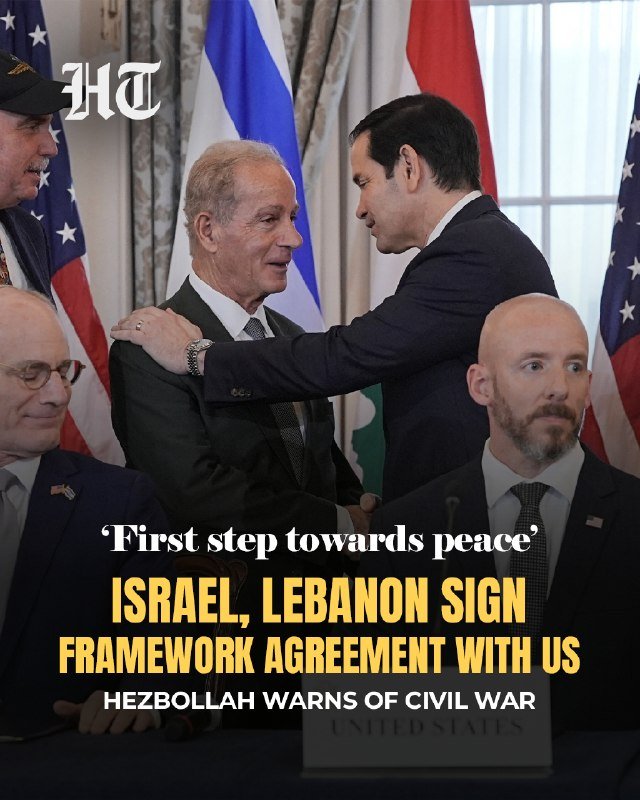
On 22 June 2026, two reports, both sourced to The Cradle Media's Telegram channel at 13:28 UTC and 13:51 UTC, sketched the same picture from opposite ends of the map. Israeli officials acknowledged years of covert operations inside Somaliland and confirmed that ground troops had deployed there on a mission now being described as strategic. Hours earlier, the same outlet reported that Tel Aviv had set public conditions for any withdrawal from occupied parts of southern Lebanon, framing a potential pullback as a "symbolic" gesture from "minor areas" while reserving the right to keep striking and to hold the wider occupied zone indefinitely.
Read together, the two dispatches are not separate stories. They are the perimeter of a single posture: Israel extending its military footprint west toward the Bab el-Mandeb, and entrenching a conditional, rolling occupation on its northern border, on terms that Israel itself defines.
What the Somaliland reporting actually says
The Cradle's Somaliland item, posted at 13:51 UTC on 22 June 2026, summarises a report in which Israeli officials in Tel Aviv acknowledged what had previously been rumour: years of "under-the-radar" operations in the self-declared republic, with troops now deployed in the open. The framing in the report is that the relationship is "moving into the open" — that is, the covert phase is being deliberately declassified by Israeli sources on a managed schedule.
The strategic logic is not hard to see on a map. Somaliland sits on the southern shore of the Gulf of Aden, facing Yemen and the Houthis across narrow water. A basing, intelligence, or logistics footprint there gives Israel a southern Red Sea / western Indian Ocean position that no amount of air-to-air refuelling from Nevatim can replicate. It also gives Tel Aviv a partner that is not a recognised state, that controls a usable port at Berbera, and that is locked in a sovereignty dispute with Mogadishu — meaning the relationship can be deniable, expandable, and immune to the usual parliamentary oversight that follows a formal ally.
What the Lebanon reporting actually says
The Cradle's Lebanon item, posted earlier the same day at 13:28 UTC, summarises Israeli media reporting that Tel Aviv is "mulling" a "symbolic" withdrawal from "minor areas" of south Lebanon, with conditions attached. The conditions are not specified in the headline, and Israeli officials are quoted as vowing to continue operations in areas Israel continues to occupy.
The pattern is the one Israel has run for decades in southern Lebanon and in the longer arc of the West Bank: announce a tactical adjustment, frame it as a goodwill gesture, and keep the strategic depth. The 2026 version differs from 2000 — the year of the unilateral pullout from south Lebanon that did not last as a clean border — only in the candour of the framing. A "symbolic" withdrawal is a withdrawal designed to be read as a withdrawal, while the operational reality is left intact.
Why the two stories belong in the same article
The Horn of Africa and south Lebanon are usually filed on different desks. They share, in this reporting cycle, three features. First, both moves are being communicated through controlled leaks from Israeli officials, not through formal diplomatic processes. Second, both moves are designed to look smaller than they are — a "symbolic" withdrawal in one place, a long-denied troop presence in the other. Third, both moves assume an Israeli right of unilateral action in theatres that no Israeli government has formally claimed before.
That third feature is the structural one. The older Israeli security doctrine was reactive: secure the immediate border, hold a buffer, and avoid entanglements that drag Tel Aviv into the political geometry of places that are not Israel's recognised neighbourhood. The reporting from 22 June describes a different doctrine. It describes a country willing to deploy ground troops four thousand kilometres from its border into a non-recognised state, and to articulate, in its own domestic press, the conditions under which it will and will not withdraw from territory of a sovereign neighbour to the north. The older doctrine answered two questions — how far in, and for how long. The emerging doctrine answers both with: as far as we decide, for as long as we decide, in our own framing.
What the reporting does not yet show
It is worth saying plainly what the two Cradle items do not establish. The Somaliland report cites Israeli officials acknowledging a long-running covert relationship; it does not cite a basing agreement, a port-access deal, or named troop numbers. The Lebanon report cites Israeli media on the conditions being discussed; it does not cite the text of those conditions, the Lebanese or Hezbollah response, or the position of the US or France — the two external powers most invested in the post-2024 Lebanon file. The Cradle itself sits inside a regional analytical ecosystem that is sympathetic to the axis-of-resistance reading of Middle Eastern security; readers should weight the framing accordingly and treat the structural argument above as Monexus's inference from the reporting, not as something The Cradle asserts in those terms.
The honest read is that something is genuinely moving on both fronts, that Tel Aviv is choosing to let it move visibly, and that the vocabulary being used — "symbolic", "minor areas", "under-the-radar" — is the vocabulary of a state that wants the outside world to register the move without registering the cost. The question for the rest of 2026 is whether the costs are registered somewhere outside the Middle East at all.
Desk note: The wire cycle on 22 June is dominated by Tel Aviv's two-track posture; we are running the Somaliland and Lebanon threads as a single structural story rather than two regional items, on the view that the underlying doctrine is the news.
Wire provenance
This editorial synthesis draws on the following public wire/social posts:
- https://t.me/thecradlemedia
- https://t.me/TheCradleMedia
- https://t.me/thecradlemedia
- https://t.me/TheCradleMedia