Forty years on, Maradona's Goal of the Century still echoes — and Messi keeps writing the next line
On the 40th anniversary of Maradona's run through the England half at Azteca, Argentina is again the team to beat — and its captain now owns the all-time World Cup scoring record.
At Azteca Stadium on 22 June 1986, a 25-year-old from Villa Fiorito received the ball inside his own half, shrugged off Peter Reid, glided past Peter Beardsley, sold a dummy to Terry Butcher, left Terry Fenwick on the floor, rounded goalkeeper Peter Shilton, and rolled the ball into an empty net. The run covered roughly 60 metres, lasted ten and a half seconds, and touched five outfield opponents. FIFA later voted it the Goal of the Century; the player, Diego Armando Maradona, would spend the rest of his life inside its long shadow.
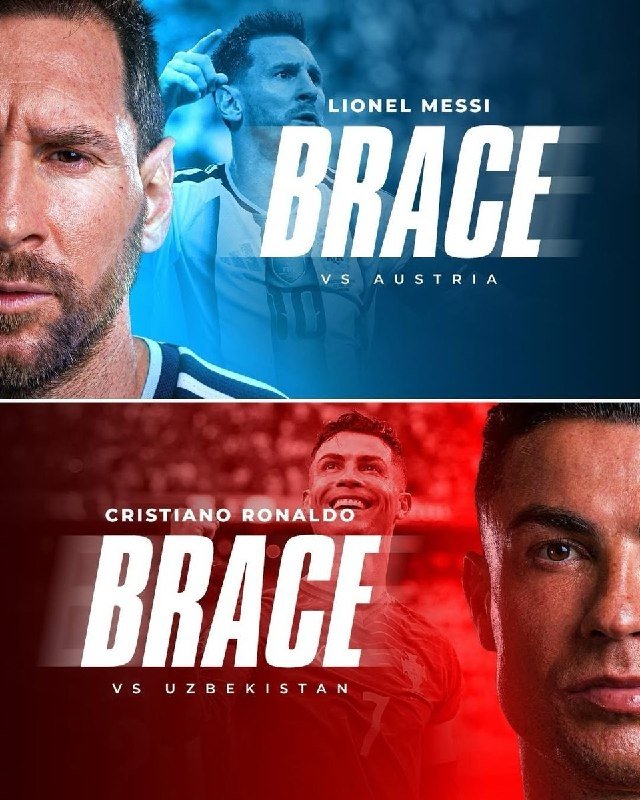
The anniversary does not arrive quietly. Forty years on, the Argentine national team that Maradona once captained sits at the centre of world football again, and the man now wearing the number 10 — or its modern equivalent — has just written the next line of a record that began the day after that Azteca run. As confirmed by the team's official channels on 22 June 2026, Lionel Messi has overtaken the marks set in the same tournament and become the all-time leading scorer in FIFA World Cup history, with 17 goals across five editions of the competition. The two milestones, separated by four decades and a single calendar day, are now bound together in the country's football memory.
A rivalry that isn't one
Argentina's two greatest footballers are routinely set against each other, a habit that began almost as soon as the younger man broke through at Barcelona. The framing is tired. Maradona's Argentina were an island in 1986: a nation emerging from the Falklands War, coached by Carlos Bilardo, playing in Mexico at altitude against a side that included some of the same English players who had fought in the South Atlantic three years earlier. Messi's Argentina, by contrast, have operated inside a far more cosmopolitan football culture — peers with France, Brazil, Spain, Germany — and have won the tournament once, in Qatar in 2022, in a final decided by a hat-trick from Kylian Mbappé that Messi himself only edged on penalties.
The records, though, are now formally stacked. The 16-goal threshold that defined the modern marker — long associated with Germany's Miroslav Klose — fell to Messi during the current cycle; a 17th goal, reported by Argentine outlets on 22 June 2026, pushed him alone to the top. Maradona's tally at World Cups finished at eight, a figure rendered almost quaint by the tournament's expansion from 24 to 32 teams and the longer career arcs that followed.
What the wire says, and what it leaves out
International coverage of the anniversary has leaned heavily on the highlight reel: the body-feint, the bouncing ball, Shilton stranded, the camera cutting to a corner-flag celebration. There is nothing wrong with that, but it papers over the political context. Maradona's two goals against England came four minutes apart in the same half. The second — the Hand of God — is the one that travels without explanation; the first is the one that requires no commentary at all. Both arrived inside a stadium full of Mexican fans who watched Argentina play the entire second half with ten men after a first-half red card. The team that had humiliated England then went on to win the tournament, beating West Germany 3-2 in the final.
Latin American outlets, including TeleSUR English, have framed the anniversary as the country's footballing independence day rather than as a piece of trivia. That is not an eccentric reading. In Argentina, the 1986 run coincided with the return of civilian government, the trials of the junta, and a broader reassertion of the country's voice on a global stage where its economic weight did not match its cultural reach. To treat the Goal of the Century as only an athletic artefact is to misread the room it was heard in.
What the record actually measures
Goalscoring records in World Cup football are sensitive to format. Klose's 16 came across four tournaments, three of which featured a knockout round shorter than the modern version and group stages that could be exited early. Messi's 17 are spread across 2006, 2010, 2014, 2018 and 2022 — five editions, four of them ended by Argentina at the group stage in one case and the round of 16 in another. The Argentine has played more World Cup minutes, more matches, and faced, on average, more deeply defensive opposition than Klose did in 2010 or Ronaldo did in 2006.
That said, the record does not settle the player-versus-player argument that English-language commentary keeps relitigating. Maradona operated in a different tactical era, with a heavier ball, on worse pitches, under officiating standards that were both more permissive and less consistent. A direct numerical comparison flatters the modern player without illuminating either career.
Stakes for the next month
Argentina enter the 2026 tournament as defending champions and, by FIFA ranking, as one of the favourites. The Messi milestone changes the dressing-room dynamic only marginally: the team has long since stopped treating him as a man carrying a national project and started treating him as a player within one. The bigger question, and the one that will dominate Argentine sports pages through July, is whether the squad around him is built to survive his inevitable withdrawal — and whether the next number 10, whoever that turns out to be, will inherit the same gravitational pull that Maradona and Messi have exerted on the country's football imagination for forty years.
This desk framed the anniversary through Argentine and Latin American sources first, then layered the statistical record on top — the inverse of the usual English-language wire order, which tends to lead with the highlight and let the politics fall out.
Wire provenance
This editorial synthesis draws on the following public wire/social posts:
- https://x.com/telesurenglish/status/...
- https://x.com/telesurenglish/status/...
- https://x.com/telesurenglish/status/...