Messi makes history as Argentina dispatch Austria to reach World Cup knockout rounds
Argentina's win over Austria sealed progression and gave Messi another all-time line. The structural point the wire missed is that the record is now secondary to a re-engineered role inside a 48-team tournament.
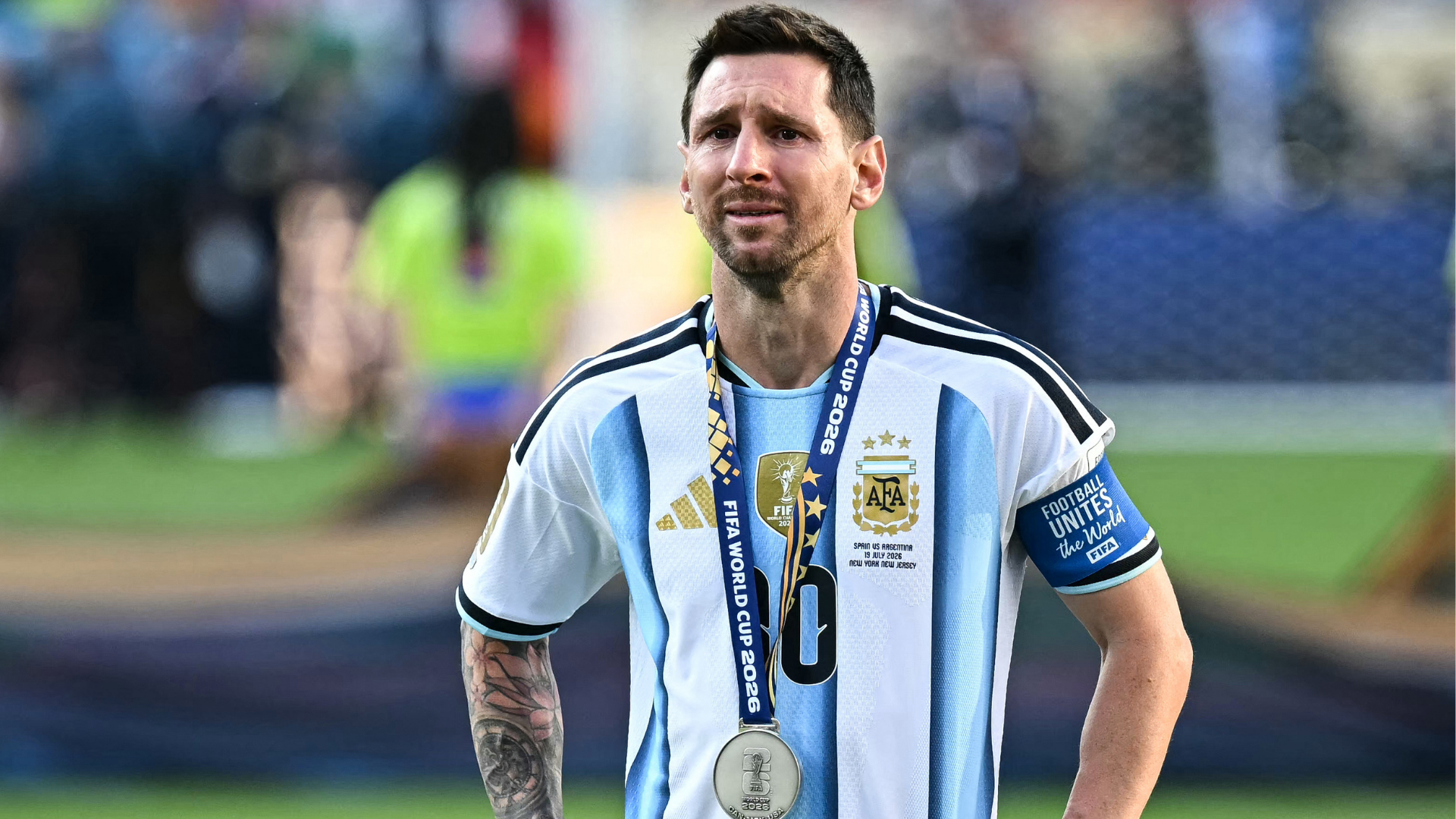
On a night Argentina's captain spent more of it gesturing than gliding, the scoreline did what was asked and the record book did what it always does in Messi's vicinity: it moved. The Albiceleste sealed their passage from Group J with a controlled win over Austria, the latest milestone in a tournament that keeps producing them, and the first hint that the 38-year-old's new brief is less about the box-to-box diagonals of Qatar 2022 and more about the geometry of a winning team.
The match itself was a reminder of the structural shift the expanded 48-team World Cup has imposed on the established powers. Group-stage wins are not the resource they once were; they are the entry fee. Argentina's job was to pay it, bank the points, and avoid the kind of result that turns a smooth route into a minefield. They did. The headline, though, belongs to the man who broke another line on the all-time list and to the squad that is clearly being built around a slightly different version of him.
The record, and what it actually measures
Lionel Messi added another line to the longest ledger in football, becoming the first player to register a goal or an assist in six separate World Cups. The data point, relayed through FIFA's official channels on the night, is the kind that compresses two decades of tournament football into a single entry. It is also, like most Messi records, slightly misleading on its own. The number captures presence, not output. A single goal involvement in 2006, accumulating through 2010, 2014, 2018, 2022 and now the North American summer of 2026, tells you that the player has remained in the building. It does not tell you what he did once he got there, and the answer in this tournament has so far been: less of the running, more of the arranging.
That matters because the wire coverage has tended to frame the night as the record rather than the role. The Athletic's tournament feed carried the line; Transfermarkt's verified channels added the statistical scaffolding. Both treated it as the lede, which it was. Neither spent much ink on the more interesting question of what Argentina's shape looked like when Messi was not on the ball, and the answer, across the group stage, is that it looked organised in a way it occasionally wasn't four years ago. Scaloni's side has stopped asking its captain to be the press trigger and started asking him to be the release valve. The result is fewer lung-bursting dribbles, more half-turns that win fouls in dangerous territory, and a goals column that reads almost identically while the workload chart flattens.
The tournament that won't stop producing records
The 2026 World Cup has made a habit of milestones. On the same matchday window, Bosnia and Herzegovina's Kerim Alajbegović became the eighth-youngest goalscorer in tournament history, per FIFA's verified feed. Canada's men's national team qualified for the knockout stage for the first time, a piece of history that was slightly soured an hour later when Switzerland beat them 2-1 in Vancouver to take the group, sending Jesse Marsch's co-hosts into the bracket without the cushioned draw top spot would have bought them. Bosnia kept their own history bid alive with a 3-1 win over Qatar in Washington. The shared thread is volume: more teams, more matches, more nights where something happens for the first time simply because the door has been widened.
CBS's group-stage wrap noted that even eliminated sides are refusing to go quietly, an unusual feature of an expanded field where dead rubbers used to be the rule. The scoring pace, as the Guardian's football desk flagged, is on track to be the most prolific since Mexico 1970. Harry Kane, fresh off preparations for England's meeting with Panama, is openly eyeing another Golden Boot. None of this is incidental to Messi's night. The 48-team tournament has recalibrated what a single player's contribution is worth in the group phase, by spreading the minutes and the milestones thinner.
A hybrid role, with a team result doing the heavy lifting
Watch Argentina for ten minutes and the shape becomes legible. Messi drops into the right half-space, usually between the lines and the touchline, and stays there. He does not chase the full-back. He does not press the centre-backs. He waits for the ball to find him, or for the foul to come to him, in areas where a foul is expensive. The younger runners around him, Julián Álvarez chief among them, do the legwork he once did. The defensive structure does the rest. The result is a team that looks less like a one-man orchestra and more like a chamber ensemble with a very distinguished first violin who keeps showing the others where the downbeat is.
This is the structural point the wire coverage has under-played. The record is real, and it will sit on the front of the sports pages tomorrow. The team performance is what made the record safe to chase. Austria, to their credit, did not embarrass themselves; they are a side that has produced organised performances in this group and will feel hard done by if the bracket sends them home on the third-place ranking. Argentina, though, treated the night as the fixture it was: a controlled exercise in professional competence, dressed up by history.
What to watch when the knockout draw lands
Argentina will go into the round of 32 as group winners and, on the form of the group stage, as one of the sides nobody will want to meet early. The bracket, still being finalised as the final group games close out, will determine whether the path back to the final mirrors the route through Lusail four years ago or whether the expanded field hands Scaloni a less convenient opening dance partner. Canada's own experience on the night is a useful cautionary tale. The co-hosts did the harder thing and qualified; they then lost the easier thing and gave themselves the tougher draw. Tournament football at this scale punishes any separation between "qualified" and "ready".
For Messi personally, the watch is simpler. Six tournaments, six involvements, and now a new shape to inhabit. The narrative will continue to be the milestones. The interesting work, and the work that will decide whether Argentina can repeat, is happening in the spaces between them.
Sources: FIFA (Telegram) · The Athletic (Telegram) · Transfermarkt (Telegram) · CubaDebate · BBC Sport · Sky Sports · ESPN · CBS Sports · The Guardian.
Desk note: The wire framed this as a record night and a routine win. Monexus kept both, but pushed the structural point, that the milestone sits inside an expanded 48-team tournament, that Messi's role has been quietly re-engineered, and that the team result is doing at least as much work as the individual one.