Millions gather in Najaf and Karbala for the funeral of a cleric Iran calls a martyr
Iranian state media says nomads, scholars and political figures will converge on Najaf and Karbala for the funeral of a cleric it calls Imam Shahid — a framing Baghdad has not echoed.
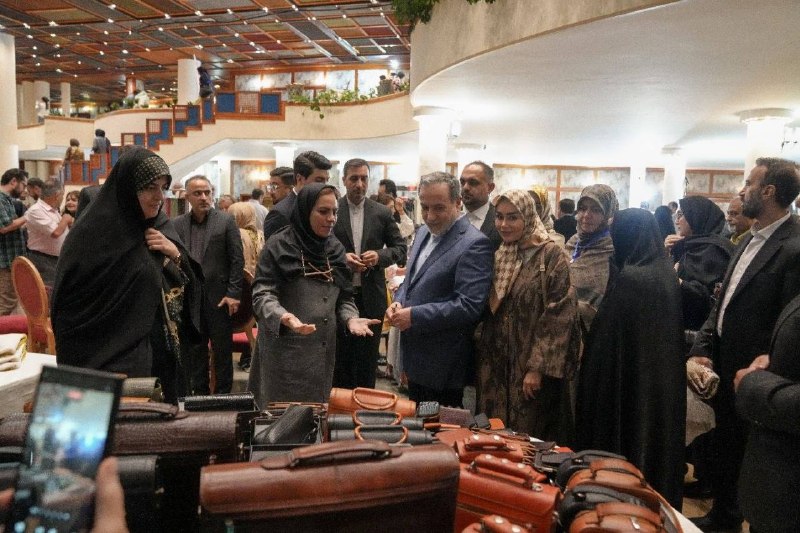
The two holiest cities of Shia Islam are bracing for one of the largest funeral processings they have hosted in years. Iranian state agency Mehr News reported at 06:28 UTC on 22 June 2026 that "nomads, scholars, elites and political, cultural and religious figures" will travel to Najaf and Karbala for the funeral of a cleric Iranian outlets are calling Imam Shahid — a designation that translates, in the language used by the agency, as a martyr for the faith.
Mehr's brief does not name the deceased cleric, give a date of death, or specify the cause of the killing. It describes a procession moving between two Iraqi shrine cities and the demographic breadth of the expected attendance, signalling that the event is being framed by Tehran as a pan-Shia moment rather than a domestic Iranian affair.
The framing is the story. Funerals in Najaf and Karbala have for centuries drawn worshippers from Iran, Iraq, Lebanon, Pakistan, India and the Gulf. When a cleric is elevated by an Iranian state outlet as a martyr before the cause of death is publicly detailed, the read-across is to a particular repertoire of political and religious meaning that sits at the intersection of clerical authority, cross-border Shia solidarity and the Iranian state's own claims to guardianship of holy sites.
What Iranian state media is reporting
Mehr News's 06:28 UTC bulletin is short on the biography of the deceased and long on the choreography. It names the two host cities — Najaf, the seat of the Hawza seminary, and Karbala, the shrine of Imam Hussein — and lists four constituencies the agency says will attend: nomadic tribes, clerical scholars, political and cultural elites, and religious figures. The headline framing in Persian reduces the cleric to a title, "Imam Shahid," which places him inside a typology reserved by Iranian outlets for clerics killed in circumstances the state considers martyrdom, whether at the Iran-Iraq war front, in targeted killings abroad or, more recently, in attacks the Islamic Republic attributes to Israel or to domestic unrest.
No Mehr News URL was supplied with the bulletin beyond the agency's homepage. The thread does not carry a death notice from the Iraqi Shia seminaries of Najaf, the office of Grand Ayatollah Ali al-Sistani, or the Iraqi Ministry of Interior, all of which would normally issue parallel statements for an event of this scale. The absence is not a denial — Iraqi clerical offices often wait until the cortege is in country before commenting — but it does mean that, on the morning of 22 June, the dominant public framing of the funeral is a Tehran-state framing.
The Najaf–Karbala axis and its audiences
Funerals on this route are not only religious. They are diplomatic theatre. Najaf's seminary is the most influential centre of Shia learning in the world and a source of authority that, in quiet contest with Qom, sets the religious terms for millions of Iraqi, Iranian, Lebanese, Pakistani and Indian Shia. Karbala, ninety kilometres to the north, draws tens of millions of pilgrims a year for the annual Ashura commemorations of Imam Hussein, the Prophet Muhammad's grandson killed at the site in 680 AD.
Holding a funeral procession that moves between the two cities is, in effect, a way of asking both establishments to underwrite the deceased's standing. Attendance by senior Hawza figures in Najaf would function as a clerical endorsement. The Karbala stop places the dead cleric in the emotional orbit of Hussein's martyrdom — a positioning that carries weight for Shia communities well beyond Iraq's borders.
Iranian state media has, in recent years, used precisely this kind of geography to project authority. The Iranian consulate in Karbala was a major target during protests in Iraq in 2019, and Iranian-backed armed factions have at times been accused of leveraging shrine-city presence for political leverage. A funeral framed as a martyr's rite in those two cities is therefore read by Iraqi officials and Gulf observers as a signal as much as a send-off.
Why the "martyr" label matters now
The "shahid" label is a political as well as a religious marker. It removes the cleric from the ordinary category of the dead and places him in a typology the Islamic Republic uses to honour fighters, clerics assassinated abroad, and — most pointedly in recent years — Iranian personnel killed in operations the state has at various times attributed to Israel. The label commits Tehran to a posture: that the death is a sacrifice on behalf of the Shia community, that the perpetrators must be identified, and that the funeral itself is an act of collective memory rather than a private rite.
That posture has consequences for Iraqi politics. Iraq's Shia political class is fragmented between the Sadrist movement, the Iran-aligned Coordination Framework, and the more quietist establishment of Najaf. A martyr's funeral with Iranian framing pulls the event towards the Iran-aligned pole by default. It does not require that Najaf adopt the framing — Sistani's office has historically resisted the politicisation of shrine cities — but it does set the tone of the coverage around it.
What the sources do not say
The single Mehr News bulletin is the only source the thread provides. It does not name the cleric. It does not say when he died, where, or how. It does not name the political and cultural elites the agency says will attend. It does not specify which tribes are travelling, from which governorates, and whether the Iraqi government has issued the kind of security and travel clearances that a procession of this scale requires.
Iraqi outlets have not yet, on the evidence available, published an independent death notice. That may change within hours. For the moment, the public record consists of one Iranian state wire framing the event as a martyr's farewell, and a route that is among the most politically charged in the Shia world.
The plausible alternative read is that the death is unrelated to foreign operations and that the "shahid" framing is the standard Iranian register for any cleric who dies violently — a register that, in calmer times, would draw mourners without producing a foreign-policy story. The counter to that read is the explicit listing of elite attendance and the choice of Najaf and Karbala rather than the deceased's home town. Both reads are consistent with the available evidence; neither can be settled from a single Iranian wire bulletin.
Stakes
If the Najaf and Karbala clerical establishments attend and endorse the framing, the funeral will be read across the region as a soft-power success for Tehran — a demonstration that Iranian religious authority can command respect at the two cities where Shia identity is most deeply anchored. If they keep their distance, the procession will still be large, but the political value of the framing will be diluted. Iraqi state agencies will be watching less for the mourning than for the photograph of who is standing next to whom on the cortège route.
The risk is in the gap between the two. Shrine cities have been the site of deadly stampedes, of attacks on Iranian cultural targets, and — most recently — of politically charged mourning for figures killed in operations outside Iraq. The choreography of a martyr's funeral, in two cities within ninety kilometres of each other and hundreds of kilometres from Iran, is not a thing that happens by accident.
This publication will update the article as Iraqi outlets, the Najaf Hawza and the office of Grand Ayatollah Sistani publish their own statements on the cleric's identity and the cause of death.
Desk note: Monexus is leading with the Iranian state-wire framing and the geographic meaning of Najaf–Karbala because those are what the available source supports, and is flagging the absence of Iraqi confirmation as a transparency note rather than filling the gap with speculation.