Petro's refusal to recognise Colombia's vote opens a constitutional fault line
Colombia's outgoing president publicly questioned the integrity of a presidential election he is set to leave office from, and pointed a finger at Israel — a rare and destabilising move with no obvious institutional upside.
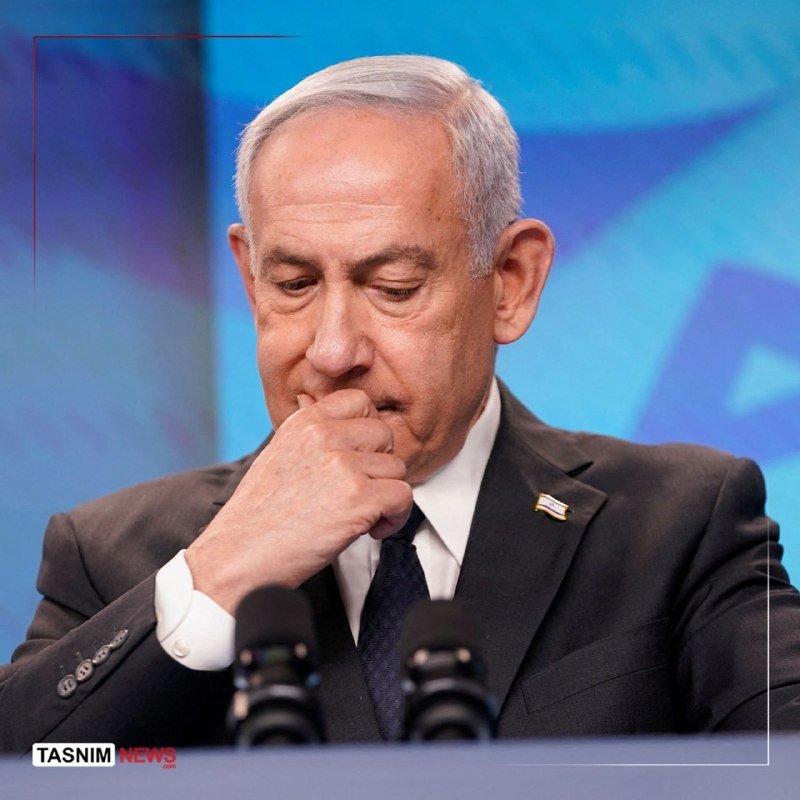
At 23:59 UTC on 21 June 2026, as vote-counting in Colombia's presidential run-off was still incomplete, the sitting head of state broke with the institutional script that has governed every transition in the country's recent democratic history. President Gustavo Petro, a former guerrilla commander turned senator who in 2022 became the first left-wing politician ever to win Colombia's presidency, declared that he did not recognise the result of the election and suggested that Israel had interfered in it. The claim, broadcast through a Telegram channel that aggregates wire copy from The Spectator Index and other feeds, carried no supporting evidence and was issued before Colombia's electoral authority had published a final tally. A separate Telegram channel that monitors conflict reporting, @BellumActaNews, framed the statement as the position of an "outgoing left-wing president and former guerrilla member." A third feed, @wfwitness, carried Petro's earlier, more measured call for calm — that no candidate could declare victory until the official count was complete. The contradiction between the two messages, dispatched within roughly twenty minutes of each other, is itself the story: a head of state visibly improvising inside an institutional crisis of his own construction.
The political logic of what Petro did matters more than the diplomatic provocation. By claiming, hours before results were certified, that a foreign government had tampered with the vote, the president is foreclosing the two outcomes that would normally allow a losing side to exit gracefully: a clean loss, and a narrow, contested loss. He is doing so from a position of institutional weakness — Colombian presidents are barred from immediate re-election, and his chosen successor did not make the run-off — and from a factional corner of the Latin American left that has, over the last four years, drifted toward a foreign-policy register that often reads the politics of other countries through the lens of Middle East conflict. The Israel accusation is the most audible part of the message, but the operative claim is the first half: Petro does not recognise the result. Everything else is rhetorical scaffolding.
What the three signals actually say
The Telegram traffic on the evening of 21 June 2026 traces a sequence rather than a single event. At 22:38 UTC, @wfwitness reported that Petro had called for calm, noting that no candidate could declare victory and that the final result depended on the official count — a position consistent with the constitutional role of the Registraduría Nacional, Colombia's electoral authority, which publishes certified totals. At 22:41 UTC, @BellumActaNews reported a different posture: that Petro had told associates he would not recognise the result. At 23:59 UTC, @osintlive carried the most explicit version, attributed to The Spectator Index, in which Petro publicly did not recognise the result and suggested Israeli interference. The first and third signals are not reconcilable as written. Either Petro's public statement evolved, or the earlier "calm" line was a tactical prelude to a more radical position. The Telegram aggregator ecosystem is not a clean wire service; channels copy, paraphrase, and amplify each other. Readers watching the night unfold saw two Petro's: a constitutionalist in the first frame, and a delegitimiser in the second.
Why the Israel claim is the operative move
Accusations of foreign interference by a sitting head of state carry consequences out of proportion to their evidentiary basis. In Latin America, allegations of US interference in domestic elections have a long history; allegations of Israeli interference are newer, and they have become a recurring feature of the Petro government's foreign-policy idiom. By naming Israel rather than, say, the United States or Venezuela, Petro is doing two things at once. He is signalling to his base — including the younger, more mobilised wing of the Pacto Histórico coalition — that the result is tainted by a foreign hand aligned with his domestic adversaries. And he is opening a diplomatic incident that will dominate Colombia's international news cycle for days, displacing coverage of the underlying vote count. The accusation is, in effect, a media strategy. The embassy in Bogotá will be drawn into a public dispute; the foreign ministry will have to engage; the opposition will have to respond to a foreign-relations crisis rather than to a domestic vote count. The clock that should be running on Colombia's electoral authority gets pulled toward the clock of international diplomacy.
The constitutional floor
Colombia's 1991 constitution is unusually explicit about who certifies elections and who does not. The Registraduría, under its national registrar, runs the count; the Consejo Nacional Electoral (CNE) oversees campaign finance and electoral conduct; final disputes are settled by the Consejo de Estado and, in some matters, the Corte Constitucional. The sitting president is not a party to that process. Petro's refusal to recognise the result, as reported on the evening of 21 June 2026, does not have a direct legal effect on the count or its certification. What it does have is a political effect: it tells the Colombian electorate, and the security forces that swear an oath to the constitution rather than to the president personally, that the commander-in-chief considers the constitutional order to have been breached. That posture is not unprecedented in Latin America — Bolivian president Evo Morales in 2019 and Brazilian president Jair Bolsonaro in 2022 both contested results they appeared to have lost — but the Bolivian case ended in Morales's resignation and the Brazilian case ended in a failed self-coup by Bolsonaro's supporters on 8 January 2023. The two historical precedents are not encouraging for a peaceful transfer.
Stakes, narrowly and widely
In the narrowest sense, the stakes are procedural: whether Colombia's electoral authority can publish a final tally that the losing side will not denounce as illegitimate, and whether the security forces continue to treat the constitution as their chain of command. In the wider sense, the stakes are about the model of left governance Petro has been exporting for four years — a model that fused ambitious social spending, environmental policy, and a foreign-policy register aligned with the Palestinian cause and skeptical of Israel, the United States, and the traditional Colombian military establishment. That model was already in retreat before the run-off; Petro's own candidate failed to reach the second round, and the runoff itself was framed as a referendum on the Petro period. By contesting the result, Petro is converting a domestic electoral defeat into a foreign-policy grievance, in a way that ensures his movement's narrative survives the loss even if the office does not. The cost is borne by the institution he is leaving behind.
What remains uncertain
The source material does not specify what Petro's legal advisers have recommended, whether the Comando General of the armed forces has issued any statement, or how the Registraduría has responded to the implied accusation of fraud. The Telegram channels reporting the story are not Colombian outlets; they are aggregators operating in English and Russian, and their provenance chain is opaque. The most consequential claim — that Israel interfered in the vote — is unattributed to any document, intercept, or official statement. Until a primary source surfaces — an Israeli foreign ministry denial, a Colombian electoral-authority briefing, a statement from one of the two runoff candidates — the claim should be read as political posture rather than as fact. The story of the night is not that Israel interfered in a Colombian election. The story is that a sitting president, twenty-four hours from handing over power, told his country that the result was not his to accept.
Wire provenance
This editorial synthesis draws on the following public wire/social posts:
- https://t.me/osintlive
- https://t.me/BellumActaNews
- https://t.me/wfwitness