Tehran's pivot to Islamabad: Pezeshkian's one-day Pakistan trip lands amid Lebanon 'breakthrough' claims
Iranian President Masoud Pezeshkian is expected in Islamabad on 23 June 2026, hours after publicly claiming diplomatic 'breakthroughs' on Lebanon. The visit lands against a wider regional backdrop Monexus examines below.
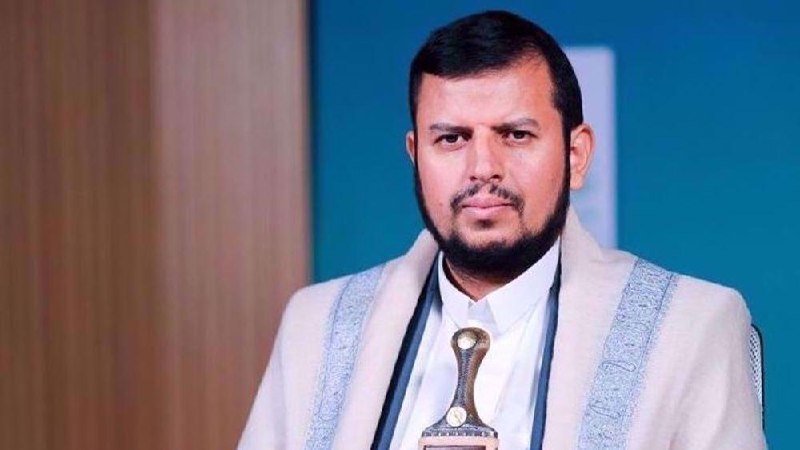
Iranian President Masoud Pezeshkian is expected to travel to Islamabad on 23 June 2026 for what Iranian, Pakistani and pan-Arab outlets are characterising as a short, one-day working visit. The schedule was confirmed in rapid sequence on the morning of 22 June: at 10:51 UTC, Al Alam, the Arabic-language service of Iranian state television, quoted Tasneem from the Iranian President's Office saying the trip would go ahead the following day. Within seven minutes, Al Mayadeen, the Beirut-based satellite channel, picked up the line, citing "Pakistani sources." By 11:04 UTC, the field-status channel Clash Report had published its own one-line confirmation, framing the visit as likely a single-day stay. Reporting in the West on the precise itinerary and counterpart meetings has not yet appeared in the thread materials reviewed; the public record is currently carried by Iranian state media and regional outlets close to the Iranian negotiating position.
What the trip actually delivers — and to whom — is the more revealing question. Pezeshkian's visit lands hours after he made two pointed public statements about Iran's negotiating posture. At 10:08 UTC, Al Alam carried a quote from the Iranian president asserting that Tehran "entered the negotiations without making concessions," followed in the same window by a second claim that "in the negotiations, we witnessed concessions from the opposite side regarding #Lebanon because of us, and we witnessed good breakthroughs." Read together with the Pakistan announcement, the sequence is consistent with a Tehran attempting to project momentum: an embattled executive at home selling a foreign-policy win abroad, with Islamabad as a sympathetic stage on which to do it. The visit also gives Iran a non-Western diplomatic audience at a moment when the substance of its regional position is being adjudicated in negotiations that, by the Iranian telling, are already moving its way on Lebanon.
The schedule, as confirmed
The single firm data point is the date. According to Tasneem, speaking from the Iranian President's Office via Al Alam at 10:51 UTC on 22 June 2026, Pezeshkian will travel to Pakistan on 23 June 2026. Al Mayadeen, sourcing the line to "Pakistani sources" and relayed by The Cradle Media and Fars at 10:18–10:53 UTC, characterised the visit as a one-day trip, and Clash Report at 11:04 UTC echoed that framing. No formal announcement from the Prime Minister's Office in Islamabad, the Iranian Foreign Ministry's English-language service, or the office of President Asif Ali Zardari has been published in the materials reviewed. That is a meaningful gap: Pakistan's own state channels have not, on the public record available to Monexus, confirmed the agenda, the counterpart, or the expected joint communiqué. Readers should treat the visit itself as confirmed but its substance — meetings, agreements, and deliverables — as not yet on the record.
The 'breakthrough' claim, decoded
The line that travelled furthest from Pezeshkian on 22 June was the assertion that Iran had extracted "concessions from the opposite side regarding #Lebanon." In Tehran's framing, the negotiating track is moving on terms favourable to the Islamic Republic, and the regional picture — the file most associated with Iran through Hezbollah, the Syrian land bridge now effectively severed, and the post-2024 confrontation cycle with Israel — is being redrawn to Iran's benefit. The claim is being amplified by Iranian state-aligned outlets and by Al Mayadeen, a channel whose editorial line on the Lebanese file is broadly sympathetic to the Iranian position; it is not yet reflected in English-language Western wire reporting on the thread. The plausible alternative reading is that the language is a domestic-political message: with Iran's economy under sustained pressure and Pezeshkian's government under fire from conservative critics at home for the posture he has taken in talks, a public assertion of diplomatic progress is also an assertion that the posture is paying off. Both readings can be true simultaneously, and a one-day Pakistan trip is exactly the kind of low-cost stage on which to broadcast the message without the obligation to produce verifiable deliverables.
Why Pakistan, why now
Pakistan matters to Tehran for three structural reasons, each of which operates independent of who currently sits in the prime minister's office in Islamabad. First, it is one of the few large Muslim-majority states with which Iran shares a long, sometimes contested, border and with which it has, periodically, run a closely managed security dialogue. Second, it is a state that has refused to subordinate its Middle East posture to the Gulf axis, while still maintaining working ties with Saudi Arabia and the United Arab Emirates — useful ballast for an Iran that wants to project diplomatic range. Third, it is a state that, on the public record, has not endorsed the maximalist Western reading of the Iranian nuclear and missile files, and that has historically offered Tehran a diplomatic back-channel when the front-channels are congested. The visit therefore performs for an Iranian domestic audience what a more dramatic meeting in Moscow or Beijing would perform for an international one — except that Pakistan is closer, the optics are cheaper, and the host does not have to be persuaded to be seen alongside an Iranian president. A sceptical reading is that the visit is calibrated for Tehran's audience rather than Pakistan's, with Islamabad's role closer to venue than to partner. The honest answer is that the thread materials do not contain enough detail on the Pakistani side to adjudicate that, and the visit's content will speak for itself once the joint readout is published.
What to watch in the next 72 hours
Three signals will tell us whether this trip is a substantive diplomatic exchange or a piece of choreographed public diplomacy. The first is the joint statement: if it names specific deliverables — energy cooperation, border security, a trade corridor, a humanitarian file on the Afghan border — the visit was a working one. If it is a generic communiqué reaffirming "brotherly ties," it was a stage. The second is who meets the Iranian president: a meeting with the prime minister, the president, the army chief, or a lower-ranking counterpart each carry different signals about how seriously Islamabad is treating the relationship on the file most likely to come up. The third is what Tehran's English-language and Western-facing outlets say about the trip the day after; if the Iranian state line shifts from "breakthroughs" to "constructive dialogue," that is a tell that the trip's main job was to put a marker on the calendar. For now, the public record is a confirmation of arrival, a contested claim of regional momentum, and a visit whose substance has not yet been written down.
This publication has tracked the Pezeshkian visit against a thread in which the leading sourcing is Iranian state media and outlets aligned with the Iranian negotiating position. Where Western wire reporting exists on the underlying Lebanon file, this article has flagged the gap rather than papered over it; the counterpoint section above names the most plausible alternative reading of the 'breakthrough' framing in plain language.
Wire provenance
This editorial synthesis draws on the following public wire/social posts:
- https://t.me/ClashReport
- https://t.me/thecradlemedia
- https://t.me/TheCradleMedia
- https://t.me/alalamarabic
- https://t.me/farsna
- https://t.me/alalamarabic
- https://t.me/alalamarabic