Iran defends Geneva track as Qalibaf pushes back against domestic critics
Tehran's lead negotiator, Parliament Speaker Mohammad Bagher Qalibaf, told critics at home that the Switzerland track had prevented further bloodshed among Muslims and Shia in Lebanon — a framing aimed as much at a domestic audience as at Washington.
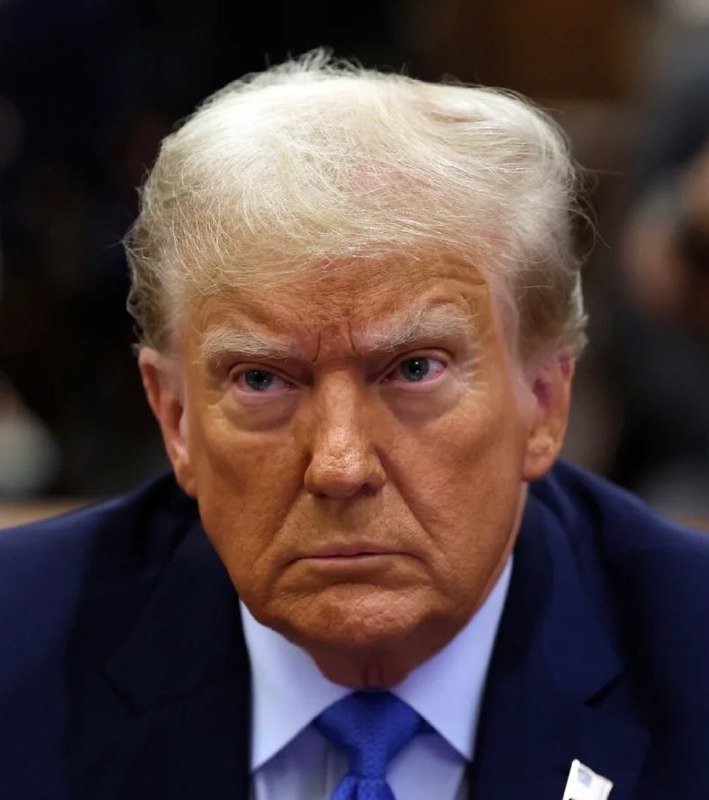
On 22 June 2026, Iran's chief negotiator in the Geneva track, Parliament Speaker Mohammad Bagher Qalibaf, used a public appearance to pre-empt criticism from inside the Islamic Republic: had Tehran not travelled to Switzerland, he argued, more Muslim and Shia blood would have been spilled every moment in Lebanon. The line, carried in identical wording by Iranian state-affiliated outlets within minutes of the remarks, was addressed less to foreign capitals than to a domestic audience that has grown visibly impatient with the costs of the regional standoff.
The statement lands at a sensitive moment. Tehran is selling a diplomatic channel to a public that has watched Lebanon absorb months of fighting, and it is doing so through a speaker who doubles as a senior negotiator — a deliberate conflation of party, parliament and state that says much about who controls Iran's external messaging.
The line, and how it travelled
The quote moved through the Iranian information system with unusual speed. Al-Alam Arabic posted it at 21:13 UTC on 22 June; the English-language Tasnim feed carried the same formulation at 21:10 UTC; Al-Alam's Persian channel pushed a version referencing Shia blood specifically at 21:08 UTC; and the Middle East Spectator account distributed the framing to an English-language Iran-watcher audience at 21:06 UTC. The cascade — Arabic first, then Persian, then English-language aggregators — mirrors a familiar Tehran template: regional audiences hear the Shia-protection frame, domestic Persian-speakers hear an even sharper sectarian version, and analysts in the West receive a more neutrally worded packet.
Qalibaf is not a marginal figure. As speaker of the Majles and one of Iran's most senior conservative figures, he sits near the top of the regime's power hierarchy and is closely identified with the security-pragmatist camp. Putting him in front of the Switzerland-track argument is itself a signal: the diplomatic channel is not being delegated to the foreign ministry or to the negotiating team alone. It is being personally underwritten at the parliamentary leadership level.
The domestic audience Qalibaf is actually addressing
The framing — protect Muslims, protect Shia, prevent more Lebanese bloodshed — reads as an answer to two specific lines of attack that have been audible in Iranian political discourse in recent weeks. The first is the charge that the diplomatic track is a strategic concession by another name, buying time for an adversary while Lebanese allies pay the price. The second is the reverse: that the channel is theatre, that no real exchange is on the table, and that the price of the confrontation will keep rising regardless of what is negotiated in Geneva.
By invoking Lebanese Shia suffering explicitly, Qalibaf recasts engagement with Washington not as capitulation but as harm-reduction for the very constituency most exposed to the regional escalation. It is a domestic-consumption argument dressed up as foreign-policy reasoning. Iran's regional allies in Lebanon — the political and armed network long treated as a forward line of the Islamic Republic's regional posture — are being held up, in this telling, as the people most in need of a negotiated off-ramp.
That is also where the framing is most vulnerable to challenge. Critics inside Iran can plausibly argue the reverse: that the Switzerland track itself presupposes a baseline of pressure on Lebanon, and that promising to contain the bleeding is not the same as offering a way out of it. The speaker's statement does not engage that critique; it presumes it.
The Omani leg, and what it tells us about the channel
Earlier the same day, at 20:50 UTC, Al-Alam's Persian channel published a photograph from the Omani foreign ministry of Foreign Minister Sayyid Badr bin Hamad Al-Busaidi welcoming the Iranian delegation. The image does more than decorum work. Muscat has, for years, served as one of the most consistent back-channels between Tehran and Washington — used during the original nuclear negotiations, the prisoner-exchange episodes, and the more intermittent regional-de-escalation talks. That Qalibaf transited Muscat on the way to the Switzerland track is, in itself, a piece of procedural evidence that the channel being defended in his remarks is the same one that has been quietly held open by the Sultanate of Oman for the better part of a decade.
The geography matters. Geneva is the formal venue, but the call-and-response that produces actual movement tends to happen in Gulf capitals whose leaders maintain working relationships on both sides. Iran's choice to make the Omani welcome part of its public record is a small but deliberate tell: this is a managed channel, with intermediaries, not a bilateral improvisation.
Stakes and what to watch next
The hard political content of the Switzerland track remains undisclosed. No readout of substance has been released; the public Qalibaf statement is a justification, not a communiqué. The risks flowing from that opacity cut in two directions. For Iran's domestic audience, an extended diplomatic process with no visible deliverable will eventually erode the harm-reduction argument the speaker is currently advancing. For Washington and the regional interlocutors, a track that can be sold at home as protective of Lebanese Shia is also one that can be wound down at home if hardliners decide the cost of engagement is rising faster than the cost of confrontation.
The near-term indicators are limited and mostly negative-space: whether the next round is announced, whether Omani or Qatari intermediaries reappear on the public stage, whether the English-language Tasnim feed carries a more concrete formulation in the days ahead, and whether Lebanese allies are brought into the messaging rather than invoked as the object of it. The current statement, in other words, is a posture, not a programme — and the space between those two things is where the next phase of the track will either consolidate or break.
Desk note: Monexus is reading the Qalibaf statement primarily through Iranian state-affiliated channels because no independent readout of the Switzerland session has yet been published. The thread context does not include a Western-wire confirmation of the substance of the remarks, and the framing here reflects that sourcing limit — the statement is treated as real, its strategic logic as plausible, and the absence of an external corroborating readout as itself a fact about the state of the channel.
Wire provenance
This editorial synthesis draws on the following public wire/social posts:
- https://t.me/alalamarabic
- https://t.me/tasnimnews_en
- https://t.me/alalamfa
- https://t.me/Middle_East_Spectator
- https://t.me/alalamfa/