Qatar and Pakistan end Burgenstock round, declare progress on US–Iran and Lebanon tracks
A joint Doha–Islamabad statement issued on 22 June 2026 says the first high-level talks under the Islamabad Memorandum produced "great progress" toward ending the war in Lebanon and clearing the way for further US–Iran negotiations.
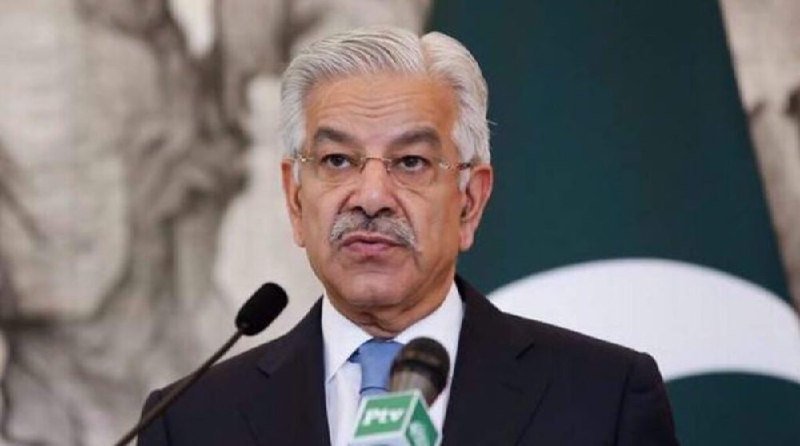
A joint statement issued by Qatar and Pakistan in the early hours of 22 June 2026 declared that the first round of high-level negotiations between Iran and the United States, convened at Burgenstock in central Switzerland under the framework of the so-called Islamabad Memorandum, had concluded with what both mediators described as substantive progress. The text, released almost simultaneously in Tehran-aligned and Doha-aligned channels between 01:12 UTC and 04:17 UTC, was framed by Iranian Foreign Minister Abbas Araghchi as the product of "tireless mediation" by Doha and Islamabad and as having advanced the goal of ending the war in Lebanon. It also pointed to movement on the oil embargo file, a longstanding pressure point in the broader US–Iran standoff.
The diplomatic choreography is the news. Two Gulf and South Asian mediators, both with working relations in Tehran and Washington, have positioned themselves as the convening authority for a track that Washington had publicly attempted to keep inside a more European and Iraqi channel. By doing so, Doha and Islamabad have acquired a structural role: not merely hosts of shuttle diplomacy, but named co-authors of the framework document under which the talks are proceeding. That document — the Islamabad Memorandum — is now the operative reference text, and the Burgenstock session is the first instalment of a serial negotiation rather than a one-off.
What was actually agreed
The joint statement, as carried by Iran's Tasnim News Agency and Fars News and amplified by the Qatari foreign ministry feed, lists three concrete deliverables from the first Burgenstock round. First, the parties agreed on a methodology for sequenced talks, with the Islamabad Memorandum serving as the working framework. Second, mediators reported what they called "great progress" on a track aimed at ending the war in Lebanon, a phrasing that suggests the Iran file and the Lebanon file are being negotiated in parallel rather than sequentially. Third, the statement acknowledged movement on the oil embargo question, without specifying whether the movement was toward partial relief, a tiered licensing regime, or a verification mechanism tied to other deliverables.
Iranian framing of the outcome was characteristically affirmative. Araghchi's readout, published in translation by Fars at 01:38 UTC, credited the two mediators and framed the round as evidence that "the war in Lebanon" — language that places the conflict inside an Iranian diplomatic vocabulary rather than a Hezbollah-command one — could be brought to a close through the same channel that addresses the nuclear and sanctions files. The Qatari foreign ministry's parallel statement, distributed through Fars at 04:17 UTC, struck a more neutral register, emphasising the procedural architecture of the talks and the intention to convene further rounds.
The mediator logic
Qatar and Pakistan are not obvious partners. Doha has spent two decades building a mediation brand around hostage releases, the Taleban political office, and intra-Gulf reconciliation; Islamabad has a longer history with Tehran dating to the Iran–Pakistan gas pipeline and a more recent one with Washington, lubricated by IMF programmes and counter-terror cooperation. Their joint convening power is best read as a function of access, not alignment. Both capitals can pick up the phone in Tehran without the call being treated as a provocation; both can deliver messages to the US State Department without them being filtered through a European interlocutor.
That access is now being institutionalised. The Islamabad Memorandum is, in effect, a piece of diplomatic plumbing: a named document under which future rounds can be scheduled, agenda items pre-agreed, and confidence-building measures tracked. The first Burgenstock round's principal achievement is procedural. It established that Iran and the United States are willing to sit at the same table, even if indirectly, and that two non-Western mediators are competent to convene them.
The Lebanon connection
The decision to bundle the Lebanon file into the Iran track is the most consequential, and the most contested, element of the readout. Treating the war in Lebanon as a sub-item of the US–Iran negotiation implies that the relevant parties believe a settlement in one domain is a precondition for movement in the other. That is a non-trivial assumption. It collapses two distinct conflict systems — one between Israel and a network of Iranian-aligned armed actors, the other between the United States and the Islamic Republic over enrichment, sanctions and regional posture — into a single negotiating envelope.
The advantage of bundling is leverage. Movement on one track can be traded for movement on another, and a mediator can use the prospect of sanctions relief to draw commitments on de-escalation. The risk is overloading the talks. If a Lebanon ceasefire requires the alignment of actors who do not recognise the Burgenstock process, the failure of one track could torpedo the other, and an Iranian negotiator cannot deliver Israeli or Hezbollah battlefield behaviour on their own. The sources provided do not specify which Lebanese actors have been consulted, or whether the Lebanese government in Beirut has been brought into the framework.
What is not in the statement
Several elements that a reader of the Western wire coverage of US–Iran diplomacy might expect are absent. The joint statement does not name enrichment levels, centrifuge counts, or stockpile sizes. It does not specify the duration of any sanctions relief under discussion, nor does it name the financial institutions through which oil revenues might be channelled. There is no reference to a verification regime, to IAEA inspections, or to the snapback mechanism that has been a feature of prior Iran deal architectures. The Pakistan read, conveyed via Fars at 01:12 UTC, refers only obliquely to "the oil embargo."
The omissions are themselves informative. The mediators have chosen to publish a procedural statement rather than a substantive one. The first Burgenstock round was, in effect, a session about the next session: agreement to keep talking, agreement on the framework under which talking will continue, and agreement on which files are in scope. The hard content — the numbers, the timelines, the verification architecture — has been deferred.
The structural read
Diplomacy convened by Gulf and South Asian states, under a framework document named after a non-Western capital, with an Iranian readout published first in Persian-language channels and only then carried in translation, is a small case study in the reorganisation of Middle East negotiating infrastructure. For two decades, the default convening authorities for Iran talks were European — the E3, the EU external action service, the Swiss Interests Section in Tehran. The Burgenstock round signals that the convening authority is migrating, at least for this track, toward actors who sit outside the Atlantic frame.
That shift is not a defeat for European diplomacy. Doha in particular has long operated as a European-adjacent mediator, and the Burgenstock venue is Swiss. But the naming rights — Islamabad Memorandum, Doha–Islamabad joint statement — are held by non-Western capitals. The structural pattern is one that has been visible in other recent files: the Ukraine grain corridor was negotiated with Turkish and UN leadership; the Syrian normalisation track was driven by Chinese and Saudi brokering; the Sudan talks have been hosted in Jeddah and Manama. The locus of convening power in Middle East diplomacy is dispersing, and the Burgenstock statement is the latest data point.
Stakes and the road to the next round
If the trajectory holds, the next Burgenstock session — the date for which the joint statement does not specify — will need to convert the procedural architecture into substantive text. The Lebanon file is the most likely site of early movement, because it carries the lowest enrichment-technology threshold and the most visible humanitarian pressure. A ceasefire framework, even an unannounced one, would give both Tehran and Washington a deliverable to point to before any sanctions architecture is touched.
The downside is symmetrical. A collapse of the Lebanon track, or a Hezbollah–Israeli re-escalation during the inter-session period, would harden the Iranian negotiating position and make the oil embargo file politically unsellable in Washington. The mediators have bought time. They have not yet bought settlement. The 22 June statement is best read as the opening move of a serial negotiation whose outcome will depend on whether the actors at the far end of the table — in Beirut, in Tel Aviv, in the Iranian foreign ministry's deeper policy circles — are prepared to treat the Burgenstock process as binding.
What remains genuinely uncertain is whether the two mediators have the leverage to compel movement on the Lebanon file from actors who are not in the room. The sources do not specify consultation with the Lebanese government, with Hezbollah's political leadership, or with the Israeli side. The joint statement's confident tone on "great progress" sits in tension with the absence of named counterparties beyond Iran and the United States. Until that gap is closed, the Burgenstock round is best described as a framework agreed, not a settlement reached.
Desk note: Monexus is sourcing this readout from the joint statement as carried by Iranian state media and the Qatari foreign ministry feed. Where those texts differ in tone — and they do — we have flagged the divergence. The Western wire has, at time of writing, not yet published a State Department readout of the round; this article will be updated when a US-side confirmation is available.
Wire provenance
This editorial synthesis draws on the following public wire/social posts:
- https://t.me/FarsNewsInt
- https://t.me/farsna
- https://t.me/farsna
- https://t.me/tasnimnews_en
- https://t.me/farsna
- https://t.me/tasnimnews_en
Follow the event.
These dated source records provide context. They do not retrospectively verify this archive article.
Separate what the nuclear watchdog reported from what it could not determine after the June 2025 strikes.