Hynix topples Samsung: how the memory cycle redrew Korea's corporate order
A 340% share-price surge has lifted SK Hynix past Samsung for the first time in 26 years, with high-bandwidth memory — not handsets — the decisive battleground.
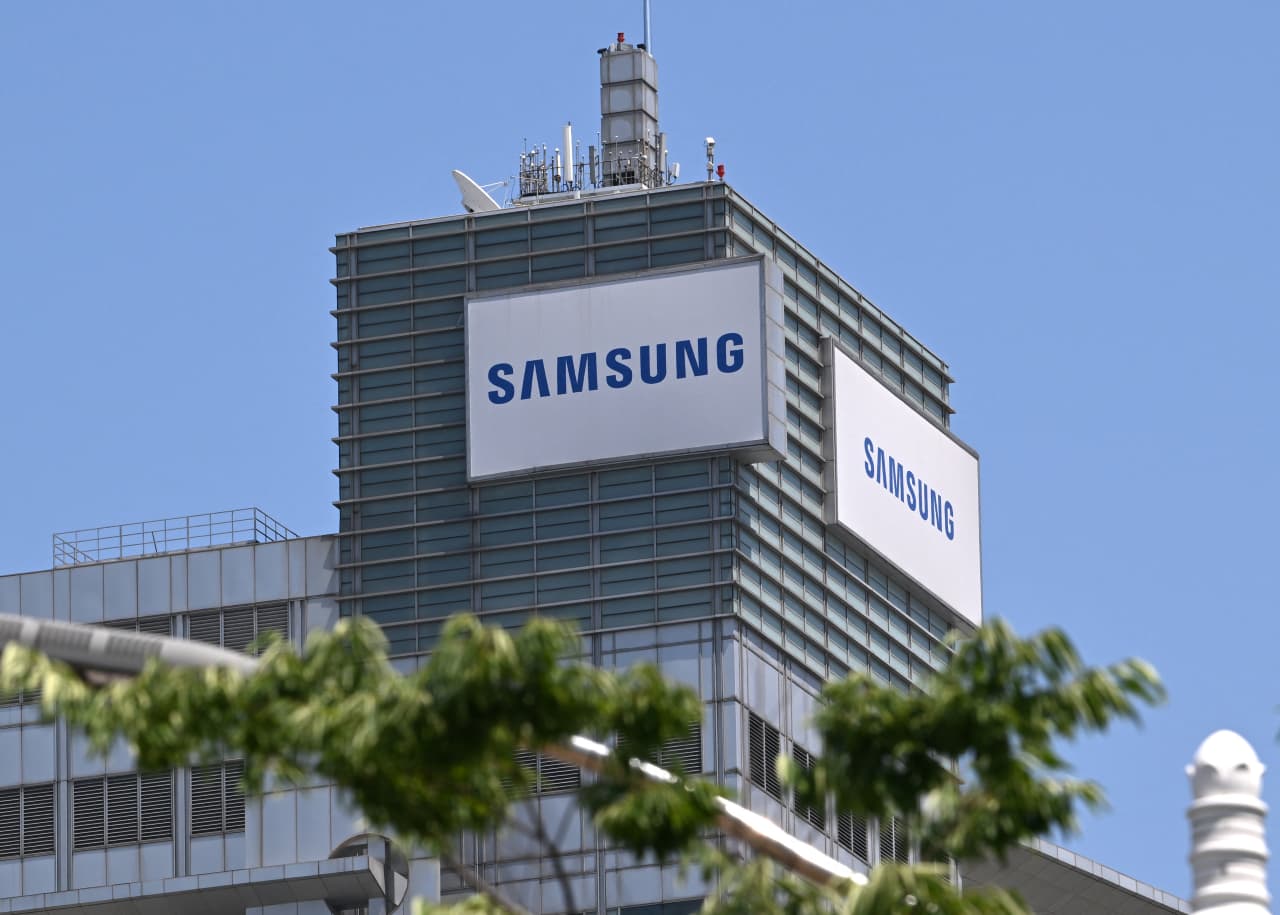
At 06:31 UTC on 22 June 2026, Nikkei Asia reported that SK Hynix had overtaken Samsung Electronics as South Korea's most valuable company during intraday trading, ending a 26-year run in which the chaebol's flagship handset-and-memory conglomerate held the local market's top slot. By 14:02 UTC the same day, the move had solidified enough to draw commentary across the Korean-language market ecosystem and beyond, with the X account Pirat Nation flagging a year-to-date share-price gain above 340% for SK Hynix against an essentially flat tape for Samsung over the same window. The reversal is more than a market-cap curiosity. It marks the moment the AI build-out, not the smartphone cycle, became the dominant driver of Korean industrial value.
The mechanics matter as much as the ranking. South Korea's two memory champions have spent the past three years fighting over the same narrow product: high-bandwidth memory, the stacked-DRAM technology that pairs Nvidia's accelerator GPUs and is now the binding constraint on frontier AI training and inference capacity. SK Hynix bet earliest and hardest on HBM3E qualification with Nvidia, and the qualification pipeline, not wafer count or fab footprint, has been the bottleneck that translates into pricing power. Samsung, the larger and more diversified house, chose a parallel course through its own HBM program and through legacy DRAM and NAND exposure — a course that has, on the 2026 tape, cost it the crown.
What the tape is telling Seoul
The market-cap inversion is the cleanest read yet of where Korean industry actually sits inside the global AI supply chain. SK Hynix's product mix is now structurally tilted toward the inputs that frontier model training cannot do without: HBM for accelerators, advanced 1c DRAM, and the packaging steps that turn stacked die into a shippable component. Samsung's mix is broader — foundry, displays, handsets, image sensors, consumer appliances — and that breadth has historically been a valuation premium. In 2026 the premium has inverted. Investors paying for Korean chip exposure are paying for AI-cycle leverage, and SK Hynix is the cleanest way to buy it on the domestic bourse.
The leadership change is also a verdict on capital allocation. Samsung's memory business is the larger by capacity, but its HBM3E ramp has lagged, and its foundry investment cycle at Pyeongtaek and Taylor has not yet translated into a differentiated revenue line. SK Hynix, by contrast, has run its Cheonan packaging lines and M16 wafer output at the cadence that Nvidia's order book demanded. The result is visible in the share-price gap: a roughly 340% year-to-date surge for Hynix against a Samsung tape that has not kept pace, with the move pronounced enough that the relative-value trade has crowded back in the other direction.
The counter-narrative: durability of the Samsung franchise
The case for treating this as a temporary rotation rather than a structural shift rests on three pillars. First, Samsung's installed base in DRAM and NAND remains larger than Hynix's, and the cyclical recovery in conventional memory pricing — driven by hyperscaler capex that extends well beyond accelerator-attached HBM — eventually pulls Samsung's earnings power back into line. Second, Samsung's foundry and systems-semiconductor businesses, including the Taylor, Texas build-out and the automotive and image-sensor franchises, give it option value that a pure-play memory company does not have. Third, Korean institutional flows have a long history of mean-reverting sector leadership at exactly the moment foreign investors most loudly declare the rotation permanent.
The reading that holds up better against the evidence, however, is that 2026 is not 2017. In the prior memory upcycles the bottleneck was wafer capacity and the marginal buyer was a PC or smartphone OEM. In the present cycle the bottleneck is advanced packaging and HBM qualification, and the marginal buyer is a small number of AI accelerator vendors whose order books are now de facto Korean industrial policy. Samsung's structural diversification was built for the prior cycle's buyer. SK Hynix's narrowness is, for the moment, the right kind of narrowness.
Plain-prose frame: where the value actually sits
What this episode illustrates, more clearly than any earnings call has, is that the unit of value in semiconductors has migrated. The conventional rule of thumb — that process-node leadership and wafer scale determine who captures the margin — has been quietly displaced by a different rule: the bottleneck determines the rent. In the 2010s the bottleneck was sub-7nm logic, and TSMC's foundry discipline captured the surplus. In the 2020s the bottleneck sits one step downstream, in the advanced packaging lines that bind HBM stacks to accelerator dies, and the rent has migrated with it. SK Hynix, having invested in those packaging lines and in the qualification relationships that gate them, now sits on the rent.
This is not a uniquely Korean story. Micron's HBM ramp in the United States and the packaging build-outs being subsidised under the CHIPS Act are the same bottleneck, the same rent, viewed from a different supply chain. The difference in Korea is that two domestic champions sit on either side of the bottleneck decision — and the market has now decided, for the time being, that the one closer to the bottleneck wins. Samsung's response will shape Korean industrial policy for the rest of the decade.
Precedent: the 2017–2019 memory cycle and what it did not predict
The last comparable memory boom, 2017 to early 2019, lifted both Korean memory makers in lockstep. Samsung's memory earnings in that window dwarfed its handset and consumer electronics divisions and briefly made the conglomerate look like a memory pure play. The lesson Seoul's policy establishment took from that episode was that capacity discipline — not market share — was the operative variable. Korean chipmakers coordinated capex more tightly through the downturn that followed than their Taiwanese and Japanese counterparts did, and the discipline paid off in the subsequent pricing recovery.
What the 2017 cycle did not predict was that the next upturn would be driven by a customer base that did not exist in any meaningful form five years earlier. Generative AI workloads did not appear in 2018 capacity-planning models. The HBM order book of 2024 to 2026 is, in effect, a new product category whose qualification cycles, packaging geometry, and reliability windows were not on the roadmaps Samsung and SK Hynix signed off on in the early 2020s. The company that moved first on the new product captured the qualification window, and qualification windows in HBM are unusually sticky: once an accelerator vendor locks in a qualified supplier, the switching cost is measured in lost model-deployment quarters, not in dollars.
Stakes: who wins and who loses if the rotation holds
If SK Hynix's lead persists through the HBM4 transition expected in late 2026 and 2027, the consequences radiate outward. Within Korea, the chaebol balance shifts: SK Group's effective weight in national industrial policy rises, and policy attention — including the allocation of subsidized power capacity, water rights for fabs, and engineering talent from KAIST and POSTECH — tilts further toward the SK axis. The Samsung response, almost certainly a re-acceleration of its own HBM roadmap and a more aggressive foundry pricing posture at Taylor, will determine whether the rotation extends into 2027 or snaps back.
Outside Korea, the implications cut two ways. For Nvidia and the broader accelerator ecosystem, a dominant HBM supplier is a single point of failure that the industry has already begun to mitigate through Micron's ramp and Samsung's belated qualification push. For Chinese accelerator and system builders, the dominance of a Korean HBM supplier sits inside the same export-control architecture that already constrains their access to leading-edge logic; the localisation of HBM within China, through CXMT and others, becomes more urgent as the rent migrates. For the U.S. policy establishment, the CHIPS Act subsidies now underwriting Micron's HBM ramp look more strategically central than they did when the legislation was drafted, and the second wave of subsidy allocation is likely to flow disproportionately into advanced packaging rather than additional wafer capacity.
What remains genuinely uncertain is the durability of the HBM premium itself. Memory pricing has historically reverted, often violently, and the gap between AI-driven demand and broader semiconductor demand is the kind of gap that closes when a single large customer — Nvidia among them — moderates its accelerator roadmap. The sources reporting this transition do not yet contain the second-derivative data, the order-book growth rates, or the customer-concentration disclosures that would let an analyst distinguish a structural shift from a cyclical rotation. The market, on the day SK Hynix took the crown, was pricing in the structural case. Whether the tape over the next two quarters confirms that read is the question the rest of 2026 will turn on.
Desk note: Monexus frames the Hynix overtaking of Samsung as a verdict on the AI-supply-chain bottleneck rather than as a market-cap headline. The wire framing — Nikkei Asia and the X commentary it prompted — has tended toward the latter; this publication treats the former as the operative read.
Wire provenance
This editorial synthesis draws on the following public wire/social posts:
- https://t.me/s/NikkeiAsia
- https://t.me/s/nikkeiasia
- https://x.com/pirat_nation/status/
- https://en.wikipedia.org/wiki/SK_Hynix
- https://en.wikipedia.org/wiki/Samsung_Electronics
- https://en.wikipedia.org/wiki/High_Bandwidth_Memory
- https://en.wikipedia.org/wiki/List_of_largest_corporations_by_market_capitalization
- https://t.me/s/NikkeiAsia
- https://t.me/s/nikkeiasia
- https://x.com/pirat_nation/status/
- https://en.wikipedia.org/wiki/SK_Hynix
- https://en.wikipedia.org/wiki/Samsung_Electronics
- https://en.wikipedia.org/wiki/High_Bandwidth_Memory
- https://en.wikipedia.org/wiki/List_of_largest_corporations_by_market_capitalization