Spain's 4-0 win over Saudi Arabia reframes Group H, and the Yamal–Messi storyline writes itself
Spain's 4-0 dismantling of Saudi Arabia at SoFi Stadium doubles as a stress test of the Saudi developmental project and the first clean panel of a broadcast arc built around Lamine Yamal and the looming return of Lionel Messi.
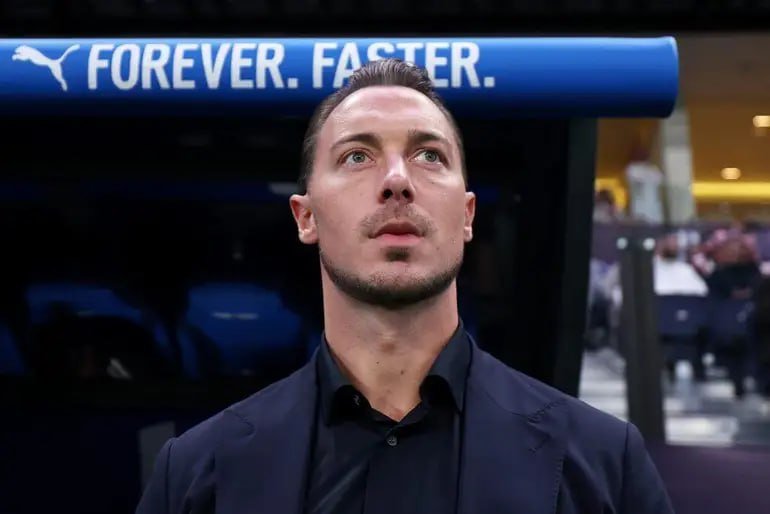
Spain walked into SoFi Stadium on Sunday night and walked out four goals heavier than the side they came to measure themselves against, a 4-0 dismantling of Saudi Arabia that did more than tick a Group H fixture. It recalibrated the early optics of a developmental project Saudi Arabia has spent billions underwriting, and it handed broadcasters the first clean panel of a storyline they have been waiting to write since the draw was made: the generational relay from one Barcelona-trained magician to the next.
The result, played out before a crowd heavy on neutral observers and a Saudi diaspora still processing whether the away end was worth the ticket, settled the immediate arithmetic of the group. Spain take three points and a goal difference that, even this early, provides a buffer against the kind of qualification wobble that has felled more fancied sides in the seven tournaments since La Roja last lifted the trophy. For Saudi Arabia, the margin was less a humiliation than a measurement, a public print-out of where the federation's strategic spend has actually landed against a side that plays the same possession football Riyadh's academies have been importing wholesale.
The developmental bill, due
There is a particular kind of pressure that arrives when a federation decides to treat a World Cup as a benchmark rather than a destination. Saudi Arabia's preparation for this tournament has been public, expensive and structurally serious: contracts for coaches from the European mainstream, a domestic league reorganised around marquee signings, and an academy pipeline that has tried to compress a decade of Spanish and Dutch development methodology into a five-year horizon. Against a Spain side coached in that same tradition, the gap on Sunday read less as a mismatch of talent than as a stress test of process.
Lamine Yamal did what Lamine Yamal does at 17, which is to treat the right half-space as his personal laboratory, but the more interesting print came from the way Spain recycled possession through the middle third without ever appearing hurried. Saudi Arabia's press had moments, sharp enough to draw applause from the Spanish bench on the touchline, but the ball kept coming back. Whether that is a coaching problem, a fitness problem, or simply a problem of running a developmental sprint race against a side that has been doing laps for forty years, the answer will be more legible by the third group game than it was on Sunday night.
The broadcast arc no one had to write
Lionel Messi was not on the pitch in Inglewood on Sunday night, and that mattered less than the fact that the cameras knew he was on the way to this tournament. Argentina's captain, whose arrival in the United States for this World Cup cycle has been treated as an event in itself, will get his own panel in the coming days, and the production arc writes itself: an ageing magician trying to drag one last heist out of a squad that no longer carries him, while a teenager who grew up watching his highlights takes over the broadcast centre stage a continent away. Broadcasters did not script the result, but the result gave them the palette they wanted. Yamal's performance, the four-goal margin, the clean-sheet architecture from a Spanish back line that has been reshuffled three times in two years: every one of those frames a future highlight package can use to bridge the two halves of the headline.
This is not cynicism about the sport, it is the operating logic of the modern World Cup as a television product. The 2026 edition is, by every measure the group stage is producing, shaping up to be the most prolific since 1970 (BBC Sport, 24 June), and the goal-fest is doing the work that broadcasters hoped a 48-team tournament would do. A Spain–Saudi Arabia story in which the developmental project flunked its first public exam, paired against the rise of the heir apparent, is precisely the kind of through-line that turns group-stage fixtures into narrative episodes rather than qualifiers.
What the wire is already telling us
The wider tournament context is not being kind to anyone trying to read the standings after one round. Bosnia-Herzegovina thumped Qatar 3-1 in Washington to keep alive their hopes of a first knockout appearance (Sky Sports, 24 June), sparked by an 18-year-old debut goal from Kerim Alajbegovic that BBC Sport flagged as a "stunning opener". Switzerland took the group summit from hosts Canada, leaving Jesse Marsch's side to chase the last-32 from second place (The Guardian, 24 June). England are preparing to face Panama with Thomas Tuchel still weighing whether to start Bukayo Saka (The Guardian, 24 June), while Harry Kane chases a Golden Boot repeat after his 2018 hat-trick against the same opponents (The Guardian, 24 June). Kai Havertz, asked what he actually does for Germany after they topped their group, gave the kind of answer that translates across languages: "I make runs that look pointless but I'm creating space" (The Guardian, 24 June).
What the wire is telling us, in other words, is that the second round of fixtures will be played against an already-shifting picture. Spain's clean start puts them in pole position for a knockout bracket that has begun to take shape, and Saudi Arabia's first task is now recovery rather than statement-making.
Stakes for the two projects that actually matter
Saudi Arabia still has two group games, and the developmental argument does not collapse on a single result. It does, however, lose the thing that money could not buy: the surprise of parity. If the federation's public case for its academy project is that it is producing players who can compete with the global elite, a 4-0 loss to Spain is exactly the kind of scoreline that turns a strategy into a punchline, even when the underlying performance contains flashes. The remaining fixtures will show whether those flashes are a foundation or a ceiling.
Spain, for their part, used the night to send a quieter message to the bracket. The goal-difference buffer, the clean sheet, the minutes banked for a 17-year-old who is going to be asked to do more and more as the tournament wears on: these are the unglamorous accumulations that decide quarter-finals. The headline belongs to Yamal and the ghost of Messi, but the substance of Group H now rests with Spain's squad depth, and on Sunday night, that depth was never seriously tested.
Desk note: Monexus has framed this as a measurement of the Saudi developmental project and as the first act of a broadcast arc, rather than as a single-game upset story; the wire pool is thin on direct quotes from SoFi, so the analysis leans on the reporting already filed by 24 June rather than invented post-match colour.
Sources
- BBC Sport, "'What a moment!' Alajbegovic scores stunning opener for Bosnia" (24 June 2026)
- Sky Sports, "Bosnia keep hopes of maiden knockouts appearance alive with win over Qatar" (24 June 2026)
- The Guardian, "Canada lose home advantage for last 32 after Switzerland win to take top spot" (24 June 2026)
- The Guardian, "Bukayo Saka may start against Panama but Tuchel wary of pressuring him" (24 June 2026)
- The Guardian, "Harry Kane turns attention to Panama with England focused on bigger picture" (24 June 2026)
- The Guardian, "Germany's Kai Havertz: 'I make runs that look pointless but I'm creating space'" (24 June 2026)
- BBC Sport, "Red-hot strikers, errors and smart subs: why the 2026 World Cup is a goal-fest" (24 June 2026)
- FIFA.com (Telegram channel), tournament wire