A Strait the World Cannot Afford to Lose: Trump, Tehran, and the Brink at Hormuz
A negotiating walkout in Switzerland, a presidential threat to "take over" the strait, and a chokepoint still moving crude. The crisis of 21 June 2026 exposes how thin the line is between deal and war.
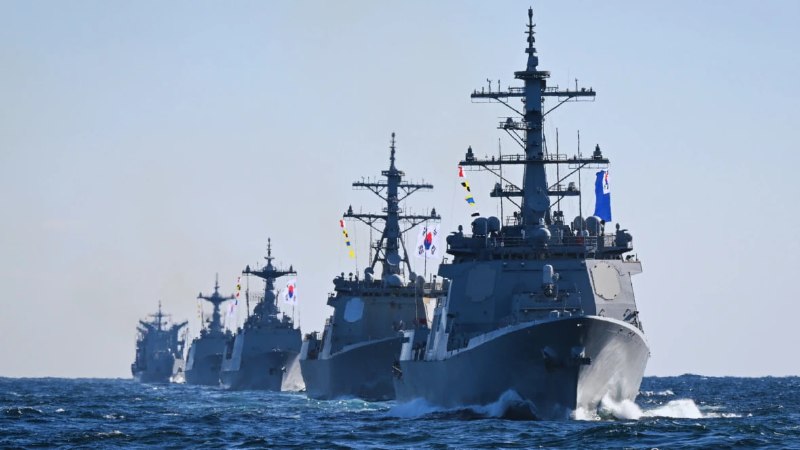
On the afternoon of 21 June 2026, an Iranian negotiating team walked out of talks in Switzerland. According to Iranian state media, the walkout was a direct protest at threats issued by US President Donald Trump. Within hours, Trump had told Fox News that if Iran closed the Strait of Hormuz, Iranian negotiators would not be able to return to their country. He had also told reporters the United States might have to "take over" the strait if a deal was not reached. By 16:32 UTC, Bloomberg was reporting that oil was still flowing through the waterway, even as Tehran claimed it had been closed. A war of words, a walkout, and a still-open seaway — that is the shape of the moment.
The point worth holding is not which side blinked first. It is that the most important energy corridor on the planet is now being negotiated by two governments that have, within seventy-two hours, openly discussed blockading it and seizing it. Both sides are warning the other not to cross a line. Neither has yet said it has crossed it. The space between warning and action is the entire story.
The day the talks collapsed
The public break came on 21 June at 17:18 UTC, when a wire flagged that Iran's negotiating team had left the Switzerland talks in protest at Trump's threats. That framing — that the walkout was a response, not an initiative — matters. It places the immediate trigger on the US side, and the diplomatic initiative on the Iranian side, and it makes the question of who bears responsibility for the breakdown a contested one from the first hour.
Trump's own contribution had been laid down earlier in the day. In comments reported at 17:37 UTC, he told Fox News that if Iran closed the Strait of Hormuz, Iranian negotiators would not be able to return home. In comments reported at 18:21 UTC, he went further, suggesting the United States might have to "take over" the strait if no deal was reached. These were not off-the-cuff remarks from a backbencher. They were statements from the US president about a waterway through which a large share of the world's seaborne oil transits, and about a counterpart government that was, at that exact moment, sitting across a table from American envoys.
The Iranian response on social media was swift and acidic. A widely shared post from analyst-account s_m_marandi at 13:05 UTC on 22 June — ahead of the next round of US commentary — captured the dominant mood in Tehran's policy Twitter sphere: anyone who still believed the Trump administration's narrative on Iran was "irredeemably naive." That is a sentiment, not a verified fact, but its prominence indicates how completely the diplomatic register has collapsed in Iranian elite discussion. The framing on the Iranian side is now that the United States is not negotiating in good faith, and that the threats are the policy, not the prelude to it.
A chokepoint that did not actually close
The most important market fact of the day is that the strait remained open. At 16:32 UTC, Bloomberg, repackaged by Cointelegraph's markets feed, reported that oil was continuing to flow through the Strait of Hormuz even as Iran claimed the waterway was closed. The gap between a declared closure and an observed one is not a technicality. It is the entire reason a global price spike was contained in the hours after the walkout.
If Iran physically closed the strait — through mining, fast-attack boat swarms, anti-ship missile batteries along its coast, or some combination — the effect on seaborne crude flows would be immediate and severe. A significant share of globally traded oil moves through that corridor. A sustained closure would push prices into territory that no importer, including the United States, has any interest in visiting. That is the structural reason both governments have so far stopped short of action. The threat of closure is a lever precisely because actual closure would hurt the lever-puller as well as the lever-target.
The market read on 21 June, then, was a bet that threats remain threats. The diplomatic read was less reassuring: a walkout in Switzerland is the kind of event that, in other crises, has preceded a kinetic move by days or weeks, not months. The fact that a major outlet felt it necessary to confirm the strait was still open speaks to how seriously traders were taking the rhetoric.
Why this moment is different
The United States and Iran have been here before — a presidential threat, a walkout, a chokepoint, a market scare. What marks 21 June 2026 is the openness with which the most aggressive option is being named. A US president discussing taking over the world's most important oil corridor in a public interview is not routine crisis-management language. It is a description of an outcome that, until recently, sat firmly in the unthinkable column for any US administration not already at war with the Islamic Republic.
Three structural features make the current episode unusually dangerous. First, the negotiating channel that usually absorbs rhetorical excess — back-channel diplomacy, third-party mediators, quiet Omani or Qatari channels — is being publicly bypassed. The threats are not being made in private with a wink; they are being made on Fox News and confirmed on social media within hours. That forecloses the kind of mutual face-saving that has historically allowed both sides to climb down.
Second, the Iranian negotiating team's walkout, if the Iranian state media framing is correct, is being framed domestically as a defensive act — a refusal to be bullied under the cover of talks. That framing does not give Iranian diplomats much room to return to the table quickly. Any return will have to be presented as a victory, or it will not happen. The longer the walkout, the higher the cost of climbing back down.
Third, the Hormuz threat itself is asymmetric in a way that complicates US planning. Iran does not need to actually close the strait to alter the strategic calculus. The credible threat of closure, especially when amplified by presidential remarks about a US takeover, can move the price of crude, tighten insurance markets, and force a global diplomatic response — all without a single shot fired. The weapon is the uncertainty, and both sides now hold pieces of it.
The Global South has the most to lose
The diplomatic and security attention in this crisis has focused, as it usually does, on the US–Iran bilateral relationship. The actual distribution of harm in the event of a real disruption runs through the rest of the world. South and East Asian importers — China, India, Japan, South Korea — purchase the bulk of the crude that transits Hormuz. A sustained closure or even a sustained premium on Hormuz risk would feed directly into inflation, currency pressure, and fuel-subsidy bills across the developing world.
That is the framing the Western wire coverage tends to underplay. The story is told as a US–Iran confrontation, with Gulf allies, Israel, and European partners as the supporting cast. The structural fact is that the largest contingent of buyers of Hormuz crude sits outside that cast, and has no formal seat at the table where the strait's fate is being discussed. African and Latin American economies, similarly exposed to fuel-price pass-through, are even further from the conversation. The crisis is bilateral in form and global in consequence.
This is also where the Iranian framing of the dispute — that it is being conducted at the expense of the world's energy security, and that the United States bears the responsibility for escalation — has structural merit. Whether or not one accepts Iranian state media's preferred version of events, the geography of the strait means that any disruption is, by construction, a tax on the countries furthest from the negotiating room.
Stakes, in plain terms
If a deal is reached in the coming days, the 21 June walkout becomes a footnote — a heated weekend in a long negotiation. If a deal is not reached, the sequence of threats and walkouts will harden into a new normal in which the US president and the Iranian negotiating team are publicly trading maximalist language about a chokepoint that the entire world depends on. The market can absorb a day of that. It cannot absorb a quarter.
The narrow path forward runs through a quiet channel — Oman, Qatar, Switzerland again — and a return to the table before the threats become the policy. The wide path runs through a blockade, a US naval response, and a sustained disruption of energy flows to the countries least represented in the rooms where the decision will be made. The events of 21 June did not close either path. They did, however, make the wide path more legible than it has been in years.
What the sources do not settle
It is worth naming what is not yet known. The Iranian state-media framing of the walkout — that it was a direct response to Trump's threats — has not been independently corroborated in the materials available. Trump's own comments to Fox News, the Bloomberg market report on continued oil flows, and the Iranian-side commentary on social media are all on the public record, but the substantive content of what was offered in Switzerland, and what was demanded in return, has not been disclosed. The crisis is being conducted in public language and private substance, and the public language is moving faster than the private substance can be verified. Until that gap closes — through a return to talks, a confirmed deal, or a confirmed breakdown — every reading of the moment is necessarily provisional.
— Monexus framed this as a structural chokepoint crisis with a global price tag, not as a bilateral shouting match. The wire coverage on 21–22 June has tended to lead with the Trump quotes; this piece leads with the walkout, the still-open strait, and the buyers of Hormuz crude who will absorb the consequences either way.
Wire provenance
This editorial synthesis draws on the following public wire/social posts:
- https://t.me/cointelegraph
- https://x.com/unusual_whales/status/
- https://x.com/unusual_whales/status/
- https://x.com/unusual_whales/status/
- https://x.com/s_m_marandi/status/
- https://x.com/sprinterpress/status/
- https://t.me/cointelegraph
Follow the event.
These dated source records provide context. They do not retrospectively verify this archive article.
Separate what the nuclear watchdog reported from what it could not determine after the June 2025 strikes.