Tehran's Funeral Stage: What the July 5 Ceremony Tells Us About the Iranian Succession
Brigadier General Hassanzadeh's announcement of a city-wide funeral on July 5 is less a liturgy than a logistical revelation — and a quiet test of who runs the capital now.
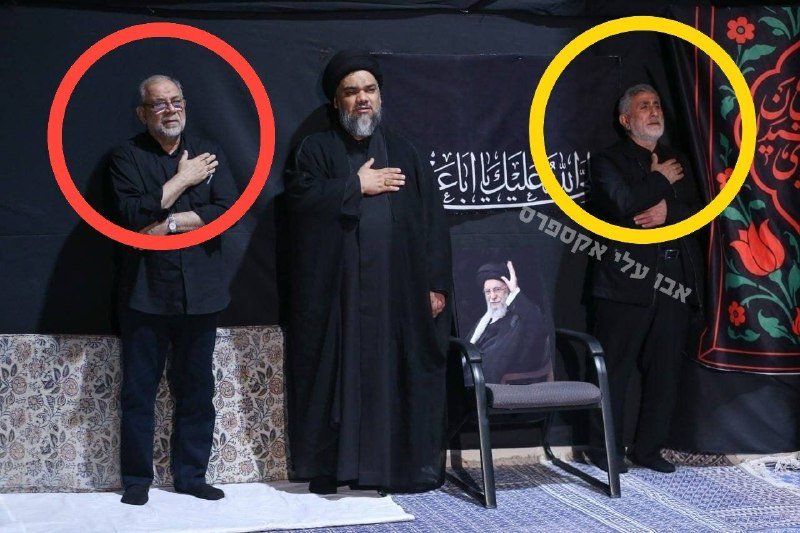
The operational choreography arrived before the elegies. On 22 June 2026, the commander of the Islamic Revolutionary Guard Corps in Tehran, Brigadier General Hassanzadeh, laid out the logistics of a state funeral scheduled for 5 July in the capital's central prayer hall, with a city-wide procession routed along Tehran's main east–west and north–south arteries, a public holiday on the first day, round-the-clock access to the capital's chapel from 4 July, and a dedicated electronic system for registering volunteer marshals and procession organisers. The detail is granular almost to the point of theatre. It is also the most concrete public signal yet of the scale the Iranian state intends for the sendoff of the country's martyred leader — and of the apparatus that will inherit his office.
Hassanzadeh's announcements, carried on the Al-Alam Arabic channel's breaking-news feed, do not name the deceased, do not specify the cause of death, and do not identify a successor. The omissions are themselves the story. A funeral of this logistical footprint, announced by an IRGC general rather than a civilian protocol office, is a statement about who, in this transitional moment, actually runs the streets of Tehran — and who, by extension, will manage the choreography of succession that follows.
A military planner in charge of mourning
Two facts in the announcement stand out. The first is the choice of spokesman. Hassanzadeh is identified as the IRGC commander for Tehran, not a culture ministry official, not the Supreme Leader's office, not the presidential protocol directorate. When a serving general controls the access routes, the holiday calendar, and the volunteer registration portal for a national ceremony, the message is that this is treated as a security-grade event, not a civilian rite.
The second is the granularity. East–west and north–south corridors, dedicated electronic registration, 24-hour chapel access from 4 July. These are the planning outputs of an institution that has spent four decades rehearsing mass mobilisation — Basij rallies, Ashura commemorations, war-anniversary marches. The IRGC knows how to move millions of people through central Tehran without gridlock. That competence, in this moment, is power.
What the silence is doing
The thread of Hassanzadeh's remarks is notably thin on substance the wire would normally cover. No name of the deceased. No official cause. No named successor-designate, no mention of the Assembly of Experts, no reference to the Supreme Council of the Cultural Revolution or any of the constitutional bodies that, on paper, govern such a transition. A reader relying solely on Al-Alam's feed cannot tell from these five items whether the funeral marks the end of a long illness, the aftermath of an Israeli or American strike, or an assassination.
That opacity is not unusual in Tehran succession politics, where premature disclosure is treated as a vulnerability. But the operational confidence of the announcement — we are ready, the routes are ready, you may register now — sits in unresolved tension with the absence of any political content. It implies a leadership that has decided on tempo before it has decided on narrative.
A succession run from the ground up
In plain terms, the Iranian political system is built so that no single officeholder is indispensable. The Supreme Leader is appointed by the Assembly of Experts and serves for life; the president, the judiciary chief, and the Expediency Council chair each hold distinct constitutional weight. In practice, the balance between the office of the Supreme Leader, the IRGC high command, and the civilian clerical establishment is renegotiated after every transition. The 1989 shift from Khomeini to Khamenei was, in retrospect, less a coronation than a structural bargain struck between the then-president, the IRGC leadership, the Assembly of Experts, and the clerical hierarchy of Qom.
A state funeral choreographed by the IRGC Tehran commander is not the same as an IRGC succession. It is, however, an early signal of the institutional weight that will sit at the table when the bargain is struck this time. The clerical old guard of Qom, the technocratic cadre around the presidency, and the IRGC's own command triangle — Khamenei's former office, the IRGC chief, and the Tehran garrison commander — will each want a seat. Hassanzadeh's announcement is the first public move on that board.
The regional read
For the outside, the funeral is a logistical event to plan around. Gulf states, Turkey, Iraq, and the post-Assad Levant will watch the delegations list as carefully as the route map. The presence — or pointed absence — of a Houthi delegation, a Hezbollah flag-bearer, a Palestinian Islamic Jihad representative, or a Hashd al-Shaabi contingent will be parsed for the shape of Tehran's coalition in the next phase. The Western wire will read the same guest list for the opposite signal: which Arab capitals have quietly declined, which sent a junior minister, which sent the foreign minister in person.
Stakes
If the funeral runs as Hassanzadeh has promised — on schedule, on route, at scale — the Iranian state demonstrates that it can execute a complex civilian-military ritual under conditions of acute political transition. That demonstration matters. It tells domestic factions that the IRGC can deliver continuity, and it tells external actors that the leverage window between death-of-leader and investiture-of-successor may be narrower than they had planned for. If the ceremony slips, is truncated, or visibly fails to mobilise the expected turnout, the read is the inverse: a fractured centre, contested authority, and a more crowded field of claimants.
The honest uncertainty here is the subject of the funeral itself. The source items do not name the deceased, do not give a cause, and do not reference any successor process. The logistical confidence is real and documented. The political content remains, by design, undisclosed. Monexus will update as the wire firms up the underlying facts.
Desk note: the wire is currently heavy on the choreography and light on the politics; Monexus is leading on the institutional read, not the elegy.
Wire provenance
This editorial synthesis draws on the following public wire/social posts:
- https://t.me/s/alalamarabic
- https://en.wikipedia.org/wiki/Supreme_Leader_of_Iran
- https://en.wikipedia.org/wiki/Islamic_Revolutionary_Guard_Corps