The Hormuz Question: Trump's Ultimatum and the Iran Deal That Refuses to Land
A presidential threat to 'take over' the Strait of Hormuz, a warning that Iranian negotiators may not be able to fly home, and an Israeli read-out suggesting Washington misplayed the room — the Iran file is wobbling in public again.
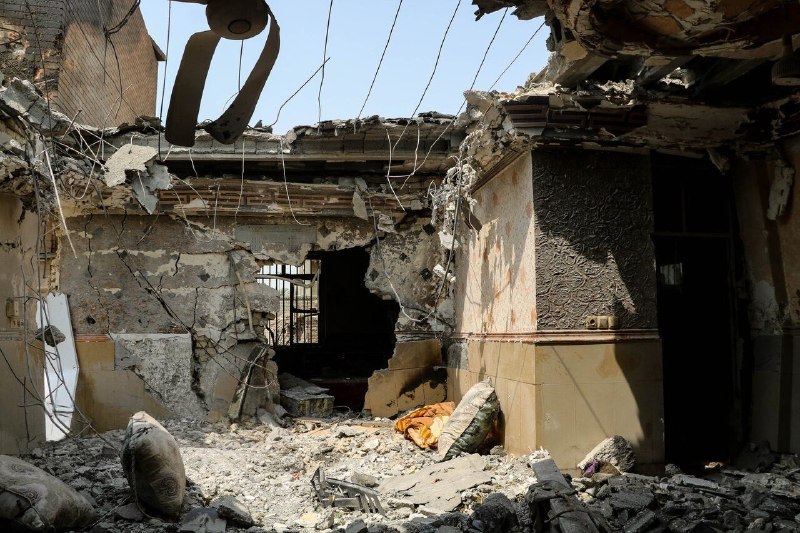
On the evening of 21 June 2026, in a phone interview with Fox News, the President of the United States sketched a maritime ultimatum. If Tehran closed the Strait of Hormuz, the Iranian negotiators currently in talks with Washington would not be able to return to their country. Earlier the same day, the same president had floated the option of the United States itself "taking over" the waterway. By 22 June, an Israeli diplomatic voice — relayed through the Telegram channel of correspondent Amit Segal — was publicly musing that the American side had made a grave mistake in the talks, and that Israel was better off letting Washington discover that on its own. A separate channel, IRIran_Military, carried a defiant line from Trump: "I am the president of everyone!"
What the public is watching is a familiar pattern in modern coercive diplomacy: a maximalist demand, a public threat that converts a negotiating track into a hostage track, and a regional ally quietly trying to ensure that the next move does not become its problem. The underlying question — whether Iran's civilian nuclear programme and missile architecture can be contained by a single deal, or whether the deal itself is now dissolving under the weight of its own rhetoric — has not been answered. The choreography around it has hardened.
The statements, in order
At 17:37 UTC on 21 June, the X account @unusual_whales carried Trump's Fox News remark that if Iran closed Hormuz, Iranian negotiators "will not be able to return to their country." The implicit hostage logic is straightforward: the negotiating delegation is being told that the safety of its own return flight is conditional on the strategic behaviour of the state it represents. At 18:21 UTC the same account logged Trump's earlier suggestion that the United States might "take over" the Strait of Hormuz if a deal is not reached. By 16:26 UTC on 22 June, Segal's channel was reporting the Israeli read: grave mistake in the talks; let Trump find out on his own. By 16:31 UTC on 22 June, IRIran_Military was pushing back with the line "I am the president of everyone!" — a public re-assertion that the office Trump occupies does not, in his telling, belong to one camp, but to the United States as a whole.
Read together, the four messages amount to a single composite: a coercive offer, a coercive threat, a partner publicly distancing itself from the coercive offer, and the principal publicly re-anchoring his own legitimacy against the criticism. None of it advances the technical file — enrichment levels, IAEA access, missile constraints — by a single documented line. All of it shifts the political file.
The counter-narrative from Tehran and Tel Aviv
Two voices are doing most of the pushing back, and they are pushing in different directions. The Iranian channel frames the dispute as one about presidential authority and the scope of American power: the "president of everyone" line is a counter-claim that the United States cannot legitimately speak for, or coerce, a sovereign negotiating counterpart. The Israeli read, relayed by Segal, runs the other way: it argues the coercive language has already damaged the leverage Washington thought it was accumulating, and that Israel should now sit back and let the consequences accrue to the principal who chose them.
Both lines are partial. The Iranian framing elides the fact that Iran's own coercive moves — periodic harassment of commercial shipping, the steady expansion of missile proxies across the wider Middle East — are part of why the diplomatic track exists in its current coercive shape in the first place. The Israeli framing elides the fact that quiet coordination between Washington and Tel Aviv on Iran has been a feature of the file for decades, and that the public distancing may itself be a negotiating signal rather than a clean break. What both share is a working assumption that the current American posture is not producing the deal it claims to want. That is the part of the read-out on which Tehran and Tel Aviv quietly converge.
The structural frame: a corridor under stress
The Strait of Hormuz is roughly 21 nautical miles wide at its narrowest, with shipping lanes on either side of a buffer zone; somewhere between a fifth and a quarter of seaborne oil passes through it on most days. It is not the busiest waterway in the world, but it is the most strategically concentrated one, because the alternatives — pipelines across Saudi Arabia and the UAE, the longer Cape route around Africa — exist at scale only as overflow. A sustained closure, or even a sustained credible threat of closure, is not a tactical event. It is a re-pricing of global energy insurance, a re-routing of naval posture, and a re-alignment of which Gulf capitals are treated as secure. That is why a US president can talk about "taking over" a body of water without that sounding, to his own ear, like an unusual sentence to utter on cable news.
This is the structural shift the Hormuz question sits inside. For two generations, the operating assumption has been that the United States secures the sea-lanes through which the global economy breathes, in exchange for the dollar's role in pricing the cargo that moves along them. That bargain is not being openly renegotiated. But it is being tested at the edges: by an Iran that periodically reminds the world the lanes can be closed; by Gulf monarchies that have spent the last decade building their own bypass pipelines; and by a White House that now reaches for ownership language ("take over") where a previous generation would have reached for escort language ("freedom of navigation"). The shift from escort to ownership is not, on its own, a doctrine. It is, however, a tell.
Why Israel is publicly stepping back
The Segal line — that Trump made a grave mistake in the talks and Israel should let him find out on his own — is the kind of message that only lands publicly if it is meant to land publicly. Israel has a long history of working the Iran file alongside Washington and an equally long history of signalling, in plain Israeli press channels, when it thinks Washington has overreached. The signal here is not "we are abandoning the file." It is "the cost of the overreach should be borne by the principal who chose it, not by us." That is a defensive posture, and it tracks with the public reporting of recent weeks that Israel has been reluctant to be dragged into a kinetic escalation triggered by an American negotiating failure.
The other thing the Segal line does is let Israel claim plausible insulation. If the talks collapse and the maritime track hardens, Israel can say it warned the Americans off this specific move at this specific moment. If the talks succeed against expectations, Israel can claim credit for restraint. The Israeli diplomatic position on Iran is, in other words, being explicitly de-coupled from the American negotiating style on Iran — at least for the moment, and at least in public.
Stakes, and the forward view
If the current posture holds, three things follow. First, the negotiating track narrows further: Iran will read "take over" as evidence that the offer on the table is not security for constraint but submission, and will price its acceptance accordingly. Second, the energy market re-prices insurance on Hormuz transit within days, with knock-on effects on Asian importers who cannot easily substitute away from Gulf crude. Third, Israel recalibrates: more of the file moves to Jerusalem and less to Washington, which is a transfer of operational ownership that neither ally has formally acknowledged.
The most plausible near-term outcome is not a deal and not a war. It is a managed stalemate — more sanctions designations, more harassment incidents, more public rhetoric, and a slow drift in which the question stops being whether Iran gets a bomb and starts being who pays the daily cost of the ambiguity. The threat to make Iranian negotiators unable to fly home is not a negotiating instrument. It is a confession that the negotiating instrument the principal thought he had is not working.
What remains genuinely uncertain, even on the open sources, is whether the channel-level rhetoric reflects the actual temperature inside the talks. The four public messages do not, on their own, tell us whether a draft is on the table, whether enrichment caps are still the centre of gravity, or whether the IAEA file has moved in the last 72 hours. The framing suggests the file is wobbling. The sources do not specify the technical state of play.
This piece treats the four public statements as a composite rather than as four separate stories. The dominant wire framing — that Trump is escalating deliberately — is set against the Iranian counter-claim of sovereign legitimacy and the Israeli signal of public distancing. The structural read is that escort-language is being replaced by ownership-language in the American posture on Hormuz, with all the re-pricing that implies.
Wire provenance
This editorial synthesis draws on the following public wire/social posts:
- https://t.me/amitsegal
- https://t.me/IRIran_Military
- https://x.com/unusual_whales/status/
- https://x.com/unusual_whales/status/
Follow the event.
These dated source records provide context. They do not retrospectively verify this archive article.
Separate what the nuclear watchdog reported from what it could not determine after the June 2025 strikes.