The Strait Trump Says Is Open: A Reading of the White House's Iran Victory Lap
The president says the waterway is open, the navy is gone, and the war is 'working out very well.' The statements, the silence around them, and the oil math underneath all three.
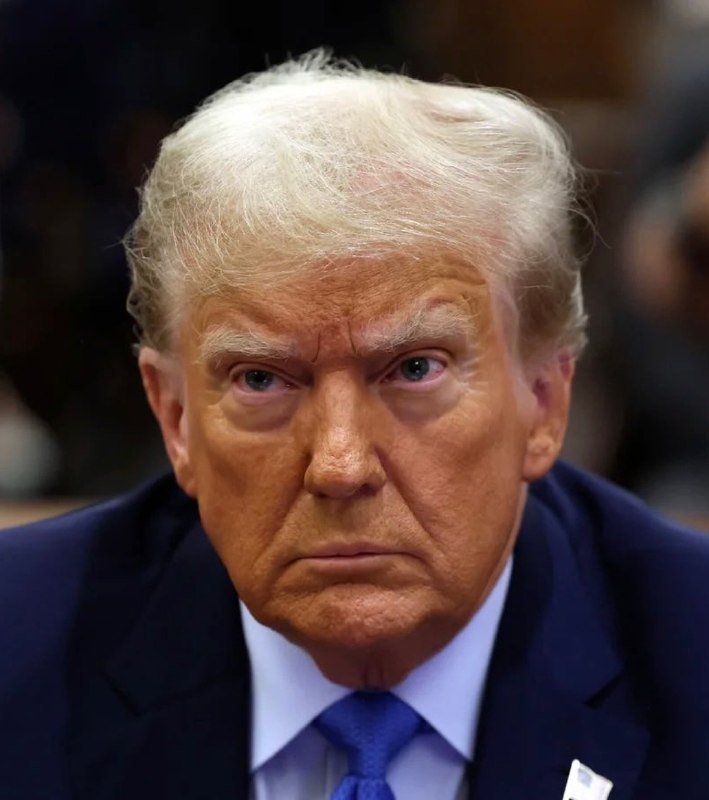
On the evening of 22 June 2026, the US president told reporters the Strait of Hormuz was "totally open," that Iran had lost its navy and air force, and that the war with Tehran was, "in its own way, working out very well." The statements, captured on camera and circulated within minutes by the OSINT account Open Source Intel, were not the careful syntax of a commander-in-chief briefing allies. They were a victory lap, delivered before the ink on any written agreement had dried.
The gap between the rhetoric of total command and the actual state of play in the Gulf is now the most important fact about American Iran policy. What the president describes as a fait accompli is, on the public record, still an unfolding event — and a contested one.
A claim, made six times in one evening
The load-bearing phrase of the day was "the strait is totally open." It appears, in slightly different packaging, in at least four separate video clips circulated by Open Source Intel on 22 June 2026 UTC. In the most quoted of them, the president pairs it with a second, larger claim: "We took in more oil yesterday than has ever gone through the strait… We have an open strait and we have a country that will never have a nuclear weapon."
The oil boast is striking. Roughly a fifth of the world's seaborne crude normally transits Hormuz. For "yesterday" to have been the largest day in the strait's recorded history, the chokepoint would have had to handle a volume that, on most public shipping-tracker datasets, no single 24-hour window has ever approached. The claim is not impossible — record days do occur when tanker queues clear after a disruption — but it is the kind of statement that invites verification rather than repetition.
Stacked on top of it, the president says he is "doing very well on Strait of Hormuz," and that Iran's "navy is gone, their air force is gone, their leaders are all dead." The cumulative picture is one of a war that has already been won, decisively, with no remaining friction at the waterline.
The counter-narrative the briefing room is not airing
The administration's framing leaves out the parts of the picture that would slow the applause. It does not address the posture of the Iranian Revolutionary Guard Corps Navy, which has historically been designed for asymmetric action in the Gulf — fast boats, mines, anti-ship missiles — rather than the kind of blue-water force that the phrase "their navy is gone" implicitly invokes. A navy optimised for harassment of tankers does not need to exist as a fleet to remain a threat to a chokepoint.
It does not address the insurance market. Lloyd's-listed war-risk premiums for transiting the Gulf are, on the public record maintained by industry brokers, the cleanest real-time referendum on whether a strait is "totally open." When premiums fall to near-baseline, underwriters have done the maths. When they do not, the strait is not, in any operational sense, open — regardless of what the lectern says.
It does not address the Iranian state-adjacent counter-claim. Tehran-aligned outlets have, in recent weeks, framed any US-brokered arrangement as a face-saving capitulation that leaves Iran's missile and proxy architecture intact. The structural read in much of the Global South commentary is the inverse of the White House one: that the United States entered a war it could not finish, accepted terms it cannot fully enforce, and is now dressing the outcome as a triumph.
The pattern: victory laps, and the oil underneath them
The structural pattern is familiar. A US administration that has tied its domestic political identity to energy dominance has every incentive to translate a fragile arrangement into a clean headline. The Strait of Hormuz is the most economically consequential pinch-point on earth; if it is "open," the inflation that the administration says it will not tolerate has one fewer excuse. The subtext of "we have an oil gusher" is not foreign policy. It is the price at the pump in November.
A second structural read sits alongside it. The repeated invocation of "respect" — "as long as they respect us, we're gonna be fine; if they don't, things wouldn't be good" — is a transactional framing, not a strategic one. It treats a regional order as a bilateral status contest between two presidents. That framing flatters the White House and humiliates the counterpart. It also, by design, makes the durability of any deal a function of one man's mood on one morning. That is not a doctrine of deterrence. It is the absence of one.
The mention of "unfrozen assets on Iran… used to buy food from our farmers" is the third tell. It is a domestic-agricultural subsidy repackaged as a concession. Whether it is a clever bit of mercantilist statecraft or a fragile arrangement that holds only as long as the oil revenue math works is the question the briefing room has not answered.
What remains genuinely uncertain
The public record assembled on 22 June 2026 establishes that the president made these claims, on camera, in roughly the space of an hour. It does not establish that the Strait of Hormuz is operationally open at the volumes implied. It does not establish the state of Iran's residual deterrent. It does not establish the terms of any memorandum of understanding, or whether one has been signed. The president's own caveat — "I didn't say it will cause a depression, I said it could cause a depression" — is a reminder, slipped into the same press appearance, that even the White House does not regard the present arrangement as settled.
The most plausible alternate reading is not that the president is wrong, but that he is early. An arrangement that holds for a quarter, with the strait genuinely quiet and insurance premiums easing, would let him say all of this in retrospect without contradiction. An arrangement that breaks on the first provocation would make 22 June 2026 read, in the historical record, as the day the administration mistook a pause for a peace.
For now, the working assumption at the chokepoint — among shipowners, underwriters, and the Gulf states that have to live with the result — is the one the lectern has not yet conceded: that open and "open" are different words, and the difference between them is the most expensive piece of geography in the world.
— Monexus Staff Writer, 22 June 2026.
Wire provenance
This editorial synthesis draws on the following public wire/social posts:
- https://twitter.com/Osint613/status/2069152008855019722/video/1
- https://twitter.com/Osint613/status/2069157538034057569/video/1
Follow the event.
These dated source records provide context. They do not retrospectively verify this archive article.
Separate what the nuclear watchdog reported from what it could not determine after the June 2025 strikes.