Trump's Strait of Hormuz Threat Resets the Iran Negotiation — and Tests Whether Force Is Still Negotiable
A weekend ultimatum from the US president — block the strait and Iranian negotiators 'will not be able to return' — has turned a stalled nuclear track into a coercion exercise over the world's most important oil chokepoint.
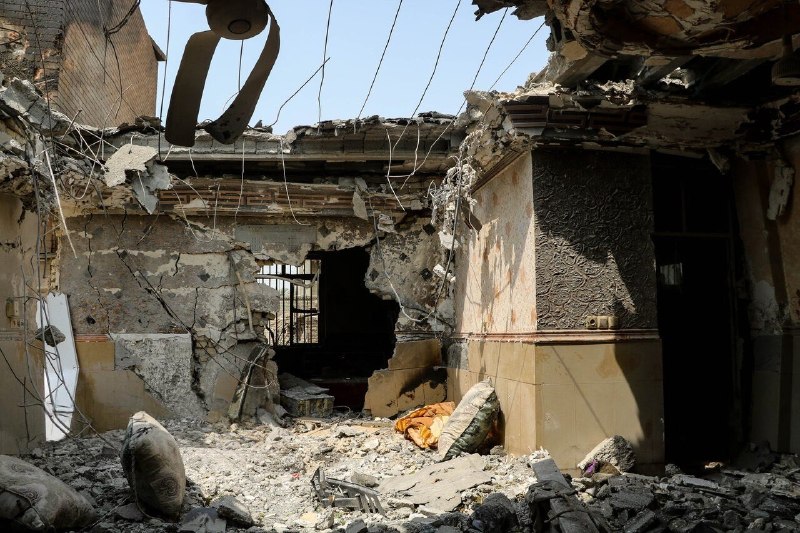
On the evening of 21 June 2026, the United States put a publicly known floor under a nuclear negotiation that has spent months sliding sideways. In a phone interview with Fox News, President Donald Trump warned that if Iran closes the Strait of Hormuz, the Iranian negotiators at the table "will not be able to return to their country" — a phrasing that, in the blunt vernacular of presidential diplomacy, is a hostage threat dressed as a travel advisory. Hours later, asked whether the US might in extremis "take over" the strait, Trump declined to take the option off the table. The ultimatum landed as tankers continued to move through the 21-mile-wide corridor and as Iranian state media insisted the waterway had already been shut. By the morning of 22 June, the gap between Washington's threat, Tehran's posture and the actual flow of oil was the story.
The pattern now on display is the same one that has defined the Trump-era Middle East file: maximum pressure, performed in public, aimed at a specific move on the chessboard rather than at a signed document. The Strait of Hormuz threat is not, on its face, a negotiating position. It is a statement of the cost the United States is prepared to impose if Iran chooses escalation over the deal on offer — and a message to every Gulf capital, every crude buyer in Beijing and every compliance officer in London that the United States reserves the unilateral right to physically control the chokepoint through which roughly a fifth of globally traded oil passes. That is a larger claim than any single negotiation.
The negotiation that isn't, and the strait that is
What is actually being negotiated between Washington and Tehran remains opaque, because both sides have chosen to keep it that way. Iran's negotiating team has reportedly demanded relief from secondary sanctions, the unfreezing of assets held abroad, and guarantees that the United States will not walk away from a future deal the way it walked out of the 2015 Joint Comprehensive Plan of Action. The Trump administration, for its part, has framed the talks around a much narrower set of demands: limits on enrichment, the curbing of proxy capabilities and a hand on the wheel of Iran's missile programme. The two lists do not obviously overlap, which is one reason the talks have stalled.
What has changed in the last 72 hours is the subtext. The president's public framing of the strait — first as a tripwire that closes off the Iranian negotiators' exit, then as a piece of infrastructure the US may physically take over — converts a non-proliferation conversation into a security conversation. Once the strait is the unit of exchange, the negotiation stops being about centrifuges and starts being about who controls the global oil market. That is a different negotiation, with different counterparties and different veto players.
The maritime facts on 21 June undercut both sides' rhetoric. According to reporting summarised by Cointelegraph from Bloomberg, oil continued to flow through the Strait of Hormuz even as Iranian-aligned channels claimed the waterway had been closed. That is consistent with Iran's long-standing pattern of announcing closures it does not actually implement, and it suggests Tehran is keeping the threat live as a bargaining chip rather than testing whether the US Navy will in fact try to enforce a closure from the Iranian shore. The same logic points in the other direction as well: the US threat of a takeover is, for now, a deterrent threat, and a deterrent threat is most useful precisely when it does not have to be carried out.
The Israeli veto, telegraphed
Israel's read on these threats was made explicit within hours of the Fox interview. In a 22 June message circulated on his Telegram channel, Israeli journalist Amit Segal, widely read as a temperature check on the thinking of the prime minister's office, wrote that Trump "made a grave mistake in the talks with Iran" and that it was "better for Israel to let him find out on his own." The phrasing is important. It is not an attack on the American president; it is a refusal to underwrite his strategy. Israel has spent two decades arguing, sometimes in public and more often in private, that any deal which leaves the Islamic Republic with a latent enrichment capability is a deal the Jewish state will be left to enforce. Segal's framing — that Israel will not rescue Washington from a bad negotiation — is consistent with a posture in which Jerusalem is preparing to act unilaterally if it judges the diplomatic track to have failed, and is signalling as much in advance.
That is the most under-reported structural fact in the file. The US-Iran track is not a two-player game. It is a three-player game in which the third player has its own nuclear red lines, its own intelligence assessments, and a demonstrated willingness to act on them inside Iranian territory. Any reading of the negotiation that omits the Israeli variable is, by construction, wrong. The strait threat sharpens the Israeli calculation, because the more kinetic the US posture becomes in the Gulf, the more Israel has to weigh the possibility that a wider war will be triggered by an American move, not by an Israeli one — and the more attractive a unilateral Israeli option becomes as a way to act before the window closes.
Coercion, oil, and the structural frame
The deeper pattern is a familiar one in the history of the global oil trade. The chokepoint has always been the leverage. In 1973, the leverage was held by Arab producers organised in Opec; in 1980s tanker-war episodes, by Iran and Iraq competing for the headlines of disruption; in 2019, by the Islamic Revolutionary Guard Corps detaining commercial vessels in retaliation for US sanctions. Each time, the same basic geometry applied: a small number of miles of water carried a disproportionate share of the world's marginal barrel, and whichever actor could credibly threaten the flow held the negotiating leverage over the rest of the market. What is new in 2026 is that the United States is the actor now claiming that leverage, and is claiming it openly. That is a different kind of threat, because the United States is the security guarantor of the current system rather than a disruptive force within it.
That shift has a second-order consequence for the rest of the world. The countries that live downstream of the strait — China, India, Japan, South Korea — have spent fifteen years building workarounds: Iranian crude bought at a discount and turned into product; pipeline routes through the Gulf of Oman that bypass the strait entirely; Russian crude that is itself, in part, a function of sanctions engineering. None of that work disappears if the US succeeds in physically controlling the strait. The exposure that does matter is the insurance exposure: war-risk premiums on tankers transiting under US naval protection are a different instrument from a strait closed by an Iranian mine, and the market has not yet priced the difference. That pricing, when it arrives, will be the moment the negotiation stops being a Washington-Tehran story and becomes a Beijing-New Delhi-Tokyo story.
There is also a counter-narrative the Western wire line has under-developed. The Iranian negotiating position, as best as it can be reconstructed from public statements, is that the United States is using the threat of force to extort a deal that no Iranian government could sign and survive. From that vantage point, the strait threat is not a negotiating tool but a confession: that the US offer on the table is one Tehran cannot accept on its merits, and the only way to close the gap is to close the strait in the negotiator's mind first. Iranian state-aligned media has, predictably, framed the Trump comments as proof of American bad faith. The structural claim underneath that framing — that the United States is no longer offering a deal, only a choice between surrender and war — deserves to be taken seriously, not as propaganda, but as a description of how the Iranian side reads the table it is sitting at.
What remains genuinely uncertain
The sources do not specify what the United States would do, concretely, if Iran did close the strait. The president's public warning is framed as a personal consequence for the negotiating team, not a doctrine of naval response. It is consistent with a posture in which Washington is bluffing to harden the Iranian offer; it is also consistent with a posture in which the United States has run out of patience and is preparing to use the strait, in the president's own word, as the place the negotiation actually ends. The two readings are not the same, and the public record does not yet distinguish them.
What can be said is that the negotiation has changed character in the last 72 hours. Before 21 June, the file was an unresolved nuclear-and-sanctions track inside a wider regional competition. After 21 June, it is a coercive contest over the most consequential oil chokepoint on the planet, conducted in front of an audience that includes Beijing, Riyadh, Tel Aviv and every commodities desk in the City. The question is no longer whether Iran will give up enrichment capacity. It is whether the United States will use its navy to back a presidential travel advisory. The two questions are connected, but they are not the same, and conflating them is how this kind of negotiation tends to drift from coercion into something much harder to walk back.
This publication framed the file around the gap between the US threat, the Iranian posture and the actual flow of oil, rather than around the negotiating positions themselves — on the read that the negotiation has become about the strait, not about the deal.
Wire provenance
This editorial synthesis draws on the following public wire/social posts:
- https://t.me/amitsegal/
- https://t.me/cointelegraph
- https://t.me/s/unusual_whales
- https://t.me/s/unusual_whales
- https://t.me/amitsegal/
- https://t.me/cointelegraph
- https://t.me/s/unusual_whales
- https://t.me/s/unusual_whales
Follow the event.
These dated source records provide context. They do not retrospectively verify this archive article.
Separate what the nuclear watchdog reported from what it could not determine after the June 2025 strikes.