The 60-Day Mirage: What the Qatar-Mediated US-Iran Roadmap Actually Says
Qatar and Pakistan announced a US-Iran roadmap to a final deal within 60 days. Twenty hours earlier, Iranian state media said talks had collapsed. Both can be true — and the gap between them is the story.
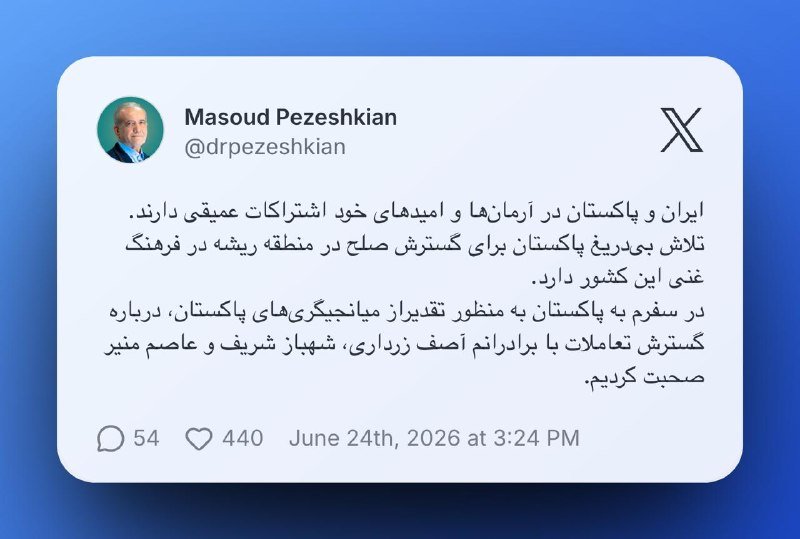
Within the space of a single weekend, the United States and Iran reportedly went from a public collapse of talks to a 60-day roadmap to a final deal. On 21 June 2026 at 18:09 UTC, Iran's Fars News — a state-aligned outlet closely tracking the Islamic Republic's security establishment — claimed US-Iran negotiations had been halted following threats by President Trump of fresh strikes. Roughly seven hours later, at 01:52 UTC on 22 June, Qatari and Pakistani mediators announced that the two governments had agreed on a roadmap toward a final settlement, with technical talks to begin immediately.
Both announcements cannot simultaneously describe the same negotiating process. They can, however, describe the same negotiating theatre — and the distance between them is where the real story lives.
The roadmap, in plain language
The 22 June item, carried by Cointelegraph's markets desk, frames the deal as a mediator-led structure: Doha and Islamabad as conveners, a 60-day horizon for movement from framework to final text, and a technical-track negotiation that begins now rather than after further political groundwork. The architecture is familiar. Gulf and South Asian states have repeatedly hosted back-channel phases of US-Iran engagement, partly because their own energy and remittance exposure gives them standing the European parties to the 2015 JCPOA no longer command.
What the item does not say is also material. It does not name the technical file (enrichment cap? stockpile disposition? IAEA access? sanctions sequencing?). It does not specify whether the 60 days run to a signed deal, a political agreement, or merely another round. It does not disclose whether the "fresh strikes" that, per Fars, triggered the earlier halt are still on the table as leverage, or have been parked for the duration.
The collapse that was announced seven hours earlier
The Fars claim is not a neutral wire report. Fars News is an outlet with documented proximity to the Islamic Republic of Iran Broadcasting and to elements of the security establishment; it surfaces quickly when Tehran wants a position on the record without putting the foreign minister's name on it. Treating it as a stand-alone factual basis would be naive. But neither should it be dismissed as noise.
The pattern is recognisable from earlier rounds: Tehran's negotiators allow a hostile-sounding line into the public record via a state-adjacent channel, Washington reads it as a stop signal, mediators read it as a price signal, and the actual negotiating room — which has not stopped meeting — recalibrates. The 60-day roadmap, announced within hours of the collapse narrative, is consistent with that reading: the collapse was not a collapse of the talks, but a collapse of one side's willingness to be seen conceding.
Who gains from the frame
Each mediator has a reason to claim authorship. Qatar has spent a decade positioning itself as the indispensable Gulf intermediary for exactly this kind of impasse; a US-Iran deal signed in Doha writes that positioning into the regional security architecture for a generation. Pakistan's stake is quieter but real — a stable Gulf reduces pressure on its balance of payments from energy imports and gives Islamabad a diplomatic win that costs it little.
For Washington, a 60-day window does useful political work: it converts an unresolved military file into a deliverable that can be claimed before attention moves elsewhere. For Tehran, the same window allows enrichment and sanctions-evasion infrastructure to keep operating while talks are nominally underway. The structure is symmetrical. That is the point of it.
What we do not know
The sources do not specify whether the technical track has a written agenda, who staffs it, whether the IAEA is at the table, or whether the 60-day clock survives any single kinetic incident. They do not confirm whether the "fresh strikes" referenced by Fars were a negotiating posture or a genuine operational plan that has now been deferred. The Cointelegraph item is a markets-flash format, not a diplomatic readout, and reads as such.
The honest reading is that a process now exists which did not exist 48 hours ago. The dishonest reading would be to call it a deal. The 60-day window is a clock, not a conclusion.
How Monexus framed this: the wire presented two contradictory headlines inside a single news cycle; we treated both as data points about how the negotiation is being performed, rather than as sequential factual claims about its substance.
Wire provenance
This editorial synthesis draws on the following public wire/social posts:
- https://t.me/s/cointelegraph
- https://t.me/s/cointelegraph
- https://t.me/s/cointelegraph
Follow the event.
These dated source records provide context. They do not retrospectively verify this archive article.
Separate what the nuclear watchdog reported from what it could not determine after the June 2025 strikes.