After the Switzerland talks, a Lebanon-centred deal takes shape — and the ticket counter notices
A first round of US-Iran talks in Switzerland has produced five preliminary agreements, with Lebanon's de-escalation at the centre. Air carriers and passengers are reading the same signals and reaching different conclusions.
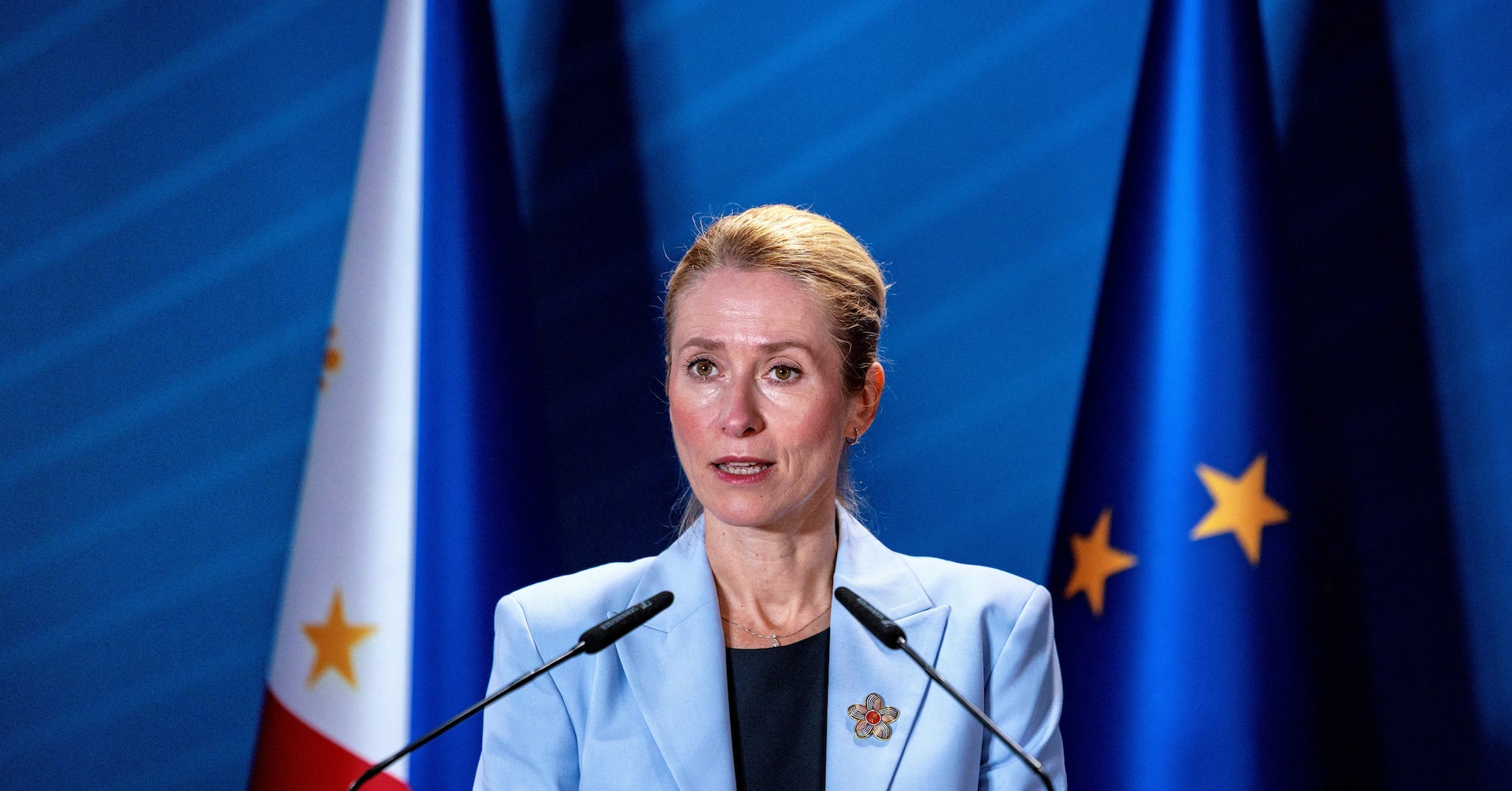
The first round of US-Iran negotiations held in Switzerland on 21–22 June 2026 produced what Iranian officials described on 22 June as five preliminary agreements, with the de-escalation of the Lebanon file running through the agenda from the opening session. By midday UTC, Tehran said the United States had lifted elements of the economic pressure campaign and that some Iranian assets held abroad had been released; in parallel, US President Donald Trump publicly directed Tehran to rein in its Lebanese partners, and air carriers across the Gulf and Levant were repricing tickets on the assumption that jet fuel had just become cheaper to hedge against. What is striking is not the optimism — optimism in these talks is, at this point, a profession — but the speed at which a diplomatic track, an airline pricing model, and a consumer booking decision are now moving in lockstep on the same underlying signal.
This article argues that the Switzerland round is best read as the moment a Lebanon-centred framework became the agreed organising logic of US-Iran diplomacy, and that the macroeconomic channel — fuel, freight, fares — is doing more of the political work in Washington and Tehran than the communiqués suggest. The thread is fragile, the claims from both sides are unusually detailed for a first round, and the disagreement between Iranian progress language and the abrupt on-record demand from the US president is the tell that the deal is being negotiated on Lebanese terms.
What was actually agreed in Switzerland
Iranian state-linked and regional outlets reporting on the 22 June readout converged on a structure: five working agreements, sequenced rather than signed, with Lebanon as the central issue and a financial track running in parallel. The Cradle reported on 22 June at 10:56 UTC that Tehran had framed the round as productive, claiming the US "siege" had been partially lifted and that some Iranian assets had been released, while stressing that any durable arrangement required de-escalation in Lebanon. The Palestine Chronicle, covering the same readout, catalogued the five agreements and named Lebanon as the issue that travelled through every agenda item rather than appearing as a single line entry. Coverage cited a Financial Times report — flagged by Unusual Whales on X at 11:37 UTC on 22 June — that Iran was hailing "major progress" on ending the Lebanon war, language that dovetailed with the Iranian delegation's on-record optimism.
The counterpoint sits in the same news cycle. On 21 June at 15:31 UTC, polymarket's news feed carried Trump's directive ordering Iran to immediately stop its Lebanese partners from "causing trouble" — public, in the imperative mood, and addressed to Tehran rather than to the Lebanese actors themselves. The 21 June interruption, also carried by polymarket at 17:03 UTC, framed Iran as having briefly halted the talks before resuming, suggests the framework was contested at the working level even as the headline readouts converged.
The honest read of the Switzerland round is therefore narrower than either side's communiqué implies. There is a sequenced text. There is a Lebanese file that the parties have agreed is the most politically combustible item and that they have also agreed to lead with. There is an asset-release channel. There is not, on the public record, a signed agreement on Hezbollah's disarmament, on a timeline, or on the price-of-oil component that the airline industry is already discounting.
The Lebanon frame, and why it carries the deal
A US-Iran process in which Lebanon is the central file is structurally different from a process organised around the nuclear dossier, and the difference is doing real work. The 2015 Joint Comprehensive Plan of Action was a non-proliferation arrangement in which Lebanon was, at most, a peripheral concern; the Trump-era maximum-pressure posture collapsed JCPOA's verification architecture and reframed the relationship as a contest of economic endurance. What Switzerland produced on 22 June is a different animal: a regional-security track in which Iran's leverage over its Lebanese partners is the asset Tehran is offering, and Lebanese de-escalation is the asset Washington is asking for in return. The five agreements, as catalogued in the regional readouts, appear to ladder into that trade.
This is why the language matters. Trump's public instruction, issued the day before, was addressed to Iran and named Lebanon's actors as a problem Tehran is responsible for solving. Tehran's readout, by contrast, names the US "siege" and asset release as the corresponding concession. The two are not symmetric — one is a command, the other an entitlement — but they describe the same transaction from opposite sides of the table. Whether that transaction closes depends on whether Iranian leverage over its Lebanese partners is real, sufficient, and durable; whether the US side is willing to convert asset release into something Iran regards as the siege being lifted; and whether the Lebanese file can be made governable in a way that survives the next news cycle.
The risk, plainly stated, is that the framework is being constructed on the assumption that Iran can deliver Lebanese actors it does not formally command, in a political environment in which Lebanese actors have their own domestic and regional patrons. The Iran International and Western-wire reading of the file has long held that Iranian leverage is real but not unconditional. The Iranian and regional-axis reading, as carried by The Cradle and the Palestine Chronicle readouts on 22 June, holds that the leverage exists and that the question is whether Washington will pay for it. Both readings can be true. The Switzerland communiqués do not resolve that.
The pricing channel: how a deal becomes a fare
A second signal travels through the same news cycle, and it is the one that most directly reaches a reader's wallet. Reuters reported on 22 June at 12:00 UTC that airline ticket prices may stay elevated as carriers bank the fuel-relief component of any Iran deal rather than pass it through to consumers. The mechanism is straightforward and worth describing in plain terms: jet fuel is a refinery product priced off international crude benchmarks; Iran sits on roughly a tenth of proved global oil reserves and a meaningful share of incremental supply; a credible de-escalation lowers the probability-weighted price of crude and therefore of jet fuel. Carriers hedge on probability-weighted prices, not spot prices, so the directional signal from Switzerland moves their cost curves forward, even before any sanctions architecture is actually changed.
The Reuters analysis is sharper than the headline. The argument is not that fares will fall — it is that the fuel relief is being absorbed into carrier margins, balance-sheet repair, and a slower pace of capacity rebuild, rather than transmitted to ticket counters. In other words, the diplomatic news is good for airline P&Ls, and the consumer benefit is at best delayed and at worst absent. That is a political fact as much as an economic one. The political economy of a US-Iran deal in 2026, in which fares stay sticky and crude relief accrues to carriers, is structurally similar to the political economy of the 2010s shale era: supply normalises, the consumer is told to expect relief, and the relief materialises first in the cost lines of the firms that intermediate the commodity.
The corollary is that any breakdown in the Switzerland process is repriced symmetrically. A Lebanon frame that fails, or a sanctions track that re-escalates, will move jet-fuel probabilities in the opposite direction and pull fares higher, faster, with the carriers retaining the upside on a reversal as well. This is the part of the deal that is already in the price.
The structural picture: sanctions as the organising instrument
The deeper pattern here is that the United States is once again running a Middle East policy through the financial system rather than through direct military instruments, and Iran is bargaining in the same register. The "siege" language, used by the Iranian side in the 22 June readout, is itself a financial-system descriptor: it refers to sanctions architecture, oil export restrictions, the freezing of central-bank-held assets, and the secondary-sanctions pressure on counterparties. The asset release Iran is reporting is the corresponding instrument. The two sides are, in effect, negotiating the size and the terms of a sanctions aperture, with Lebanon as the political justification and the diplomatic cover.
This is not a new pattern. The 2015 arrangement was, at its core, a sanctions-for-constraints trade. The maximum-pressure posture that followed was a sanctions-only posture. The Switzerland round is closer to the 2015 template than to the post-2018 posture, in that something of economic value is being offered in exchange for something of security value, but it is also different in that the security value being offered is regional rather than nuclear. That is a non-trivial change. It broadens the deal's constituency in Washington — regional de-escalation has more domestic purchase than a non-proliferation signature alone — and it broadens the deal's vulnerability, because the regional file has more moving parts than the nuclear file ever did.
The other structural fact is the speed of the cycle. From Trump's 21 June public directive, through a reported halt and resumption of the talks, to the 22 June five-agreement readout and the Reuters airfare analysis on the same day, the news is moving in hours rather than weeks. That is the rhythm of a financial-instrument negotiation, not the rhythm of a traditional diplomatic process, and it is part of the reason the airline sector is already pricing the outcome.
Stakes and what to watch
If the Switzerland framework holds, three things follow. First, the Lebanon file — meaning the active armed front on Israel's northern border and the political status of Hezbollah as an Iranian-aligned non-state actor — becomes the operative test of whether Iran can deliver what Washington is buying. Any breakdown in that file, from a high-profile attack to a political assassination to a cabinet-level crisis in Beirut, becomes a deal-killer by construction, because the deal is built on the assumption that the file is governable. Second, the sanctions aperture that Iran is reporting is, on the public record, partial and conditional. Watch the oil export volumes, the access to dollar-clearing, and the unfreezing of specific tranches of central-bank assets; those are the verifiable signals that the "siege" is in fact being lifted in operational terms. Third, the consumer side of the channel will lag. Carriers will repair margins, defer capacity, and only then — if at all — pass through lower jet fuel costs. A reader flying Beirut, Dubai, Doha, Istanbul, or London in the second half of 2026 is unlikely to see a fare that reflects a Switzerland agreement, even if the agreement holds.
The alternative read is the one polymarket's 21 June feed briefly priced: that Iran halted the talks, that the framework is not yet stable enough to be called a round, and that the five-agreement framing is a joint communiqué of convenience rather than a shared text. That read is consistent with the abruptness of Trump's public instruction, with the on-record halt, and with the absence, in the public reporting, of any signed text. A genuinely held framework would have produced, by now, a list of the five agreements with named officials attached to each; what is in the record is a description of progress and an asset-release claim.
What remains genuinely uncertain is whether the Lebanese file can be made governable on the timeline the deal implies, and whether the financial-side concessions are framed in operational terms — what is unfrozen, when, and against what verification — or in political terms that can be reversed by the next administration. The sources do not resolve that. The 22 June reporting is consistent with a real first round, a real Lebanese framing, and a real pricing signal, but also with a communiqué designed to lock in the fuel-relief channel before the underlying deal is tested. Both readings deserve a reader's attention until the asset release is documented in something firmer than an Iranian readout.
This article leaned on regional readouts from The Cradle and the Palestine Chronicle, the 22 June Reuters airfare analysis, the Financial Times reporting flagged via Unusual Whales, and the polymarket wire for the on-record halt and the Trump directive. Monexus is treating the Swiss round as a sequenced framework, not a signed agreement, and is publishing the airfare read alongside the diplomatic read because the two are, in this cycle, the same signal.
Wire provenance
This editorial synthesis draws on the following public wire/social posts:
- https://t.me/thecradlemedia
- https://t.me/PalestineChronicle
- http://reut.rs/44namAx